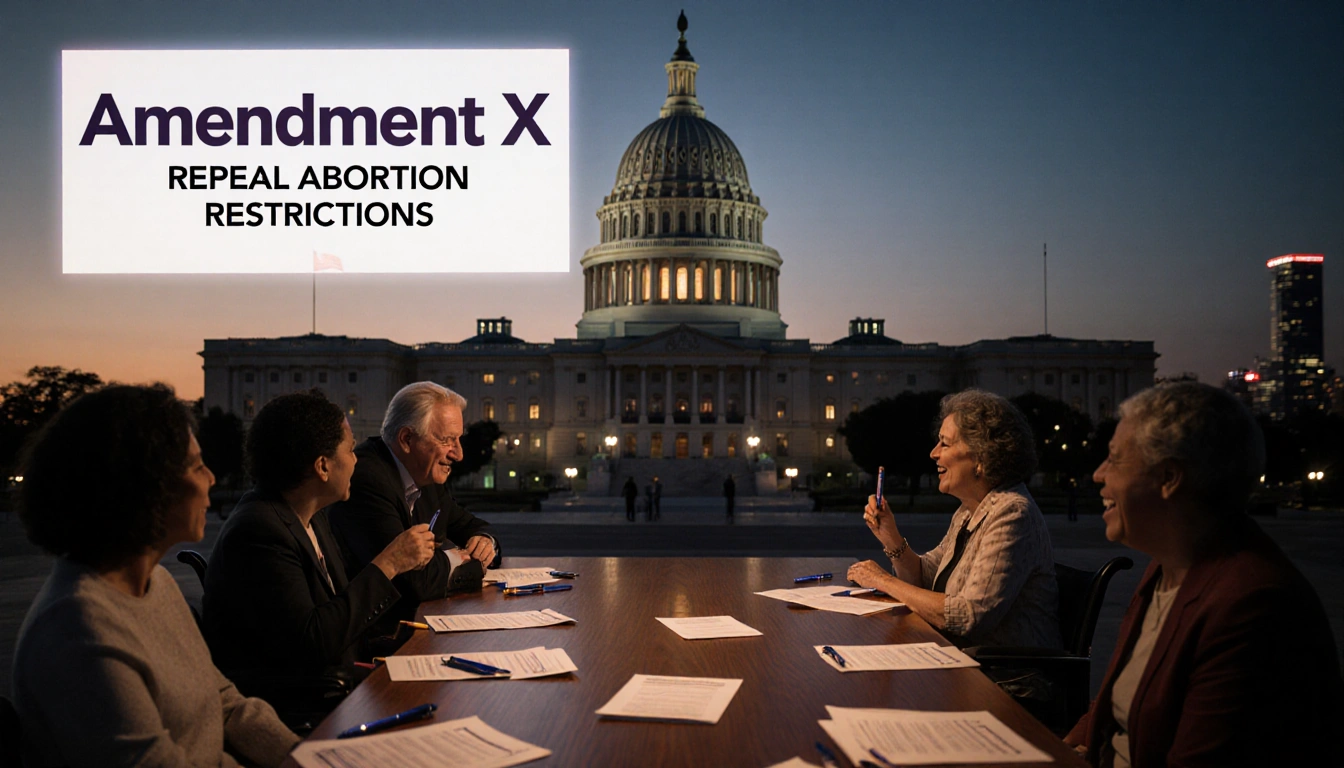
As 2026 midterms loom, voters will not only pick House, Senate, and governor candidates but also decide on a slate of high-stakes ballot measures that could reshape state policies.

Abortion Rights on the Ballot
In Missouri, voters face a question on whether to repeal the state constitution’s guarantee of a right to abortion after a 2024 measure added that right with 51.6 percent support. Amendment 3, drafted by the Missouri General Assembly, would allow abortions only in medical emergencies, rape, or incest, and would permit procedures up to 12 weeks after pregnancy in rape or incest cases. The proposal also seeks to regulate abortion facilities, require parental consent for minors, and bar public funding except in the three specified circumstances.
Nevada voters will decide if a woman’s fundamental right to an abortion until fetal viability should be enshrined in the state constitution. The 2024 campaign drew over 60 percent support, a threshold that requires passage in two consecutive elections.
Petitions are also circulating in Virginia, Idaho, and Oregon for similar rights measures, and Maine is gathering signatures for a school-based sports restriction tied to birth sex.
Transgender and Gender-Related Policies
Missouri’s Amendment 3 would ban gender-transition surgeries and the prescription of cross-sex hormones and puberty blockers for children under 18, except for medically verifiable disorders of sex development or unrelated diseases.
Maine is seeking to limit participation on gendered sports teams to those whose sex at birth matches the team’s designation, and Colorado is collecting signatures for a similar measure. Colorado also proposes a ban on sex-change surgeries for minors and a prohibition on state or federal funding for such procedures.
Petitioners in Colorado must submit at least 124,238 valid signatures-5 percent of the 2022 voter count-to Secretary of State Jena Griswold by Aug. 3, 2026.
Changing the Threshold for Constitutional Amendments
North and South Dakota are putting on the ballot measures that would raise the approval threshold for constitutional amendments from a simple majority to 60 percent. A “yes” vote would require a supermajority; a “no” vote would keep the current rule.
Utah voters will decide whether to raise the threshold for ballot measures that impose or adjust taxes from a simple majority to 60 percent. The initiative does not affect laws passed by a two-thirds majority in the state legislature.
California’s proposal, backed by the legislature, would require that any initiative seeking a constitutional amendment must itself meet the 60 percent threshold.
Agriculture-Related Measures
Florida’s legislature added a measure that would exempt agricultural equipment owned by farm owners or leaseholders from property taxes. Voting “yes” would grant the exemption; voting “no” would maintain the status quo. Florida’s 2024 USDA data shows roughly 44,400 commercial farms covering 9.7 million acres.
Georgia will decide whether to raise the maximum acreage of land that can be classified for conservation use from 2,000 to 4,000 acres. Conservation lands are taxed at 40 percent of market value for at least ten years, while residential or commercial properties receive full market-value taxation.
Drug Policy Initiatives
Idaho, one of five states where medical and recreational marijuana remain illegal, will vote on an amendment that would give the Idaho Legislature sole authority to legalize marijuana or other psychoactive substances. A “yes” vote would transfer authority to the legislature; a “no” vote would preserve citizen initiative power.
Petitions for decriminalizing marijuana and legalizing medical marijuana are circulating, with 70,725 signatures-6 percent of the 2024 registered voters-required to place the measures on the ballot by May 1, 2026.
Nebraska, where voters approved medical marijuana in 2024 with over 70 percent support, is gathering signatures for a recreational cannabis initiative targeting adults 21 and older.
Key Takeaways
- Missouri’s Amendment 3 could limit abortions to emergencies, rape, or incest and ban gender-transition procedures for minors.
- Colorado and Maine are pursuing sports-team and surgery bans tied to birth sex and puberty-blocking drugs.
- Several states are raising the threshold for constitutional amendments to a 60 percent supermajority.
- Florida and Georgia will decide on property-tax exemptions for farming equipment and expanded conservation land acreage.
- Idaho may shift cannabis legalization power from voters to the legislature, while Nebraska seeks to legalize recreational marijuana.
The 2026 ballot will therefore offer voters a wide array of policy choices, from reproductive rights to tax law, that could shape state governance for years to come.