At a Glance
- 2026 will host three supermoons, a ring-of-fire eclipse, and a total solar eclipse.
- NASA plans the first crew mission to the lunar far side.
- An interstellar comet, 3I/Atlas, will fade after its December flyby.
- Why it matters: The year’s celestial events offer rare viewing opportunities and mark milestones in human space exploration.
The sky in 2026 promises a parade of lunar and solar spectacles, a comet’s final close approach, and a historic NASA crew mission to the far side of the Moon. From supermoons to eclipses, stargazers have plenty to watch.
Lunar Exploration Milestone
NASA’s Artemis commander Reid Wiseman said his crew could be the first to study large areas of the Moon’s far side that Apollo never reached. The 10-day mission will fly past the Moon, loop behind it, and return to Earth, leaving the next crew for future walks.
- Amazon’s Blue Moon prototype
- Astrobotic Technology lander
- Intuitive Machines lander
- Firefly Aerospace far-side probe
- China’s rover and hopper
2026 Eclipses
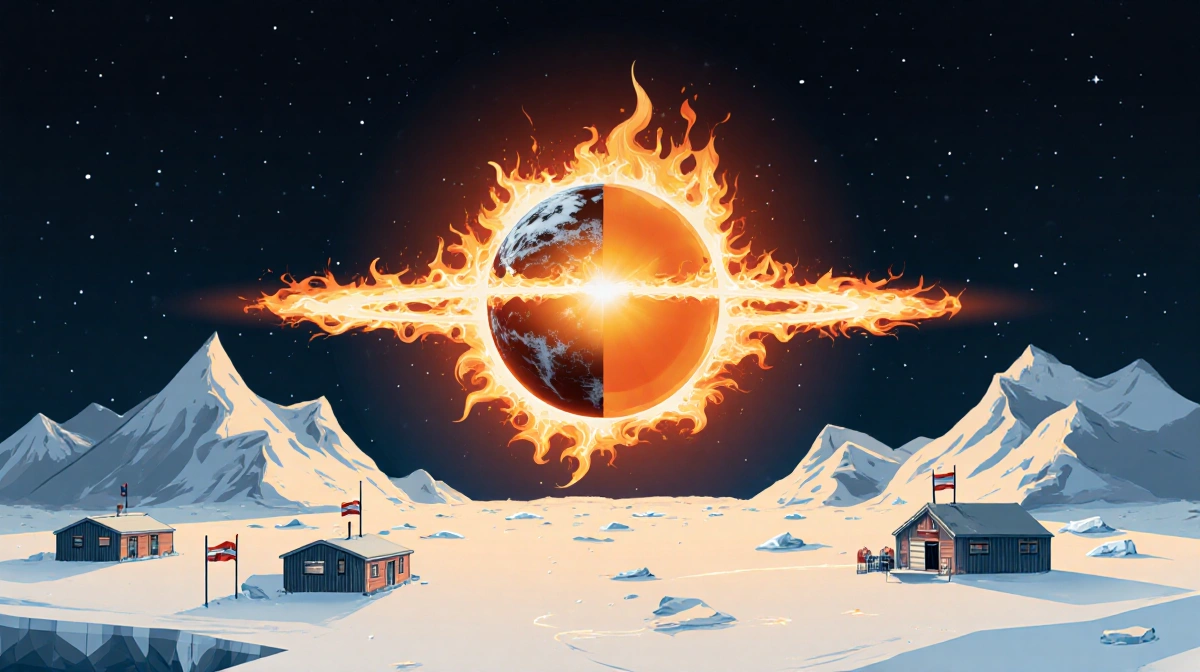
February 17 will bring a ring-of-fire eclipse over Antarctica, visible only from a few research stations. Two weeks later, a total lunar eclipse will occur, followed by a partial lunar eclipse at the end of August.
Rob Steenburgh said:
> “2026 will be an exciting year for space weather enthusiasts,” and added that new spacecraft will help scientists better understand our nearest star.
Supermoons & Planetary Parade
Three supermoons will light up the night: Jan 3, Nov 24, and Dec 23-24. A planetary parade will occur on Feb 28, showing Jupiter, Venus, and Mercury, while Uranus and Neptune need binoculars.
| Date | Supermoon | Notes |
|---|---|---|
| Jan 3 | Full Moon | Supermoon, meteor shower overlap |
| Nov 24 | Full Moon | Second supermoon |
| Dec 23-24 | Full Moon | Christmas Eve supermoon, closest approach |
Comet 3I/Atlas
The interstellar comet 3I/Atlas, first seen in 2025, is fading as it leaves the solar system. It was still visible with backyard telescopes after its December flyby but will disappear in the next decade.
NASA’s Paul Chodas said:
> “I can’t believe it’s taken this long to find three.”
NASA’s Paul Chodas added:
> “The chance of catching another interstellar visitor will increase.”
Key Takeaways
- First crew mission to the Moon’s far side is planned for 2026.
- Three supermoons and a ring-of-fire eclipse provide unique viewing chances.
- The comet 3I/Atlas is fading after its close approach, marking the end of its interstellar visit.
With lunar missions, eclipses, supermoons, and a comet’s farewell, 2026 will be a memorable year for anyone who looks up.