At a Glance
- The Choral (2025) follows a Yorkshire choir clinging to music as WWI guts its town
- Ralph Fiennes stars as the German-sympathizing choirmaster battling anti-German hysteria
- Alan Bennett’s script skewers ruling classes who send “lessers” to die
- Why it matters: Film shows how war’s trauma reaches far beyond the battlefield
The Great War didn’t just erase a generation of young men in the trenches. In the villages they left behind, only women, the elderly, and the medically unfit remained. These hollowed-out communities carried scars that still linger a century later, a truth Alan Bennett explores with biting wit in period musical drama The Choral.
A Town Left Behind
Scriptwriter Bennett sets the story in 1916 Ramsden, a fictional Yorkshire town shadowed by mills yet ringed by green pasture. Every able man has shipped out; the only males left are boys too young, men too old, or soldiers broken in body and spirit recuperating at the nearby military hospital. The local choir becomes the last tether to pre-war life, its Thursday rehearsals a fragile act of defiance against chaos.
Enter Dr. Henry Guthrie, the new choirmaster played by Ralph Fiennes as a portrait of quiet desperation. British by birth, he spent years immersed in German culture and now walks streets where friendship with “the Hun” is treason. His loyalties questioned, his past scrutinized, Guthrie must coax harmony from a town that fears the very music he loves.
Dialects, Doubt, and Dark Humor
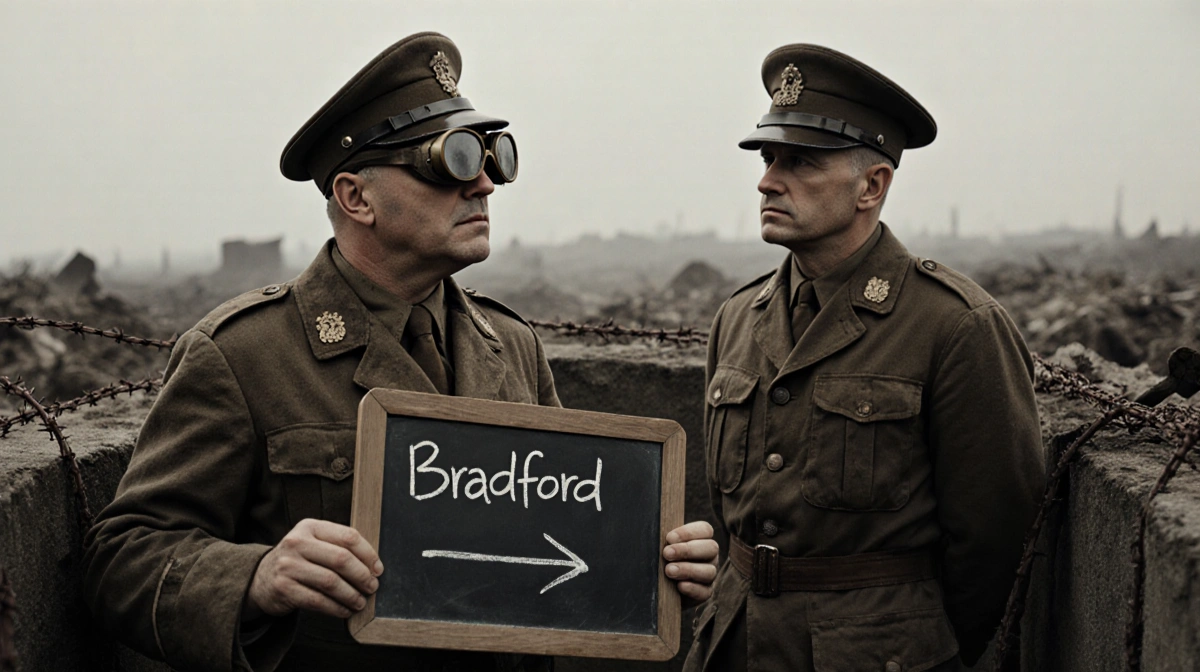
Bennett, hailed as the finest chronicler of Northern England’s dry humor, arms townsfolk with lines that sting and soothe in the same breath. When Alderman Duxbury frets that their leader is an atheist, committee member Mr. Fyton shrugs: “There are atheists now. There’s one in Bradford.” The joke lands because it’s true-tradition is fracturing along with the bodies at the Somme.
Director Nicholas Hytner, partnering with Bennett since their 1990 stage version of The Wind in the Willows, refuses cartoon villains. Duxbury, played by Roger Allam, bankrolls the choir yet knows he wins solos only because he pays the bills. Self-doubt gnaws at him, proof that Bennett writes characters, not caricatures.
An Ensemble of the Broken and the Brave
Bennett populates Ramsden with people who refuse tidy labels:
- Mary (Amara Okereke) – Salvation Army volunteer who won’t remove her bonnet
- Ellis & Stanley (Taylor Uttley & Oliver Briscombe) – schoolboys tasked with delivering bereavement telegrams
- Mrs. Bishop (Lyndsey Marshal) – the town’s “lady of ill-repute,” richer in kindness than reputation suggests
- Robert Horner (Robert Emms) – pianist who becomes Guthrie’s confidante
Each carries a private grief; each finds fleeting redemption in shared song. Bennett’s politics remain unabashed: the ruling class dispatches the poor to slaughter while small-minded jingoism poisons those left behind. Yet compassion tempers every indictment.
Banned Bach and the Elgar Solution
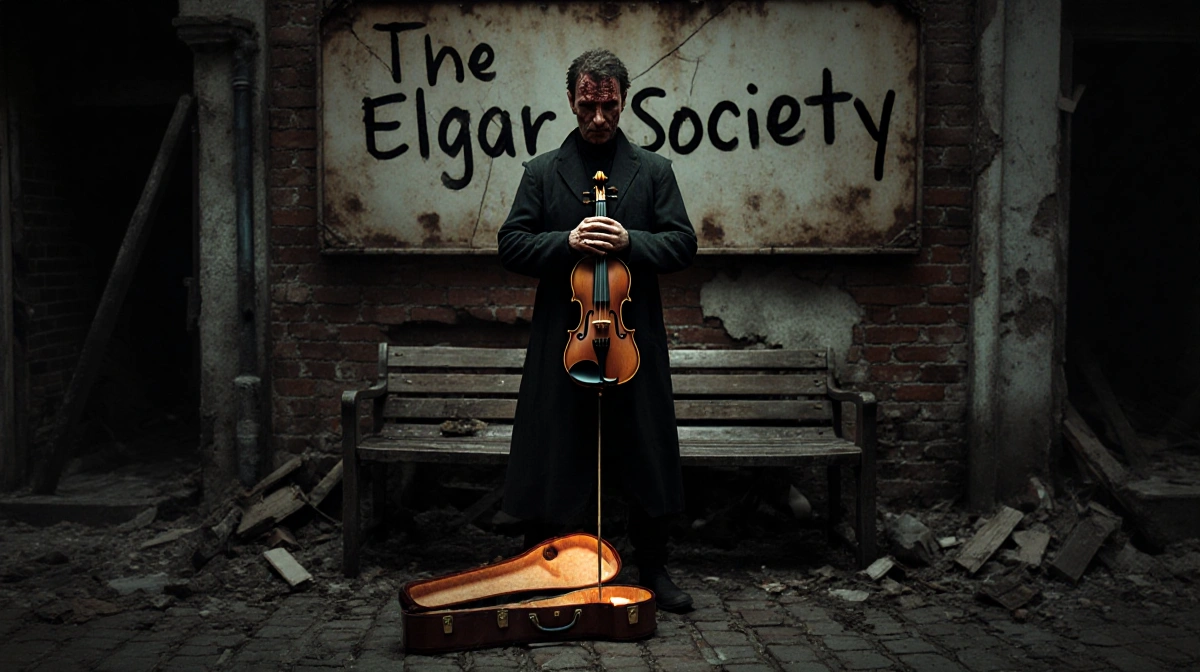
Patriotism turns absurd when German-born composers become enemy agents. Bach, Brahms, even honorary Englishman Handel are struck from the repertoire. Forced to improvise, Guthrie selects Edward Elgar’s obscure, controversial The Dream of Gerontius. The choice angers purists-Elgar’s Catholic devotional seems alien to Protestant Ramsden-but necessity breeds invention.
Guthrie reimagines the piece, binding Elgar’s soaring mysticism to the town’s earthly pain. In rehearsal, voices rise not as escapism but as acknowledgement: music cannot stop shells or bring back sons, yet it grants a sanctioned hour to breathe, remember, and hope.
A Partnership Forged in Shared Alienation
The bond between Horner and Guthrie mirrors the Bennett-Hytner collaboration. Both director and screenwriter are Northern boys who escaped to London yet never lost the region’s skepticism toward pretension. Their shorthand shows in small touches: Simon Russell Beale’s cameo as Sir Edward Elgar drips with gentle mockery of celebrity worship, while the camera lingers on cobbled streets where gossip travels faster than telegrams.
Cinematographer Mike Eley bathes moorland scenes in pewter light, underscoring how beauty co-exists with bereavement. Production designer Christina Moore fills parlors with fading photographs of boys who will never age, visual echoes of the void music tries to fill.
When the Final Note Fades
The choir’s climactic performance lands like exhalation after prolonged suffocation. Villagers who have spat at Guthrie now stand shoulder-to-shoulder, voices blending in imperfect unity. Bennett offers no false comfort-historical fact guarantees more names will join the war memorial-but for two hours art grants the living permission to keep living.
The Choral runs 113 minutes, carries an R rating for brief battlefield imagery, and opens via Sony Pictures Classics. News Of Austin awards it 3.5 out of 5, citing Fiennes’ aching restraint and Bennett’s merciless compassion as reasons the film lingers longer than its final chord.
Key Takeaways
- Bennett uses a Yorkshire choir to dissect how WWI scarred home fronts, not just soldiers
- Ralph Fiennes embodies cultural homelessness as the German-educated choirmaster vilified as traitor
- The script balances anti-war anger with belief in small acts of collective humanity
- By banning German composers, wartime hysteria forces characters to reclaim Elgar for their own healing