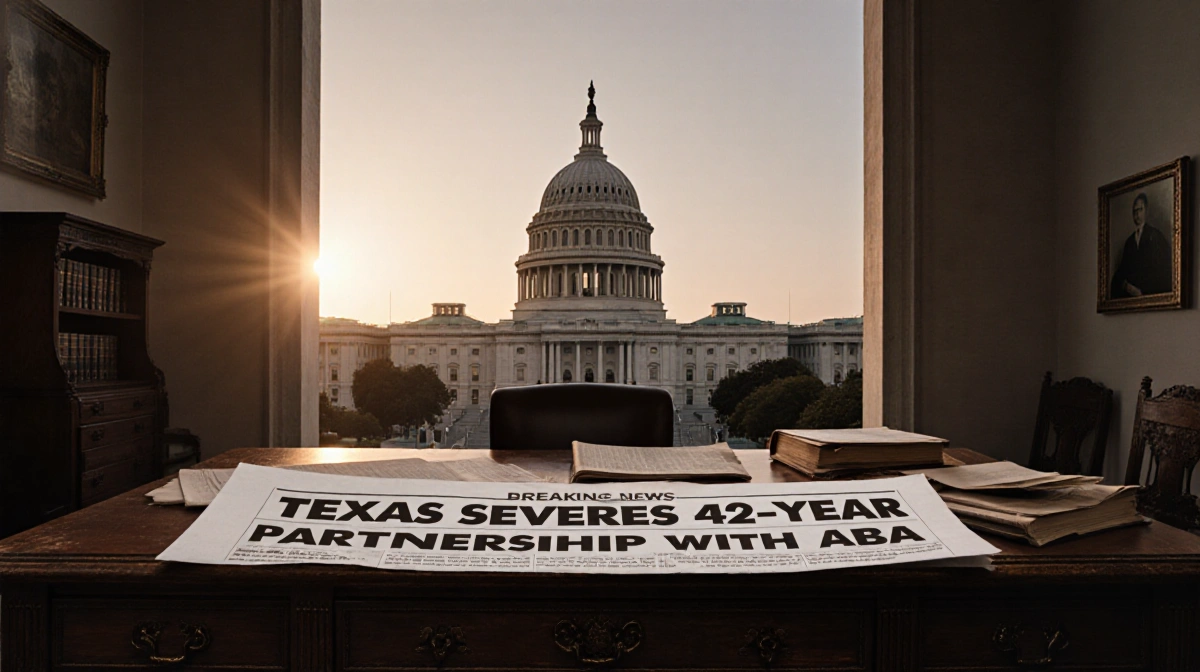
The Texas Supreme Court has severed a 42-year partnership with the American Bar Association, making Texas the first state to end ABA oversight of its law schools.
At a Glance
- Texas Supreme Court removes ABA authority over bar-exam eligibility
- State’s highest civil court now decides which law schools qualify
- Order issued last September took effect this month
- Why it matters: Future Texas lawyers will face new, state-set standards instead of national ABA requirements
The unanimous court order ends the ABA’s role as the gatekeeper that determined which law-school graduates could sit for the Texas bar exam. Under the old system, ABA accreditation was a prerequisite for eligibility; going forward, the Texas Supreme Court itself will approve or deny individual law schools’ qualifications.
KERA News first reported the change, noting that the September decision had been anticipated after months of tension between state officials and the national accrediting body. The court has not yet released detailed replacement standards, but its order states that “the Court retains plenary authority to establish all rules governing admission to the State Bar of Texas.”

Law-school administrators contacted by News Of Austin said they are awaiting guidance on how the court will evaluate faculty credentials, curriculum requirements, and library resources-areas historically policed by the ABA. Until new rules are published, schools must continue operating under existing ABA standards to maintain federal financial-aid eligibility.
Student reaction on Texas law-school campuses has been mixed. Some told Isaac Y. Thornwell they welcome the possibility of reduced tuition if costly ABA compliance mandates disappear, while others worry that degrees from Texas schools could carry less weight outside the state without the familiar ABA seal of approval.
The State Bar of Texas declined to comment on whether it will create its own inspection team or rely on self-reporting by law schools. Court clerk personnel confirmed that the justices will hold a public-comment period before finalizing new admission rules later this year.
Advocates of the move argue that Texas can better respond to regional legal needs-such as oil-and-gas, immigration, and ranch-law specialties-without deferring to a national organization they view as politically progressive. Critics counter that abandoning uniform national standards could erode educational quality and complicate interstate practice for Texas-trained attorneys.
No other state has announced plans to follow Texas’ lead, though conservative lawmakers in Florida and South Carolina have introduced similar proposals in recent legislative sessions. The ABA, for its part, released a brief statement expressing confidence that “Texas law schools will continue to provide the rigorous education necessary to protect the public,” while reserving further comment until the court issues permanent rules.
For now, thousands of current 1Ls and 2Ls will graduate under a hybrid system: they enrolled under ABA rules but will be licensed under Texas-only standards. The court has pledged to grandfather currently enrolled students so their path to licensure remains uninterrupted.