At a Glance
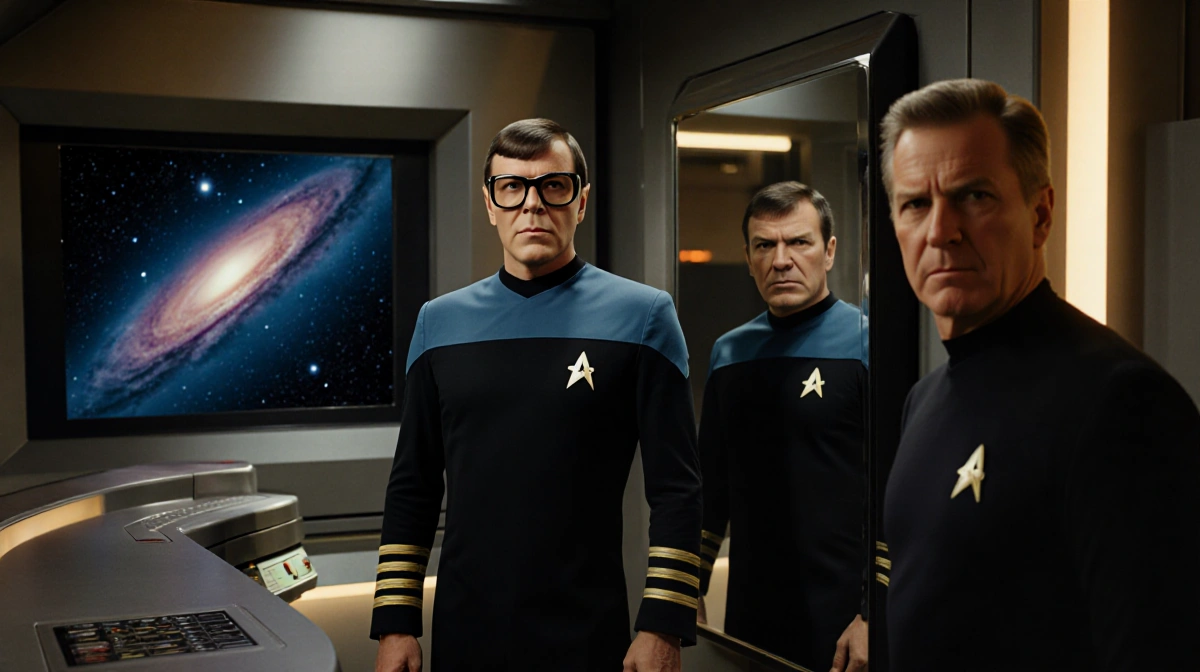
- A controversial scene featuring a captain wearing thick glasses ignited a political rant by White House advisor Stephen Miller.
- Actor William Shatner responded with sarcasm, highlighting a long history of eyewear in the franchise.
- The episode’s release and the ensuing social-media exchange illustrate how minor details can become flashpoints in cultural wars.
Why it matters: The episode shows how a single production choice can ignite a polarized debate that extends beyond entertainment into politics and media strategy.
—
Starfleet Academy, the newest addition to the Star Trek universe, faced a sudden wave of controversy after the first two episodes aired late last week. The controversy stemmed from a seemingly innocuous detail: the main character, Captain Nahla Ake, played by Holly Hunter, was shown wearing thick, rimmed spectacles.
The Spark
The episode’s scene, where Ake converses with her first officer, Lura Thok, and senior staff member Lieutenant Rourke, drew the attention of none other than White House advisor Stephen Miller. Miller, known for his outspoken stance on cultural issues, quoted a clip of the scene on Twitter from an account called “End Wokeness”.
Miller’s tweet was vague about what exactly bothered him. He described the scene as “tragic” and called for Paramount, now owned by Trump ally David Ellison, to relinquish creative control to William Shatner. His message seemed to suggest that the presence of glasses was a sign of “wokeness” in a future where vision should be fully corrected.
Shatner’s Sarcasm
On January 19, 2026, Shatner replied to Miller’s tweet with a post that mixed humor and critique. The actor wrote, “The fact that they have not cure Hyperopia by the 32nd Century is an abysmal oversight on the writers,” and added that Paramount should increase the budget for a more realistic portrayal of a hyperopic bridge crew.
Miller ignored the sarcasm and reposted Shatner’s comment, then added another quote-tweet condemning the death of Kirk in Generations as the downfall of all Star Trek. He failed to address Shatner’s point that the glasses were a stylistic choice, not an indicator of a lack of progress.
Eyewear in Star Trek History
The presence of glasses in the franchise is far from unprecedented. In the original series, an Enterprise transporter technician wore glasses in the pilot episode “The Cage,” and several other crew members also had spectacles. Captain Kirk famously wore reading glasses in The Wrath of Khan and was allergic to a common vision-correcting drug. Later series, such as Picard and Discovery, also featured characters with glasses or other eye-wear.
These examples demonstrate that the use of glasses is a long-standing narrative device in Star Trek, often used to convey a character’s personality or to add visual interest.
Political Context
Miller’s reaction is part of a broader pattern where right-wing commentators latch onto pop-culture moments to fuel a narrative of cultural decline. The incident mirrors past controversies where seemingly trivial details-such as a character’s outfit or a plot point-were framed as evidence of a perceived shift toward “wokeness.”
The White House’s engagement with the episode also reflects the strategic use of social media to mobilize supporters around cultural issues. By highlighting the glasses as a flaw, Miller tapped into a pre-existing narrative that technology and progress should eliminate such inconveniences.
Broader Cultural War
The episode’s fallout illustrates how the entertainment industry can become a battleground for ideological disputes. The swift escalation from a single tweet to a broader debate underscores the power of platforms like Twitter to amplify and shape public perception.
It also shows how media outlets, influencers, and political figures can use cultural products to rally their audiences. While the glasses themselves were a creative choice, the surrounding discourse turned them into a symbol of a larger cultural conflict.
Key Takeaways
- A minor production detail can trigger a significant political response.
- The use of glasses in Star Trek is historically grounded and not a sign of cultural laziness.
- Social-media amplification can transform a creative decision into a cultural flashpoint.
- Political actors often repurpose entertainment moments to advance broader ideological narratives.
—
Timeline of Events
| Date | Event |
|---|---|
| Late 2025 | Starfleet Academy episodes premiere |
| Late 2025 | Stephen Miller tweets a clip of Captain Ake’s glasses |
| January 19, 2026 | William Shatner posts sarcastic response |
| January 19, 2026 | Miller reposts Shatner and adds new criticism |
—
The incident serves as a reminder that in the age of instant communication, even the smallest creative choice can become a lightning rod for controversy. The interplay between entertainment, politics, and social media continues to shape how stories are received and debated.