At a Glance
- Trump allowed Nvidia to sell H200 chips to China, taking 25% of sales
- Rep. Brian Mast’s AI Overwatch Act would let Congress block such exports
- MAGA figures including Trump’s AI czar David Sacks oppose the bill
- Why it matters: The fight pits Trump’s trade agenda against national-security hawks in his own party
Washington is split over a White House plan to let Nvidia sell advanced AI chips to China, with President Trump and his AI czar on one side and key congressional Republicans on the other.
Last month Trump approved a deal that lets the chipmaker ship its H200 processors to Chinese customers. The chips sit below Nvidia’s top-tier U.S. products but outclass the China-specific H20 models that Beijing already disliked. Under the agreement, Washington takes a 25% cut of Nvidia’s China revenue, Chinese AI labs get faster hardware, and Nvidia reopens a $6-billion-plus market it had largely lost to export rules.
Nvidia CEO Jensen Huang spent months lobbying for the change. He argues that keeping Chinese AI firms hooked on Nvidia software and silicon preserves U.S. leverage rather than eroding it. The pitch won over Trump and AI Czar David Sacks, but many on Capitol Hill remain unconvinced.
Congress Demands a Veto Over Chip Sales
“Should Congress have oversight when selling missiles to other countries? Yes, the same should be said for chips,” Rep. Brian Mast (R-FL) said during a House Foreign Affairs Committee hearing last week. Mast, who chairs the panel, warned that unrestricted sales of Nvidia’s most powerful data-center chips could help China’s military leapfrog the United States in artificial-intelligence weapons.
“These chips, they’re not just kids playing video games on an Xbox, playing war games. They affect real wars, real weapons, real war power, and they will be a part of bringing about real casualties,” Mast said.
He introduced the AI Overwatch Act the same day Trump announced the H200 deal. The bill gives both the House Foreign Affairs Committee and the Senate Banking Committee the power to block export licenses for AI chips headed to China or other designated adversaries.
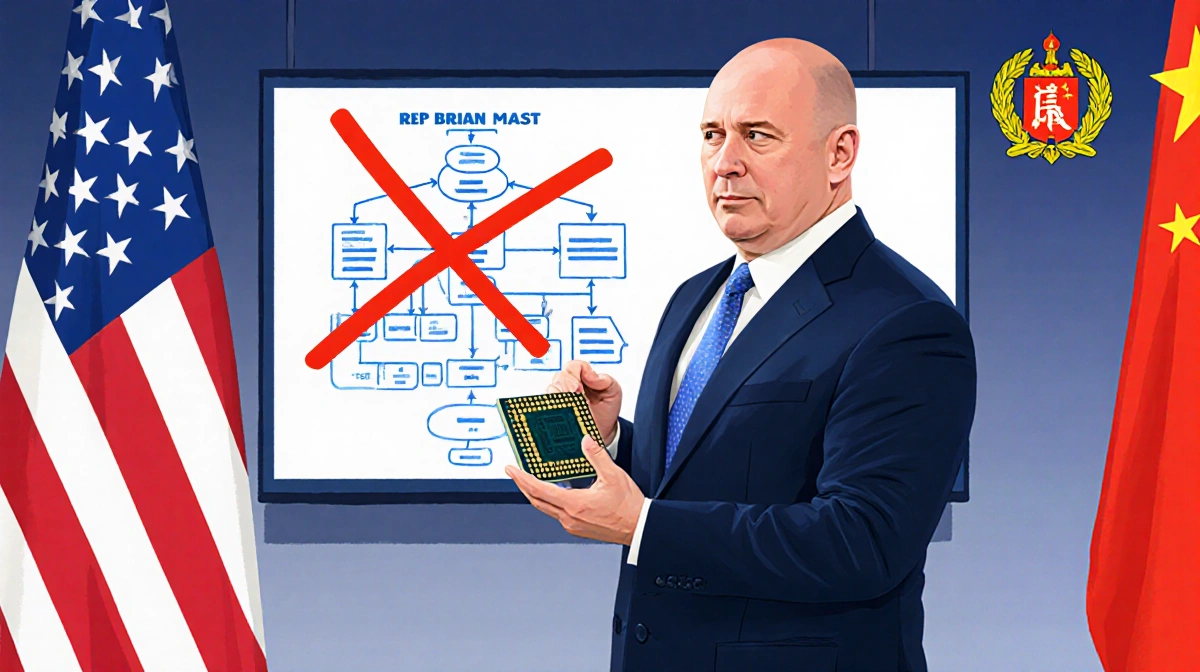
On Wednesday the committee voted to advance the measure; it now heads to the full House. While support inside the committee was strong, passage is uncertain. A similar bill, the GAIN AI Act, faltered last session after heavy pushback from Nvidia.
MAGA On MAGA: Sacks and Loomer Attack Mast
The chip fight is fracturing the America-First coalition. Sacks, appointed by Trump to lead the administration’s AI policy, endorsed a viral post claiming the AI Overwatch Act is “a brazen attempt to take away President Trump’s authority as Commander in Chief and undermine his America First strategy.” The same post alleged the bill is a “Never Trumper” plot aided by Obama and Biden alumni plus Anthropic CEO Dario Amodei.
MAGA influencer Laura Loomer called the legislation “pro-China sabotage disguised as oversight.” Mast shot back, accusing Loomer of “parroting NVIDIA’s lobbying talking points to sell chips to China.”
Amodei, whose company partners with Nvidia yet competes for government contracts, told the World Economic Forum in Davos that letting the chips flow to China is “crazy” and “a mistake.” He likened the move to “selling nuclear weapons to North Korea and [bragging that] Boeing made the casings.”
Despite the public spat, Huang appeared on the same Davos stage a day later and praised Anthropic’s Claude assistant, signaling the business relationship remains intact.
Key Takeaways
- The White House deal lets Nvidia sell H200 AI chips to China while funneling 25% of revenue to the U.S. Treasury
- Rep. Mast’s AI Overwatch Act would give Congress the power to stop such exports
- Trump’s own AI czar and prominent MAGA voices oppose the bill, calling it an attack on presidential authority
- Anthropic CEO Amodei sides with Mast, warning the sales could hand China a military AI edge