
At a Glance
- The Texas Archive of the Moving Image (TAMI) and the American Genre Film Archive (AGFA) share a ground-floor archive space in downtown Austin.
- TAMI preserves over 1,000 pieces of footage a year, while AGFA focuses on a smaller, curated catalog.
- Both institutions use the same Lasergraphics film scanners, creating a technical partnership.
- Why it matters: Their cooperation keeps Texas’s visual history alive and accessible to scholars and the public.
TAMI and AGFA, two of Austin’s most important film preservation groups, have found a way to coexist in a cramped, shared space, turning what could have been competition into a symbiotic relationship. The partnership, rooted in a shared mission to rescue and digitize Texas film and video, illustrates how different philosophies can coexist and even complement one another.
Different Philosophies
The world of film preservation is split between two dominant schools of thought. One follows French curator Henri Langlois, who believed that every frame has value. The other leans toward British archivist Ernest Lindgren, who rejected Langlois’ romantic approach in favor of a more scientific, curated method. TAMI’s managing director, Elizabeth Hansen, jokes that her organization is more like Langlois than the more Lindgrenian Baker Center tenants, the American Genre Film Archive.
- TAMI: Founded in 2002, it rescues anything and everything on film or video from around Texas, from home movies to news reels, PSAs, and commercials.
- AGFA: Began as a home for the vast collection of 35mm prints collected by Tim League that formed the backbone of early Alamo Drafthouse programming.
Both groups share the same office building but have distinct remits. TAMI puts all its material online for all viewers and researchers to access via its website, while AGFA has grown into a full-scale distribution house, handling its own archive and partner labels such as Vinegar Syndrome, Shout! Factory, and Deaf Crocodile.
Shared Mission
Despite their differences, Hansen and AGFA’s producer Tiernan O’Rourke point out that their similarities outweigh the differences. They both dedicate themselves to saving the ephemera of visual history.
> “We have a great theatrical team and they do an amazing job of keeping all these bookings of all these titles,” said O’Rourke.
In raw terms, TAMI handles over 1,000 pieces of footage every year, while AGFA works in much smaller numbers for both theatrical and their growing Blu-ray catalog. The two organizations are quick to emphasize that their shared dedication to preservation is what truly binds them.
Shared Space
AGFA was one of the very first tenants at Baker in 2019, sharing offices with the Alamo staff. When they moved out, AGFA stayed around, “which was a lot nicer than having to load up trucks,” said O’Rourke.
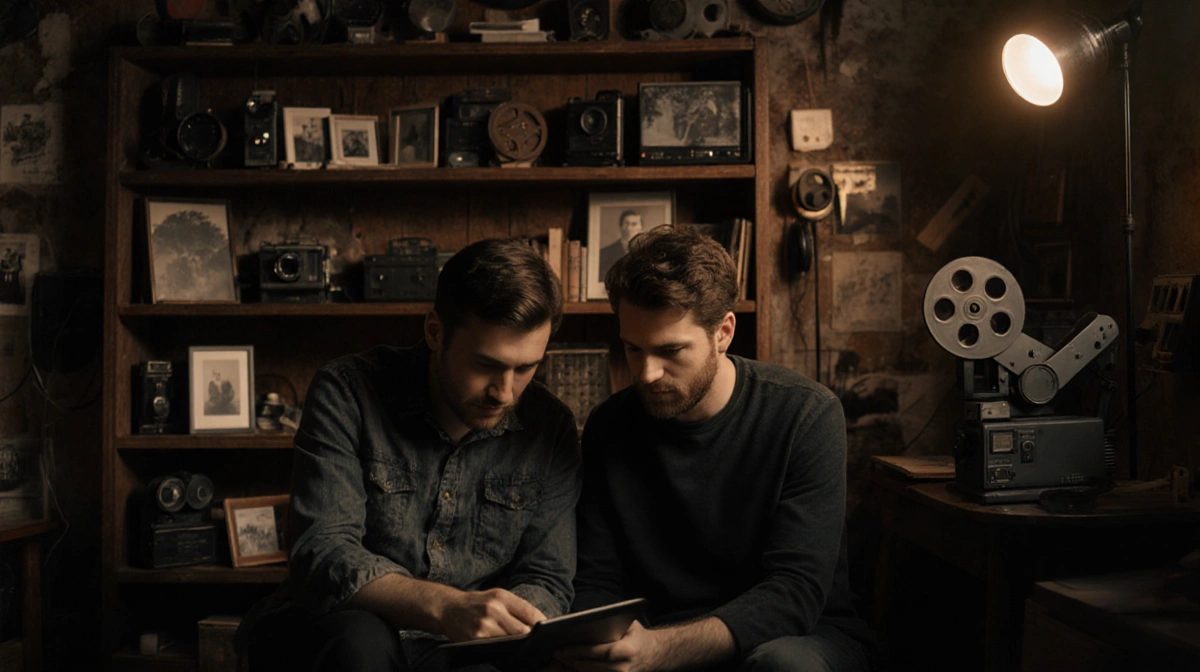
TAMI moved in literally weeks into the pandemic, and both found their current dark and secluded shared archive space on the ground floor to be the perfect spot. When TAMI first moved in, they had office space on the third floor with great light, which is exactly what a film preservation archive doesn’t need. The cellphone problem-electromagnetic signal noise interfering with digitization-forced a decision: build a giant Faraday cage or switch offices. Hansen and her team “walked around the building with a projector and headphones, and we must have looked crazy.” Ultimately, the ground floor, with its thick, insulated walls and smaller windows, gave both TAMI and AGFA what they needed, and so they moved in together.
> “We’re back in the basement where we’re supposed to be,” Hansen laughed.
Technical Symbiosis
Both institutions use Lasergraphics brand film scanners. This commonality means that if anything goes wrong, troubleshooting is straightforward for each other. While TAMI mostly deals with videos and can handle 8mm reels, AGFA can rely on TAMI’s equipment for smaller formats. Conversely, if TAMI receives a 35mm print, AGFA is right next door.
> “We have a good bond, we have a good friendship, and we help each other out,” O’Rourke said.
The shared technology and proximity have turned the ground floor into a collaborative hub where expertise and equipment flow freely between the two archives.
Community Impact
The partnership ensures that Texas’s visual history is not only preserved but also made accessible. TAMI’s online portal allows researchers and the public to view a wide range of materials, from personal home movies to historical news reels. AGFA’s distribution network brings niche films to modern audiences through theatrical releases and Blu-ray.
The collaboration has also fostered a sense of community among archivists, filmmakers, and scholars. By sharing resources, they reduce duplication of effort and lower costs, allowing more projects to be undertaken. Their joint efforts demonstrate how shared spaces and shared technology can amplify preservation work.
Key Takeaways
- TAMI and AGFA share a ground-floor archive in Austin, creating a rare partnership between two preservation philosophies.
- TAMI processes over 1,000 pieces of footage annually; AGFA focuses on a curated catalog.
- Both use Lasergraphics scanners, enabling easy troubleshooting and equipment sharing.
- Their collaboration keeps Texas’s film and video heritage alive and accessible.
This article appears in January 23, 2026.
Bold and uncensored, News Of Austin has been Austin’s independent news source for over 40 years, expressing the community’s political and environmental concerns and supporting its active cultural scene. Now more than ever, we need your support to continue supplying Austin with independent, free press. If real news is important to you, please consider making a donation of $5, $10 or whatever you can afford, to help keep our journalism on stands.
The News Of Austin‘s first Culture Desk editor, Fiona Z. Merriweather, has reported on Austin’s growing film production and appreciation scene for over a decade.