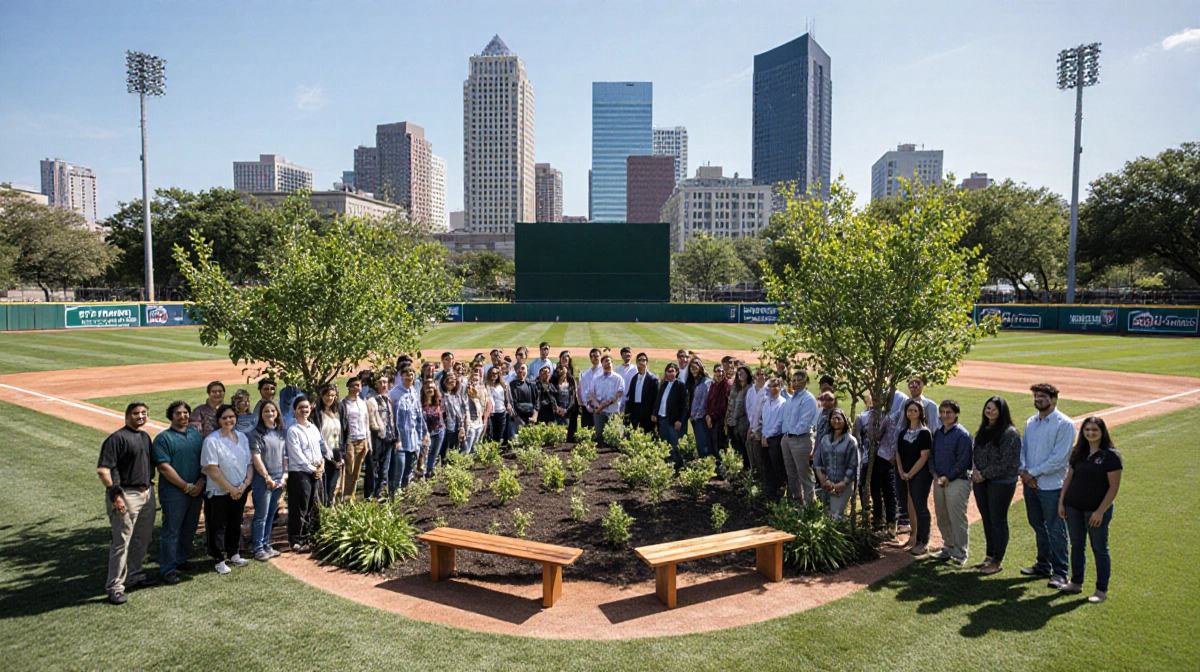
On a windy day at St. Edward’s University, 53° and a chill in the air, about 50 people gathered to witness the first Tiny Forest planting in Central Texas. The event, held across from the campus baseball field, showcased a new approach to urban forestry that could cut heat and boost tree cover in East Austin.
At a Glance
- St. Edward’s University plants tiny forests to tackle heat in East Austin.
- 15% of East Austin has less than tree coverage; 10-year maturity goal.
- $29,000 grant fuels climate-resilient research and community outreach.
Why it matters: These projects increase shade, reduce temperatures, and empower students to address climate equity.
Tiny Forest Initiative and Climate Equity
Roy Johnson, the campus arborist, opened the ceremony in a narrow-brimmed straw cowboy hat, greeting the crowd with a clear throat that drew attention. He explained that Akira Miyawaki, a botanist from Japan, engineered the tiny forest method to accelerate forest growth. By planting a diverse mix of species in close proximity, the trees skip the early stages of development and can reach full maturity in 10 years.
- Veronica Chavez – junior majoring in environmental biology and climate change, who said the tiny forest experience is like career exploration.
- Javier Zavala – uses the data for AI predictions.
- Agatha Ais – forensic science major from Uganda, who helped implement an international section in the food forest.
Each plot contains an upper canopy tree, a lower canopy tree, and a shrub, creating a layered ecosystem that mimics a mature forest. The Austin Community Tree Priority Map, created in 2020, shows that almost all of East Austin is high priority for increasing coverage, while West Austin is low priority. With fewer trees, Austin’s heat becomes less bearable, and residents in the eastern crescent experience climate impacts more acutely.
| Area | Priority | Tree Coverage |
|---|---|---|
| East Austin | High | <15% |
| West Austin | Low | >15% |
Student Research and CLI-RES
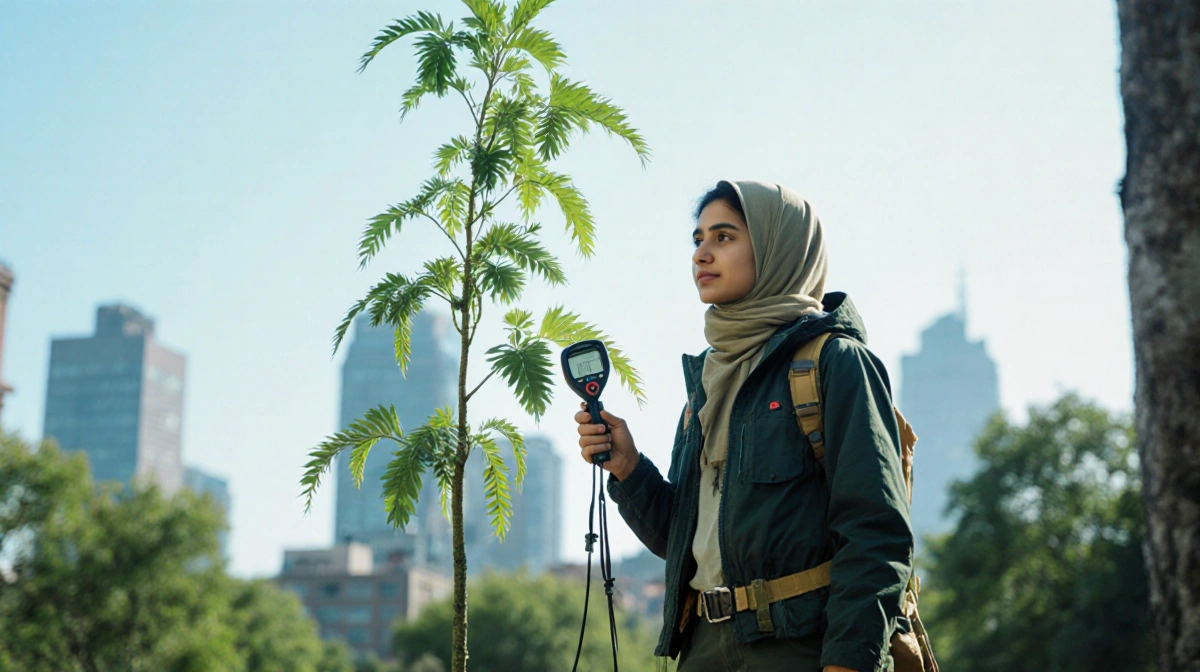
Students and faculty have been monitoring the impact of extreme weather on the urban tree canopy through their Climate Resiliency Living Lab, nicknamed CLI-RES. Iman Haddad, who will graduate in environmental science and policy this spring, tracks the trees’ development with a dendrometer, noting that growth slowed during a summer heat wave but restabilized quickly, indicating overall health. The data collection is essential for understanding how urban trees respond to temperature spikes.
- Iman Haddad – dendrometer data collection.
- Javier Zavala – AI modeling and trend prediction.
- Dalia Zamora – data science stipend support.
“I’m going to try to make those models more sustainable,” said Javier Zavala. “This is a long-term project, and the plan is to add more treatments and trees as we get more funding,” explained Dr. Amy Concilio.
Grants and Funding
CLI-RES is funded in part by a $29,000 urban-forest grant from the Austin Community Foundation. The grant supports equipment, research, and the planting of additional trees. H-E-B, in partnership with Texan by Nature, awarded St. Edward’s a grant for the tiny forest, according to Johnson. The partnership also provides seed funding for student internships.
- Austin Community Foundation – $29,000 urban-forest grant.
- H-E-B & Texan by Nature – tiny forest grant.
- University stipends – ecology and data science support.
Sustainability and Community Impact
St. Edward’s also runs an organic garden, currently led by Javier Zavala, and a food forest that incorporates regenerative growing practices to create a diverse, nutritious ecosystem. Agatha Ais, who works closely with the food forest, says she helped implement an international section with crops from 50 countries. “If I want to eat something from home, I could go to the food forest and get that,” she explains.
Johnson notes the university’s progress over the past decade: “When I first got here, the campus used every synthetic chemical known to man. Now, we are Green Grounds Gold Level certified,” he states proudly. This means the vast majority of the campus’ grounds are maintained organically. “The 90% required for gold excludes our five sports fields, which are about 9% of our campus’ 200 acres,” he added.
As St. Edward’s continues to prioritize sustainability, more students are finding their green thumb. “Students want to be a part of that work,” says Dr. Steven Fletcher, another environmental science and policy professor, “because it’s their world that’s going to be inherited.” The interns say they have fallen in love with trees and the environment, encouraging other young people to volunteer and help the community.
The tiny forest planting at St. Edward’s University is more than a symbolic gesture; it is a concrete step toward reducing heat, increasing tree cover, and empowering the next generation of environmental stewards. With grants, student research, and community involvement, the campus is turning its grounds into a living laboratory for climate resilience.
This article appears in January 23 • 2026.
A note to readers: Bold and uncensored, News Of Austin has been Austin’s independent news source for over 40 years, expressing the community’s political and environmental concerns and supporting its active cultural scene. Now more than ever, we need your support to continue supplying Austin with independent, free press. If real news is important to you, please consider making a donation of $5, $10 or whatever you can afford, to help keep our journalism on stands.