At a Glance
- Starfleet Academy and its War College counterpart collide in a new Lower Decks episode.
- The episode uses prank-induced phaser-tag to explore whether the fleet is science-driven or militarized.
- A playful rivalry turns into a lesson about teamwork and ingenuity.
- Why it matters: It shows how a beloved franchise tackles age-old questions through humor.

The latest Lower Decks episode, Vitus Reflux, lands just three episodes into the season, offering a fresh look at the long-standing debate over Starfleet’s identity. By turning a classic Star Trek premise into a series of kid-friendly pranks, the show asks whether the fleet is an exploratory science organization or the militarized arm of an expansionist power.
The Duality of Starfleet
Starfleet Academy closed its doors after the Burn destabilized the Federation, but a sister school-War College-remains open, training officers in tactics for a harsher universe. The episode’s narrative places the two schools in direct contact, forcing them to coexist and physically embody the question of Starfleet’s purpose.
- War College focuses on military tactics and strategy.
- Starfleet Academy emphasizes science and exploration.
- The episode mirrors themes from Strange New Worlds and previous Star Trek installments.
The series has often skirted this debate, but Vitus Reflux is the first to tackle it through prank-induced phaser-tag, a game that pits the two schools’ Calica teams against each other.
Prank-Induced Phaser-Tag
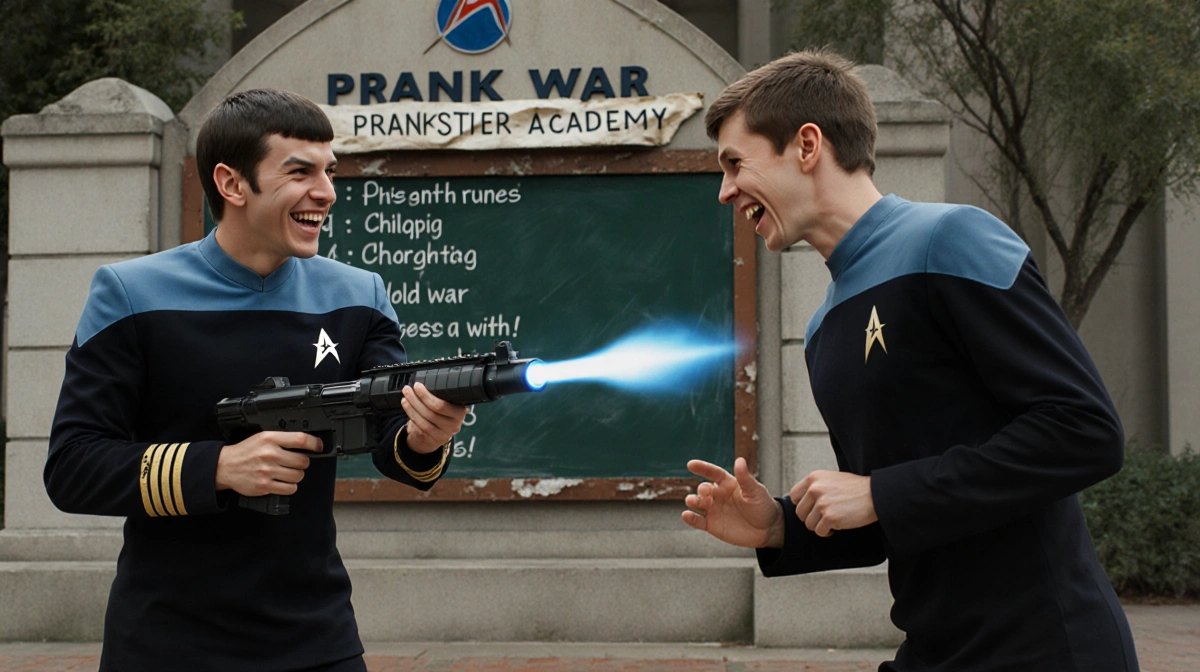
The Calica teams-Starfleet’s mascot, a Lapling, and War College’s Mugato-re-establish their rivalry through a phaser-tag wargame. The game requires teams to eliminate each other with transporter-beam-firing phasers before scoring hits on their opponent’s mascot-defended goal.
The episode follows the kids as they:
- Plan a covert Calica game after hours.
- Execute a series of pranks to prove institutional superiority.
- Collaborate to plant growth-accelerated, talking flowers in War College dorms, rendering them temporarily uninhabitable.
| Episode Moment | Characters Involved | Key Action |
|---|---|---|
| Out-of-hours game | Darem, Genesis, Caleb, Tarima | Attempted coordination fails due to leadership issues |
| Chancellor Ake’s intervention | Ake, Kelrec | Encourages a different game emphasizing teamwork |
| Final plan | Jay-den, Caleb, Sam | Infiltration montage to deploy spores |
These pranks highlight the tension between the two institutions and the broader question of whether Starfleet’s exploration can coexist with its militaristic training.
Character Dynamics & Themes
The episode places a spotlight on the main cast of cadets. The rivalry forces them to confront their own expectations and the reality of a harsh galaxy.
- Darem and Genesis compete for Calica captaincy.
- Caleb struggles with his relationship with Tarima, who chose War College.
- Commander Kelrec and Chancellor Ake intervene, adding a layer of authority.
Ake’s presence-showing up at Kelrec’s office to chide his encouragement of pranking-underscores the need for balance between lightheartedness and seriousness.
The episode ultimately prioritizes camaraderie and inventive problem-solving. While it may not fully satisfy skeptics, it demonstrates Star Trek’s willingness to explore complex ideas through humor.
Takeaway
Vitus Reflux delivers a charming, earnest narrative that solidifies friendships among cadets while subtly questioning Starfleet’s dual nature. The playful pranks and phaser-tag games illustrate that even in a universe of high stakes, teamwork and ingenuity remain central. Though the episode sidesteps a definitive answer, it keeps the conversation alive and shows that the franchise can tackle serious themes without sacrificing fun.
Key Takeaways
- Starfleet Academy and War College coexist, embodying the science-vs-military debate.
- Prank-induced phaser-tag serves as a vehicle for exploring institutional identity.
- Character dynamics emphasize growth, teamwork, and the importance of balancing exploration with defense.
- The episode champions inventive solutions to conflict, staying true to Star Trek’s core values.