
At a Glance
- ICE officers have entered homes without judicial warrants, using administrative warrants approved in a May 12, 2025 memo.
- The policy has sparked protests in Los Angeles and legal challenges citing Fourth Amendment violations.
- DHS and ICE officials confirm the policy is actively used, but details on frequency remain undisclosed.
ICE officers are now using administrative warrants to enter private residences without judicial warrants, a shift that has raised legal alarms and sparked public protests across the United States. The policy, detailed in a memo dated May 12, 2025, allows officers to act on removal orders without the higher court approval normally required for home entries. The move has prompted criticism from civil liberties groups and officials who say it violates constitutional protections.
ICE Officers Use Administrative Warrants to Enter Homes
The new policy states that officers can rely on an administrative warrant when a person is subject to a final removal order. Administrative warrants are signed by ICE field-office officials and permit arrests, but they do not carry the same judicial authority required for entering a home. The memo clarifies that officers must still provide the occupants time to comply with the order.
- Administrative warrants are issued by ICE field-office officials.
- They allow arrests but not full judicial entry authority.
- Officers must give occupants time to comply.
- The policy applies only to individuals under final removal orders.
- The memo cites the Immigration and Nationality Act.
- It references the U.S. Constitution and immigration regulations.
- Officers must avoid entering before 6 a.m. or after 10 p.m.
- Use of force must be necessary and reasonable.
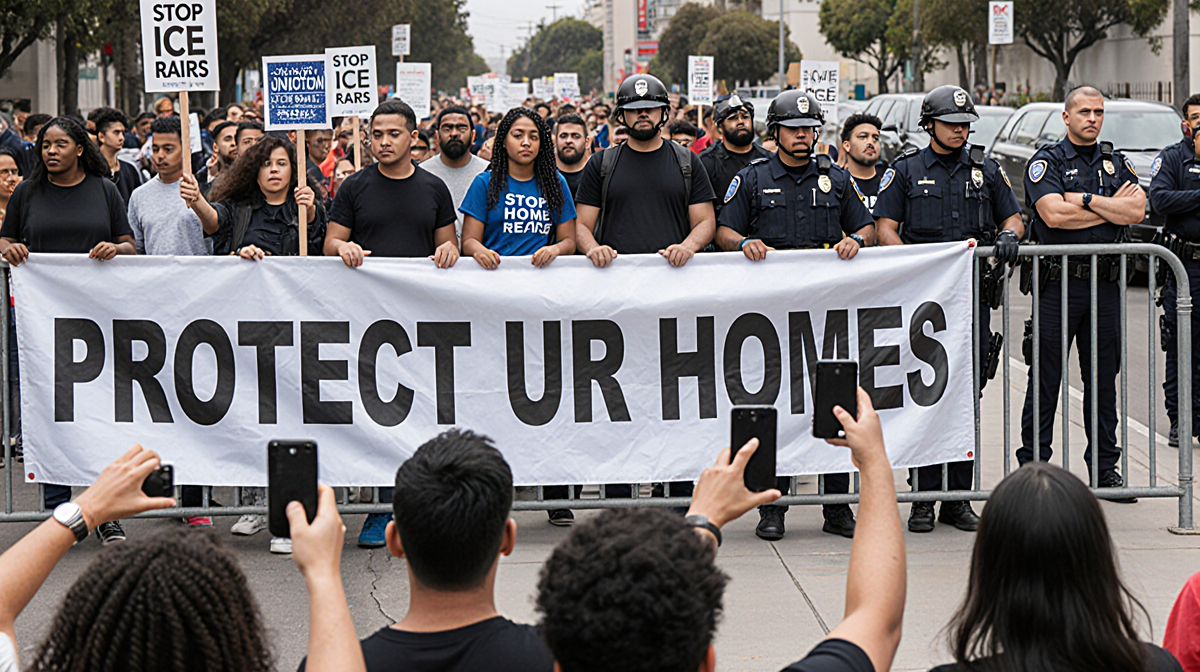
Legal and Public Backlash
Civil liberties advocates have condemned the policy as a direct violation of the Fourth Amendment. Protests erupted in Los Angeles after ICE began arresting individuals on June 6, a date that has become a flashpoint for anti-immigration demonstrations. DHS spokesperson Tricia McLaughlin has confirmed that administrative warrants are in use but has not disclosed how many homes have been entered.
- ACLU attorney Spencer Amdur said the policy “flatly violates the Fourth Amendment.”
- He added it is “part of a consistent pattern of trying to disregard clear legal limits.”
- Protesters in Los Angeles marched on June 6 in response to ICE arrests.
- Tricia McLaughlin stated that due process had already been given.
- She declined to provide details on frequency or locations.
- The policy is now referenced in ICE training materials.
- The Associated Press first reported the memo on Wednesday.
- The policy has prompted legal challenges in federal courts.
Implementation and Training
Charlie Wall, acting deputy director of ICE, was tasked with implementing the new policy. In June, he briefed officers in Los Angeles ahead of enforcement actions, marking a shift in operational tactics. The policy’s inclusion in training materials signals its institutional adoption.
- Charlie Wall is the acting deputy director of ICE.
- He briefed officers in Los Angeles in June.
- The briefing covered the new administrative warrant policy.
- Officers received updated training modules.
- The policy is now part of standard ICE training.
- The briefing coincided with a surge in arrests.
- ICE presence in Los Angeles sparked citywide protests.
- Training emphasizes compliance with removal orders.
Legal Context and DHS Opinion
The memo follows a March 2025 opinion from the Department of Homeland Security’s Office of the General Counsel. That opinion concluded that relying on administrative warrants does not violate the Constitution, the Immigration and Nationality Act, or immigration regulations. However, legal opinions are not settled law, and the policy remains contested.
- The March 2025 DHS opinion is a legal advisory.
- It states that administrative warrants are permissible.
- It does not constitute binding law.
- The memo reiterates the opinion’s conclusions.
- It specifies that officers must act after removal orders.
- It limits entry times to 6 a.m.–10 p.m.
- It requires reasonable use of force.
- The memo was shared with Senator Richard Blumenthal.
Presidential and Congressional Response
President Donald Trump acknowledged that federal agents “make mistakes sometimes” amid ongoing confrontations. He referenced the fatal shooting of Renee Nicole Good as part of the broader immigration enforcement context. Senator Blumenthal has expressed concern over the policy’s legality.
- President Trump said agents “make mistakes sometimes.”
- He referenced the shooting of Renee Nicole Good.
- The comment came after weeks of violent confrontations.
- Senator Richard Blumenthal received the memo.
- He questioned the policy’s constitutional validity.
- Congress has begun to review ICE enforcement tactics.
- The policy is under scrutiny by civil liberties groups.
- The administration faces mounting legal challenges.
Key Takeaways
The administrative warrant policy represents a significant shift in ICE enforcement, allowing officers to enter homes without judicial warrants under certain removal orders. The policy has drawn sharp criticism for violating Fourth Amendment rights and has led to protests and legal challenges. While DHS confirms active use, details on how often homes are entered remain undisclosed. The policy’s future hinges on ongoing legal scrutiny and congressional oversight.