At a Glance
- SpaceX plans a Starship V3 orbital test flight in early March 2026.
- The launch is the 12th test flight for the new version, following the 11th suborbital flight of V2 on October 13, 2025.
- Raptor 3 engines deliver 280 metric tons of thrust, up from 230 metric tons in Raptor 2.
Starship’s new version is a key step toward missions to the Moon and Mars. Elon Musk announced on X that the rocket will launch in six weeks, targeting the second week of March. The company has still to conduct extensive ground and flight tests before the vehicle can reach orbit.
Upcoming Launch
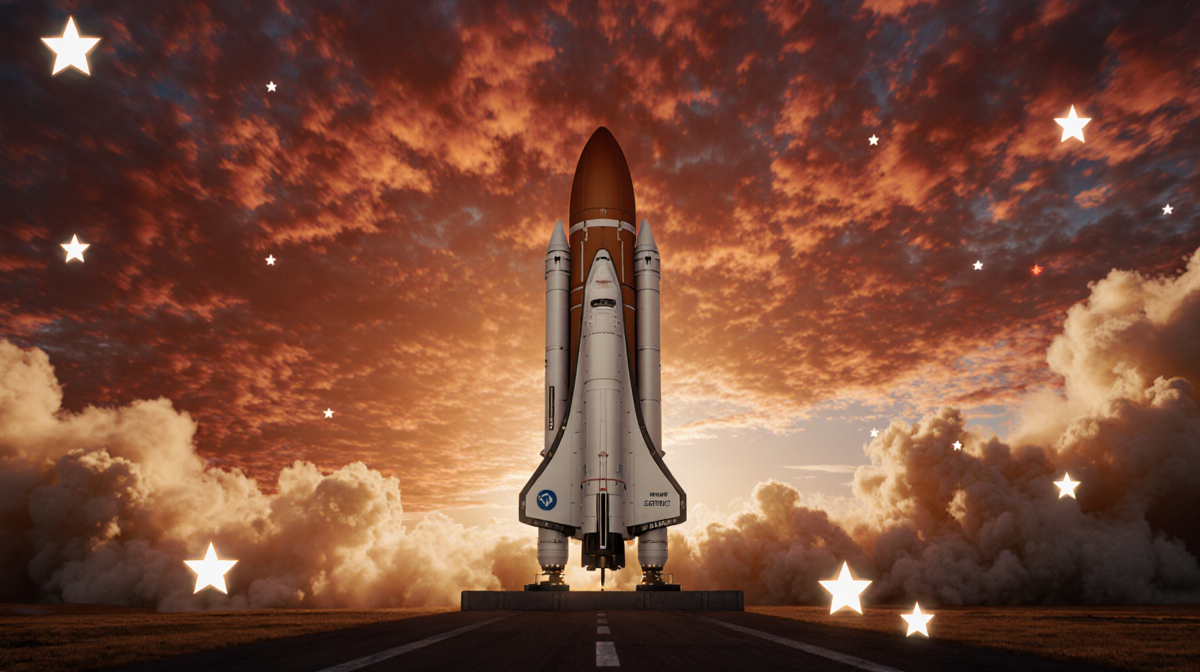
The 12th test flight is scheduled for the second week of March 2026. It will be the first time Starship V3 attempts an orbital trajectory. The launch site is Starbase in South Texas, where SpaceX previously stacked the Super Heavy booster for V2 tests.
- Pad readiness will occur six weeks after the announcement.
- The flight follows the 11th suborbital flight that ended on October 13, 2025.
- A Falcon 9 will lift 25 Starlink satellites to orbit, a routine launch that provides a staging area for Starship-related experiments.
Starship V3 Overview
Starship V3 is larger and more capable than its predecessor. It is about 5 feet taller, can carry additional propellant, and includes new docking adapters for in-orbit fuel transfer. The vehicle also incorporates the third-generation Raptor engines, which are lighter and have fewer parts.
| Feature | V2 | V3 |
|---|---|---|
| Height | 50 m | 55 m |
| Raptor Thrust | 230 metric tons | 280 metric tons |
| Propellant capacity | 120 t | 140 t |
| Docking adapters | None | New in-orbit transfer |
The upgrade also adds a ship-to-ship propellant transfer system, enabling refueling in space and extending the rocket’s reach beyond low Earth orbit.
Thermal Protection System
Starship uses black hexagon tiles for thermal protection. Photos from the Falcon 9 launch on Sunday showed the same tile pattern on the payload fairing. The tiles are designed to withstand the heat of re-entry and are a critical component of the vehicle’s design.
| Component | Description |
|---|---|
| Hexagon tiles | Black, reusable, protect against heat |
| Placement | Entire outer surface of Starship |
| Origin | Same pattern used on Falcon 9 payload fairing |
Raptor Engine Evolution
The third-generation Raptor engines bring several improvements over earlier versions. They produce 280 metric tons of thrust, are lighter, and contain fewer parts, which can reduce maintenance and increase reliability.
- Thrust rises from 230 to 280 metric tons.
- Weight is reduced compared to Raptor 2.
- The number of moving parts is smaller.
Propellant Transfer Capability
Starship V3 introduces a ship-to-ship propellant transfer system. The system allows the vehicle to receive fuel from a tanker or another Starship in orbit, enabling longer missions and payload flexibility.
- Refueling can occur after launch or during a mission.
- The system supports missions to the Moon and Mars.
- It reduces the need for large propellant tanks on the first stage.
Vehicle Mass & Performance
Starship V3’s mass is reduced relative to V2, while its thrust increases. The combination improves the vehicle’s thrust-to-weight ratio and overall efficiency.
- Mass is lower than the V2 configuration.
- Thrust-to-weight ratio is higher due to lighter engines.
- Performance gains support larger payloads.
Testing History
| Flight | Date | Outcome |
|---|---|---|
| 11th suborbital | October 13, 2025 | Successful |
| 12th orbital (planned) | March 2026 | Pending |
Starship V2 completed its two-year run with two consecutive successful flights late last year. Those flights followed a series of failures that ended in explosions, indicating a learning curve for the new version. Musk admitted in September 2025 that “pretty much everything changes on the rocket,” said Elon Musk.
Earlier V2 Flights
- Several flights before the 11th ended in failures.
- Multiple explosions occurred during ascent or re-entry.
- Each failure prompted design reviews and engineering updates.
Flight Sequence
The launch sequence for Starship V3 will involve a first stage, a second stage, and a controlled re-entry. The vehicle will separate, re-enter, and land for reuse.
- First stage ignites and propels the vehicle upward.
- Second stage provides final velocity for orbit insertion.
- Controlled re-entry allows the vehicle to return to Earth.
Mission Architecture
With its new capabilities, Starship V3 will support a broader mission architecture. The docking adapters and refueling system allow the rocket to capture payloads, transfer fuel, and continue to deeper destinations.
- Docking adapters enable payload capture and fuel transfer.
- In-orbit refueling extends range beyond low Earth orbit.
- Increased propellant capacity supports heavier spacecraft.
Strategic Significance
The orbital test is a critical milestone for the company’s lunar and Martian plans. Success will confirm the vehicle’s ability to reach orbit and validate the new engine and thermal protection systems. It also demonstrates the feasibility of in-orbit refueling for long-range missions.
Company Timeline
SpaceX’s Starship program has progressed through multiple test flights, each building on lessons learned from the previous mission.
- 2023: First test flights focused on basic flight and landing.
- 2024: Subsequent flights introduced improved guidance and landing systems.
- 2025: The 11th suborbital flight achieved a successful orbital insertion attempt.
Launchpad Footage
Observations from the Falcon 9 launch show the black hexagon tiles on the payload fairing, indicating the same thermal protection design used on Starship. The footage highlights the robustness of the tile system under high-temperature re-entry.
- Black hexagon tiles are visible on the Falcon 9 payload fairing.
- The same tile pattern appears on Starship’s outer surface.
- The footage confirms the tile system’s effectiveness during re-entry.
Key Takeaways
- Starship V3’s orbital test is set for early March 2026.
- Raptor 3 engines provide a significant thrust increase.
- The vehicle’s new design supports in-orbit refueling and longer-range missions.