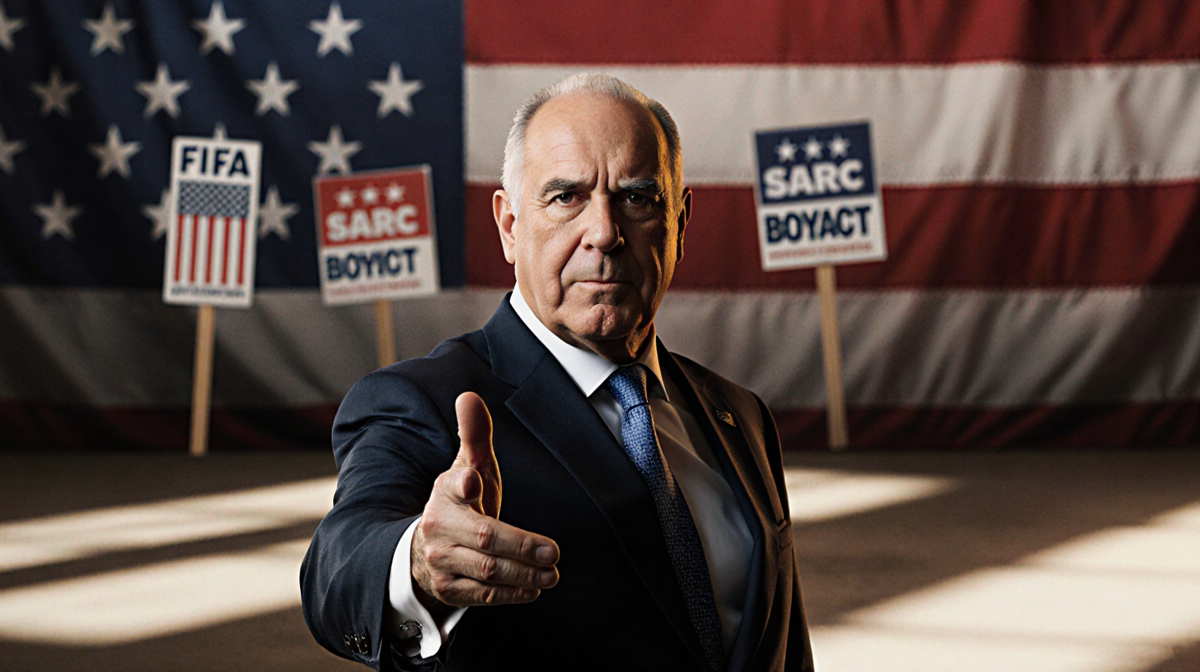
At a Glance
- Sepp Blatter calls for a fan boycott of U.S. World Cup matches.
- He cites President Donald Trump’s domestic and foreign policies as the cause.
- Travel bans could bar fans from several qualifying nations.
Why it matters: A boycott could reduce attendance and revenue for the co-hosted tournament.
Sepp Blatter, the former FIFA president, announced on Monday that fans should avoid watching World Cup games in the United States because of President Donald Trump’s conduct at home and abroad. The former soccer chief echoed comments from Swiss attorney Mark Pieth, who has long warned about the suitability of the U.S. as a host.
Blatter’s Call to Action
In a post on X, the former FIFA head quoted Pieth and added his own endorsement of the boycott. He said, “I think Mark Pieth is right to question this World Cup.” The message was aimed at fans who might travel to the U.S. for the June 11-July 19 tournament.
Blatter’s statement was a direct challenge to the U.S. as a host nation. He highlighted the country’s policies on immigration, travel bans, and its stance on Greenland, all of which he believes undermine the spirit of the World Cup.
Pieth’s Influence
Mark Pieth, a Swiss attorney specializing in white-collar crime and anti-corruption, chaired FIFA’s Independent Governance Committee a decade ago. In a recent interview with the Swiss newspaper Der Bund, Pieth warned fans: “If we consider everything we’ve discussed, there’s only one piece of advice for fans: Stay away from the USA! You’ll see it better on TV anyway. And upon arrival, fans should expect that if they don’t please the officials, they’ll be put straight on the next flight home. If they’re lucky.”
Pieth’s remarks carry weight because of his long-standing role in overseeing FIFA reform. His comments helped shape Blatter’s stance, and both men see the U.S. policies as a threat to fair play and safety.
Travel Ban Fallout
The Trump administration’s travel restrictions have already disrupted fan plans. Two weeks ago, a new ban would have barred people from Senegal and Ivory Coast from following their teams unless they already had visas. The administration cited “screening and vetting deficiencies” as the reason for the suspension.
Fans from Iran and Haiti, also qualified for the World Cup, are now facing the same restrictions. The ban’s first iteration already listed those countries, and the latest update includes additional nations.
| Country | Status | Notes |
|---|---|---|
| Senegal | Banned | Unless visa already secured |
| Ivory Coast | Banned | Unless visa already secured |
| Iran | Banned | Included in first iteration |
| Haiti | Banned | Included in first iteration |
These restrictions have raised concerns among national federations about the feasibility of attending matches in the U.S. and Canada.
FIFA’s Ticket Policy
Despite the controversy, FIFA has announced that $60 tickets will be made available for every game at the tournament in North America. The money will go to the national federations whose teams are playing. This policy is intended to offset travel costs for fans who might otherwise be unable to attend.
The $60 ticket price is a small fraction of typical travel and accommodation expenses, but it signals FIFA’s attempt to keep the tournament accessible even amid travel bans.
Broader Reactions
The German Football Association’s vice president, Oke Göttlich, told the Hamburger Morgenpost that the time had come to seriously consider a boycott. His statement underscores the growing frustration among soccer officials.

The United States is co-hosting the World Cup with Canada and Mexico. The tournament will run from June 11-July 19, and the U.S. government’s policies on immigration enforcement and travel bans have become a central point of contention.
Key Takeaways
- Sepp Blatter has called for a boycott of U.S. World Cup matches.
- The call is rooted in President Trump’s policies on immigration, travel bans, and foreign affairs.
- Travel bans could prevent fans from Senegal, Ivory Coast, Iran, and Haiti from attending.
- FIFA will offer $60 tickets to national federations to help offset costs.
- German soccer officials have also voiced support for a boycott.
The debate continues as the World Cup approaches, with fans and officials weighing the costs and benefits of attending matches in the United States.