Introduction
The European Space Agency’s researchers have used an artificial-intelligence system to sift through the Hubble Space Telescope’s 35-year archive and spot 1,400 unusual objects, 800 of which were never catalogued before. The discovery showcases how machine learning can unlock hidden treasures in decades-old data.
At a Glance
- 1,400 anomalous objects identified in Hubble images.
- 800 previously unknown to science.
- AI tool scanned nearly 100 million image cutouts in just 2.5 days.
- 1.7 million observations made by Hubble to date.
- Why it matters: AI can accelerate discoveries in existing and future astronomical surveys.
A Deep Dive into Hubble’s Archive
Hubble has been continuously surveying the cosmos for more than three decades, producing over 1.7 million observations. These images form a data goldmine, but manually searching for rare phenomena-such as colliding galaxies, gravitational lenses, or ring galaxies-has been a daunting task.
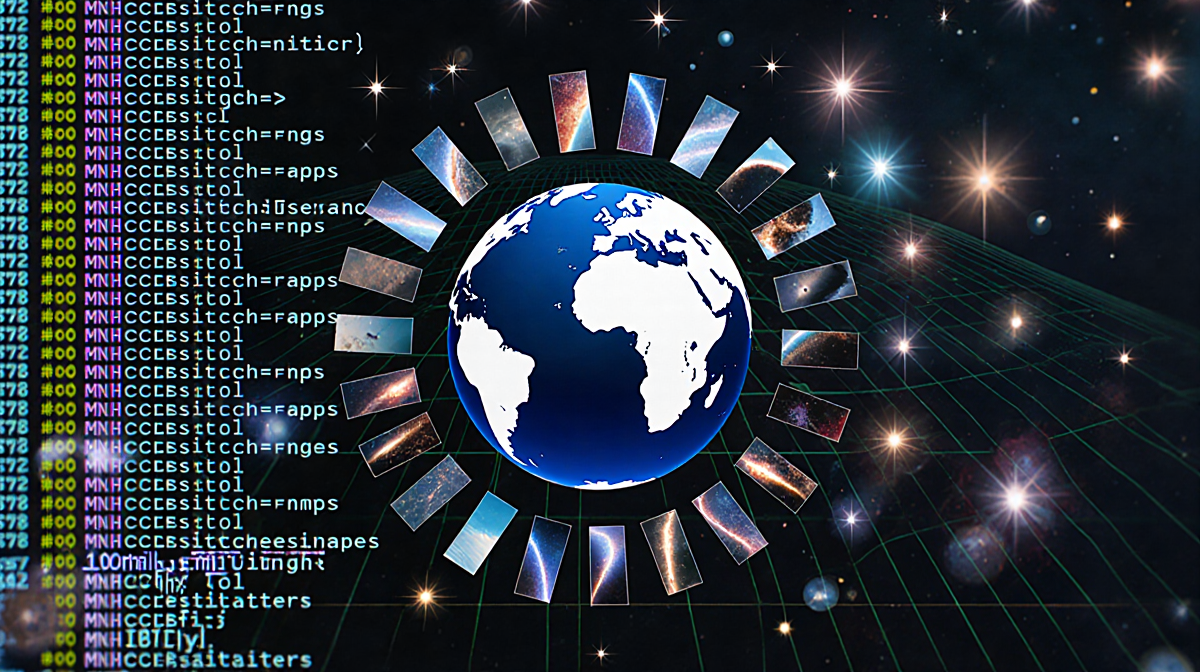
To overcome this challenge, the team turned to AI. They developed a neural-network model, AnomalyMatch, trained to recognize patterns that deviate from the norm. The system combed through almost 100 million image cutouts, flagging objects that stood out.
| Metric | Value |
|---|---|
| Total images examined | ~100 million |
| Total anomalous objects | 1,400 |
| Previously unknown objects | 800 |
| Known anomalous objects | ~600 |
The AI Tool Behind the Discovery
AnomalyMatch is a neural network that mimics the human brain’s pattern-recognition abilities. It was designed to sift through massive datasets quickly, highlighting candidates for astronomers to review.
> “This is a powerful demonstration of how AI can enhance the scientific return of archival datasets,” said Pablo Gómez, an ESA data scientist, in a NASA statement.
The tool’s efficiency is evident: it processed the data in 2.5 days, a fraction of the time it would take a human team.
Key Features of AnomalyMatch
- Pattern recognition: Identifies objects that differ from typical galaxies or stars.
- Rapid processing: Completes scans in days rather than months.
- Scalable: Can be applied to future surveys like ESA’s Euclid or the Vera C. Rubin Observatory.
What the Anomalies Tell Us
Most of the 800 new objects are galaxies engaged in mergers or interactions, creating unusual shapes or trailing tails of stars and gas. Other findings include:
- Gravitational lenses that bend spacetime.
- Galaxies with massive star clumps.
- Jellyfish galaxies with gaseous “tentacles.”
- Planet-forming disks that look like hamburgers or butterflies when viewed edge-on.
A handful of objects defied classification entirely, offering fresh opportunities to study previously unseen cosmic structures.
> “The discovery of so many previously undocumented anomalies in Hubble data underscores the tool’s potential for future surveys,” added Gómez.
Future Horizons
The team hopes AnomalyMatch will unlock discoveries from upcoming datasets. ESA’s Euclid mission and the National Science Foundation’s Vera C. Rubin Observatory will generate even larger volumes of data. Advanced AI techniques will be essential to keep pace.
> “Combing through the cosmos with AI could open the door to a whole new world of scientific discovery,” said David O’Ryan, a research fellow at ESA.
The success of AnomalyMatch demonstrates that neural networks can maximize the value of archival data, turning decades of observations into a continuous source of new insights.
Key Takeaways
- AI can rapidly identify rare astronomical objects in vast archives.
- Hubble’s 35-year dataset still harbors hidden gems.
- Neural-network tools like AnomalyMatch are ready for next-generation surveys.
- The approach opens pathways to discover entirely new classes of cosmic phenomena.
The collaboration between ESA scientists and AI developers marks a milestone in how we extract knowledge from existing data, paving the way for future discoveries in astronomy.