At a Glance
- Jessica Mallios presents a three-channel video piece that explores women lighthouse keepers.
- The exhibit, titled Signaling Light, blends film, charcoal rubbings and archival documents.
- It highlights the quiet labor of keeping a light burning and the legacy of women in a male-dominated field.
- Why it matters: It brings forgotten histories into a sensory, immersive experience that challenges gendered narratives in maritime heritage.
At the Women & Their Work gallery in Austin, artist Jessica Mallios unveiled Signaling Light, a three-channel video installation that turns the history of women lighthouse keepers into an intimate, sensory experience. The piece weaves interviews, charcoal rubbings of spiral stair treads and archival documents into a layered narrative that foregrounds the labor and resilience of these women. The exhibit invites viewers to step into the physical space of a lighthouse and feel the weight of its maintenance.
Exhibit Overview
The installation occupies a space that feels both cavernous and claustrophobic, with a semicircular fabric wall that bisects the room and projects two portholes. One porthole shows an endless, undulating sea; the other alternates between a neighboring home, a sidewalk, and a line of trees. The central screen displays a looping video of Sally Snowman, the recently retired keeper of Boston Light, speaking from the top of the tower.
The Three Mediums
- Asynchronous film compiled over five years of interviews with women lighthouse keepers and their descendants.
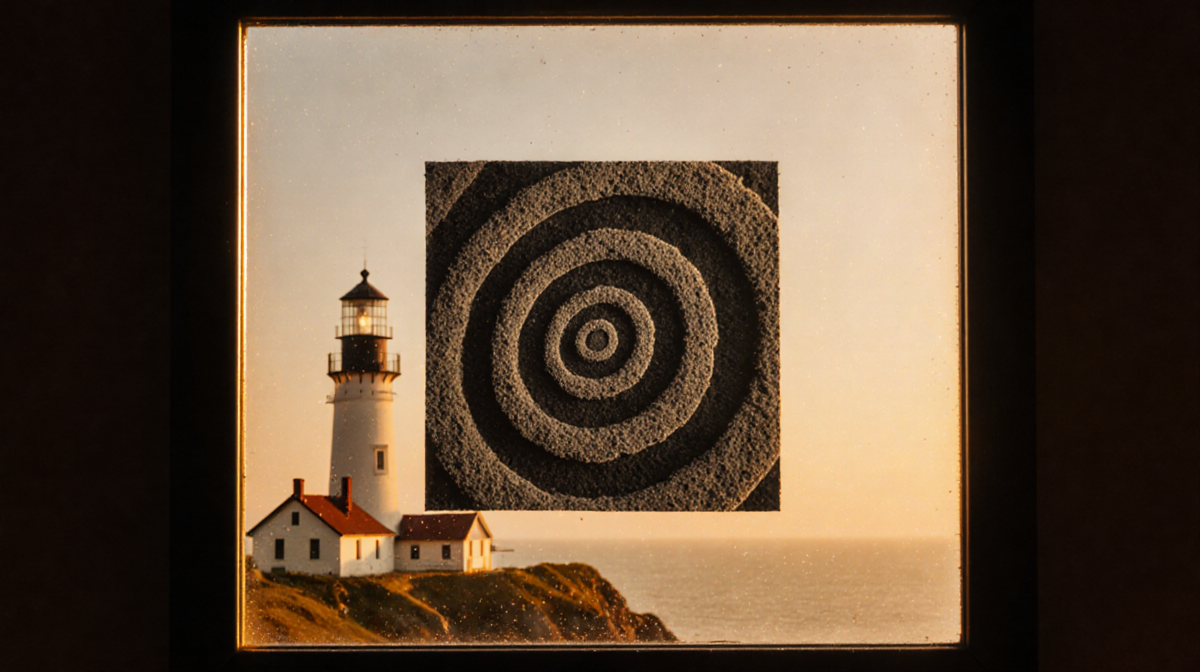
- Charcoal rubbings of spiral stair treads found within the round structures, displayed in glass-less frames.
- Archival documents that attest to the keepers’ livelihoods and the historical context of their work.
Each medium is layered to create a tactile sense of the lighthouse environment. The charcoal rubbings show worn white paper with fingerprints and shoe-tread marks, while gelatin prints capture the inverse black-on-white renditions. The documents add a textual record that complements the visual narrative.
Sally Snowman’s Story
Sally Snowman, who has spent years cleaning and maintaining Boston Light, appears in a short clip where she says, ‘I am just in total awe,’ and describes the prism colors and rotating light. She gestures to the light’s personality, noting how her hands-on maintenance contrasts with today’s technological immediacy. Her testimony anchors the exhibit’s exploration of labor and light.
Women Lighthouse Keepers
The film also features voices from other women keepers. Lucy Ball, granddaughter of Maine’s Eagle Island keeper, reflects in a voice-over, ‘I like the term keepers, because women are such keepers, whether it’s keeping the light burning or keeping the family together and alive or keeping stories going.’ The narrative highlights discrimination and underestimation from government and male partners. The exhibit’s archival documents preserve this legacy of resilient vigilance.
Key women represented include:
- Sally Snowman – Boston Light
- Lucy Ball – Eagle Island, Maine
- Harriet Gill – Port Isabel, Texas
- Hannah Ham – Port Isabel, Texas
Legacy and Representation
A Texan lighthouse, Port Isabel, appears in the film. Once tended by Harriet Gill and later by Hannah Ham, the publicly accessible white tower is now a museum. Mallios captures LED lights that dwarf the tower’s original brightness, rendering it placeless-a last vestige of a different time amid a bustling tourist strip. The installation thus returns these hallowed tools to their peculiar, scrupulous pasts.
The exhibit runs through March 12, offering visitors a chance to experience the layered history before it closes.
Key Takeaways
- The piece uses sensory detail-light, sound, texture-to convey the routine of lighthouse maintenance.
- It foregrounds women’s often overlooked contributions in a male-dominated profession.
- The combination of film, rubbings, and documents creates a multi-modal narrative that feels both intimate and expansive.
- The exhibit invites reflection on how labor, gender, and technology intersect in historical contexts.
January 30 • 2026