The Justice Department has just released a portion of the Jeffrey Epstein files, a move that satisfies a Friday deadline set by the recently signed Epstein Files Transparency Act.
Under the Act, Congress granted the DOJ 30 days to provide the public with the documents, and the department has complied by making a sizable batch available online.
The released materials include a collection of photographs and a range of documents that have been fully redacted to remove personal details.
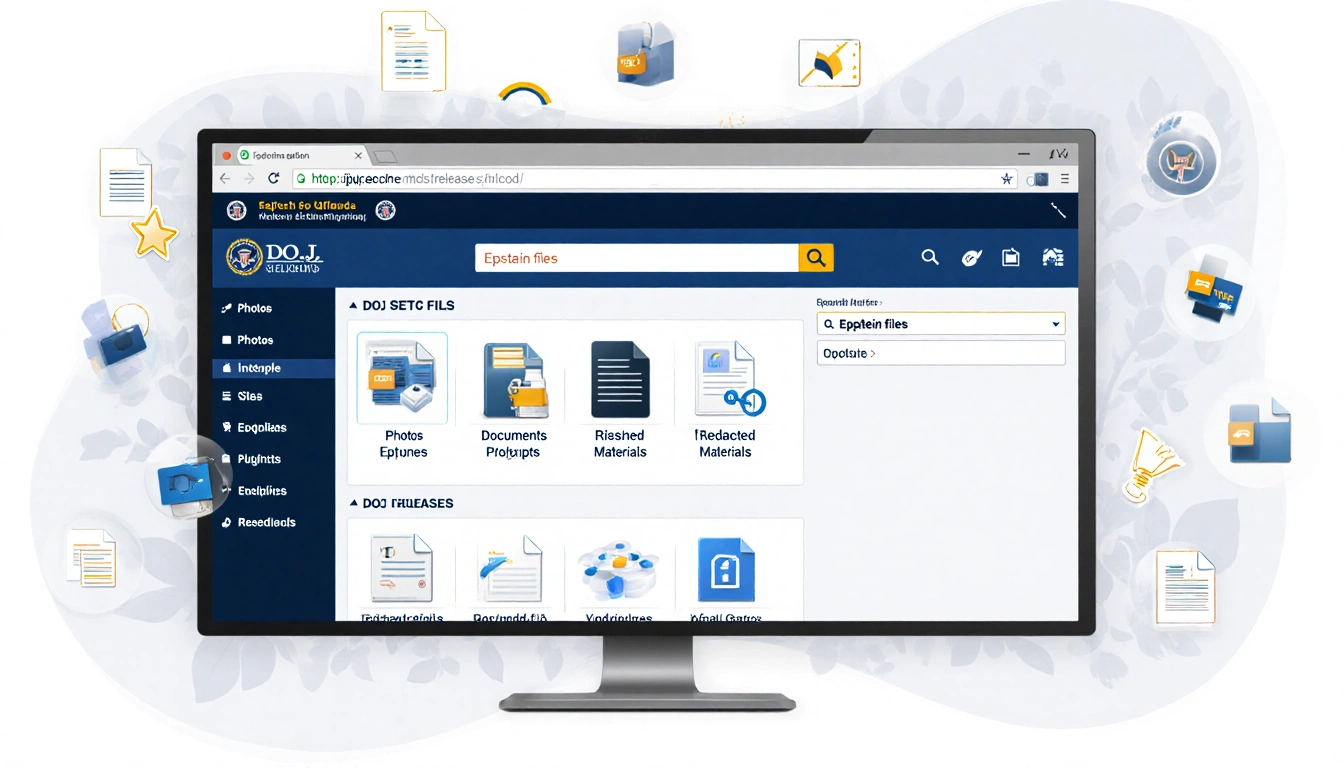
Users can find the files on the DOJ’s official website, where the files are organized into four primary categories: Court Records; DOJ Disclosures, Including Disclosures Under the Epstein Files Transparency Act (H.R. 4405); Freedom of Information Act (FOIA); and House Committee on Oversight and Government Reform Disclosures.
Each category further breaks down into subcategories, and each subcategory contains several PDF files that hold documents, photos, criminal records, and other related materials.
The DOJ’s webpage states that ‘all reasonable efforts have been made to review and redact personal information pertaining to victims, other private individuals, and protect sensitive materials from disclosure.’
However, the page also acknowledges that ‘because of the volume of information involved, this website may nevertheless contain information that inadvertently includes non-public personally identifiable information or other sensitive content, to include matters of a sexual nature.’
Officials encourage anyone who believes that a piece of information that should not have been posted has appeared to contact the department; the DOJ said it will ‘take steps to correct the problem as soon as possible.’
The website will be updated if the DOJ identifies additional documents that are ready for release.
Users attempting to access the files may encounter a notification that they are in a waiting queue due to ‘extremely high volume of search requests at this time.’ After a brief wait, a musical cue will signal that the user is being directed to the ‘Epstein Library.’
The Act itself was passed by Congress with near unanimous support, except for a single opposing vote, and was signed into law by President Trump last month.
Despite the deadline, the DOJ has indicated that the Friday release is only the first stage of a larger effort.
Deputy Attorney General Todd Blanche told reporters that the department would release ‘several hundred thousand’ documents on Friday and that ‘over the next couple weeks, I expect several hundred thousand more.’
Attorney General Pam Bondi described Friday’s batch as the ‘first phase’ and noted that not all documents would be made available immediately.
Some members of Congress have criticized the administration, claiming it has failed to comply fully with the transparency law by withholding additional files.
Representative Thomas Massie (R-Ky.)-who, along with Representative Ro Khanna (D-Calif.), urged the House to approve the files’ release-posted a screenshot of the bill on X, showing the text that specifies the DOJ’s 30-day deadline.
Key Takeaways
- The DOJ has released a portion of Epstein files, including photos and redacted documents, to meet a Friday deadline.
- The materials are available on the DOJ website under four main categories and many subcategories.
- Officials have acknowledged that some sensitive content may still appear and have invited the public to report any errors.
The release marks a significant step toward transparency, but the full set of documents will continue to arrive in the coming weeks as the DOJ fulfills its statutory obligations.