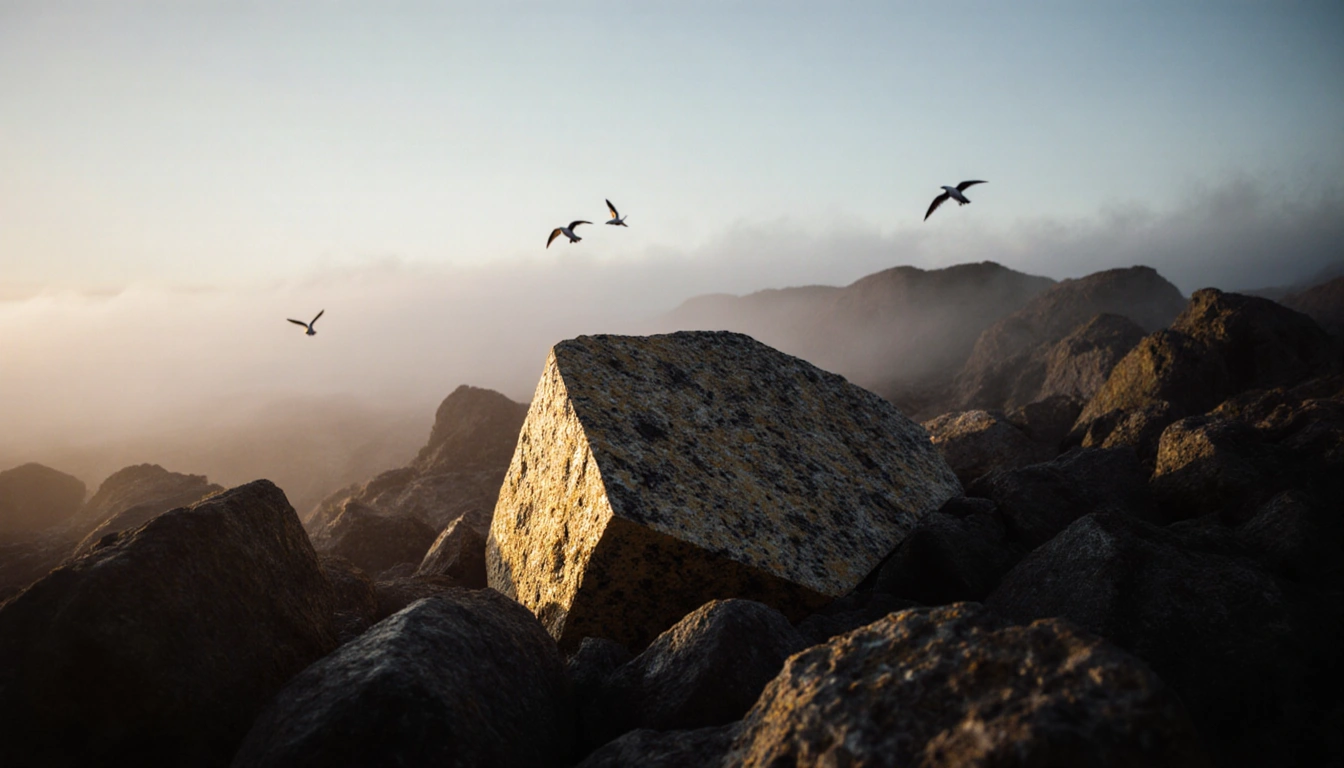
If you’re looking to strike gold – silver or bronze, too – look to Ailsa Craig.
The Granite Island
Ailsa Craig sits 10 miles off the southwest coast of Scotland, an uninhabited isle that is the source of the super-dense granite used to make curling stones for the Winter Olympics. The island, rising 1,110 feet (340 m) above sea level and stretching 2 miles (3.2 km) around, was formed by volcanic activity millions of years ago. According to the Scottish Geology Trust, it is composed almost entirely of microgranite whose “essentially unflawed nature” makes it ideal for the sport.
Jim English, co-owner of Kays Curling, explained that the granite must be more than just any rock. “It’s not just a case of landing a boat and then looking for granite. There’s a particular type of granite we’re looking for,” he said while standing beside a 19th-century lighthouse that no longer has a keeper. “We look for ones that have got really tight surface pattern.”
The stones themselves are built from two varieties of this granite. The common green granite forms the body and striking band, while a blue hone granite forms the running surface. As poet John Keats once described the island, it is a “craggy ocean pyramid,” a fitting image for the stone that travels across the ice to win medals.
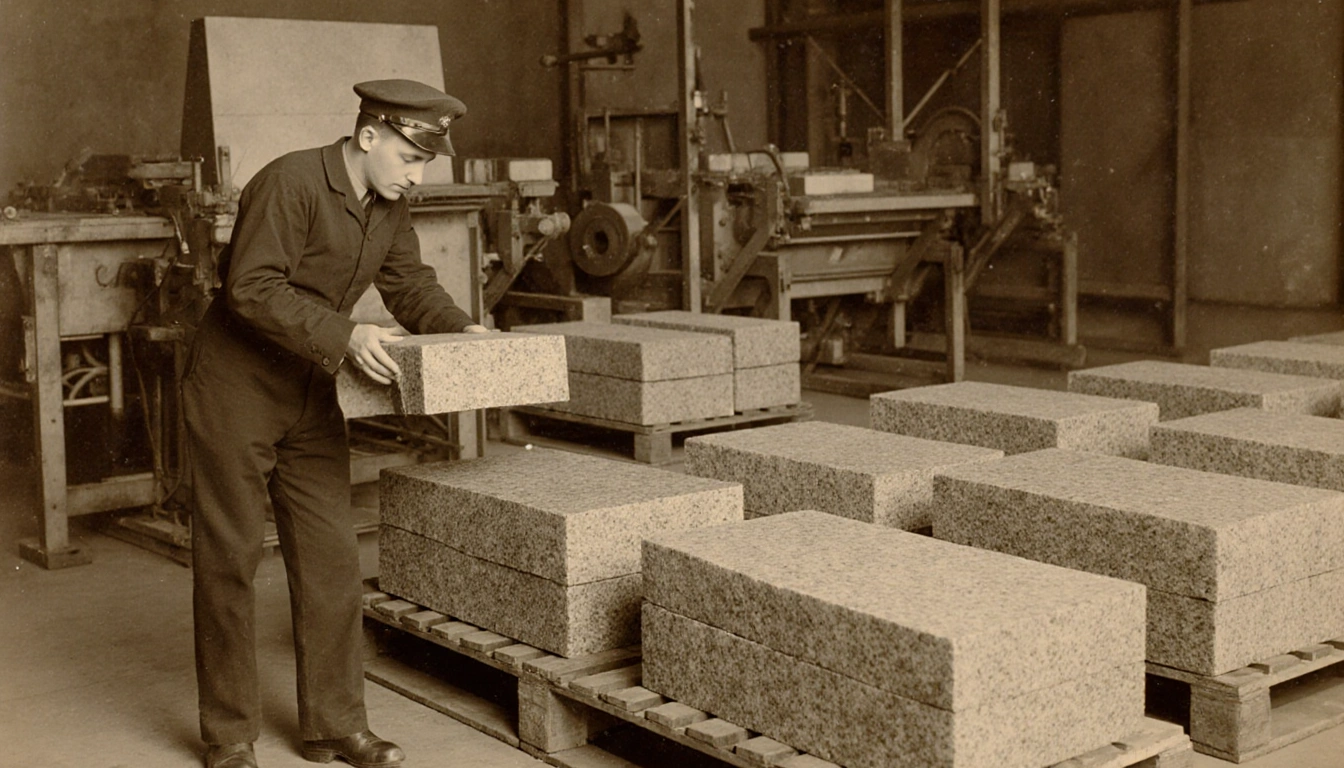
Kays Curling: From 1924 to the Present
Founded in 1851, Kays produces its stones from a shop in Mauchline near Ayr. The company holds the only license to harvest granite from Ailsa Craig, an island owned by Lord David Thomas Kennedy, 9th Marquess of Ailsa. Kays’ history with the Olympics dates back to the first winter edition in 1924 in Chamonix, France. Though curling was initially considered an exhibition event, it was later confirmed as an official competition. The company has made stones for every Games since curling returned as a medal sport in Nagano 1998.
“We can argue that it’s probably won every gold, silver and bronze medal since the sport became a medal sport back in 1998,” English said. Kays has supplied all the curling stones for the Milan Cortina Winter Games, and its 2006 Turin Olympics stones were the first complete set made entirely from Ailsa Craig granite.
Harvesting and Processing the Granite
The harvesting process can take years between cuts. The common green granite falls off naturally, so Kays simply picks boulders from the site. These boulders weigh between 6 and 10 tons. The blue hone granite, on the other hand, is dislodged from the cliff face. Engineers drill and insert a gas charge to break the rock along its natural cracks; those boulders weigh under 2 tons, allowing fewer harvests for larger quantities.
Once lifted into containers, the boulders are ferried to Girvan Harbour. Galloway Granite slices the boulders and cuts round “cheeses” from them before sending the pieces back to Kays. The common green granite forms most of the stone, including the striking band around the middle. A hole is drilled through the center of the stone, which weighs an average of 42 lb (19 kg). The blue hone insert is glued in place, and the handle is attached.
A double-insert stone, with blue hone on both sides, costs 750 pounds ($990) or 12,000 pounds ($15,860) for a set of 16. The single-insert stone costs 704 pounds ($930). Operations manager Ricky English, Jim’s son, explained the material’s resilience: “The granite itself has got elasticity properties in it. In a collision, energy is both absorbed and released, so the stone doesn’t split,” he said. “The blue hone granite is essentially waterproof, making it perfect for the running surface. You can’t get this granite anywhere else in the world but Ailsa Craig,” he added.
Protecting the Island’s Wildlife
Steps are taken on the island to protect a large colony of gannets and some gray seals. Rat traps are set to ensure that boats from the mainland – the trip takes just over an hour – don’t reintroduce rodents to the island. These measures preserve the delicate ecosystem while allowing the granite to be harvested sustainably.
Global Reach and Market Growth
Kays produces between 1,800 and 2,000 stones per year. Canada remains its biggest market, while China, Japan and South Korea are increasing their orders. “The market in Asia seems to be growing quite a bit,” Ricky English said. “The 2022 Olympics (in Beijing) has maybe just gave it that wee push over there.”
The company has also sent stones to less-obvious curling spots, such as Qatar and Antarctica, where a travel company used curling as part of a luxury experience. Scottish Curling traces the sport’s local roots back to 1540 in Paisley Abbey, and curling is about to launch its first professional league, the Rock League, after the Milan Cortina Winter Olympics. The league will feature events in the United States, Canada and Europe.
Key Takeaways
- Ailsa Craig’s microgranite is the sole source of the granite used in Olympic curling stones.
- Kays Curling has produced stones for every Winter Games since 1998, with a history dating back to 1924.
- The company’s global market is expanding, especially in Asia, and it also supplies curling stones for niche destinations like Qatar and Antarctica.
Ailsa Craig may be a small, uninhabited island, but its granite powers the sport that captivates millions at the Winter Olympics. From the careful harvesting of green and blue hone boulders to the precise assembly of each stone, Kays Curling ensures that every curling stone carries a piece of Scotland’s geological heritage onto the world’s ice rinks.