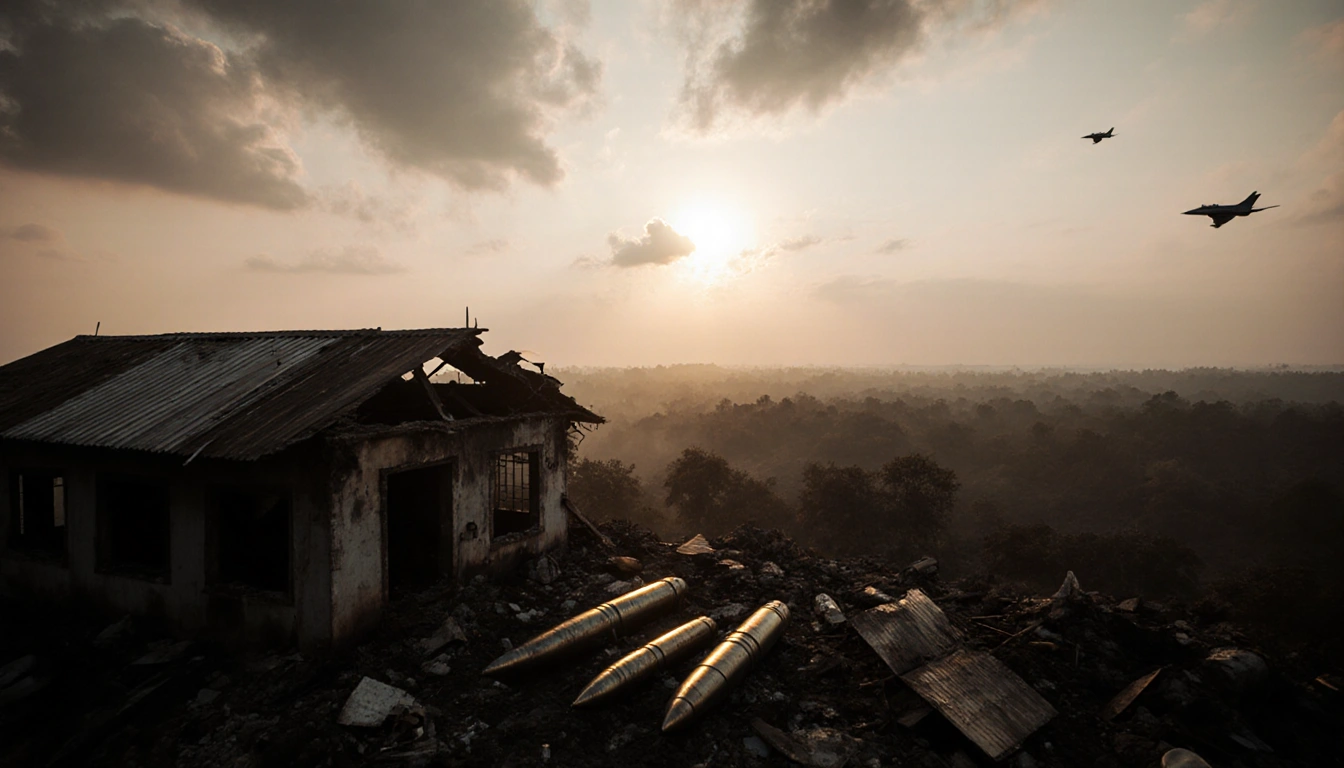
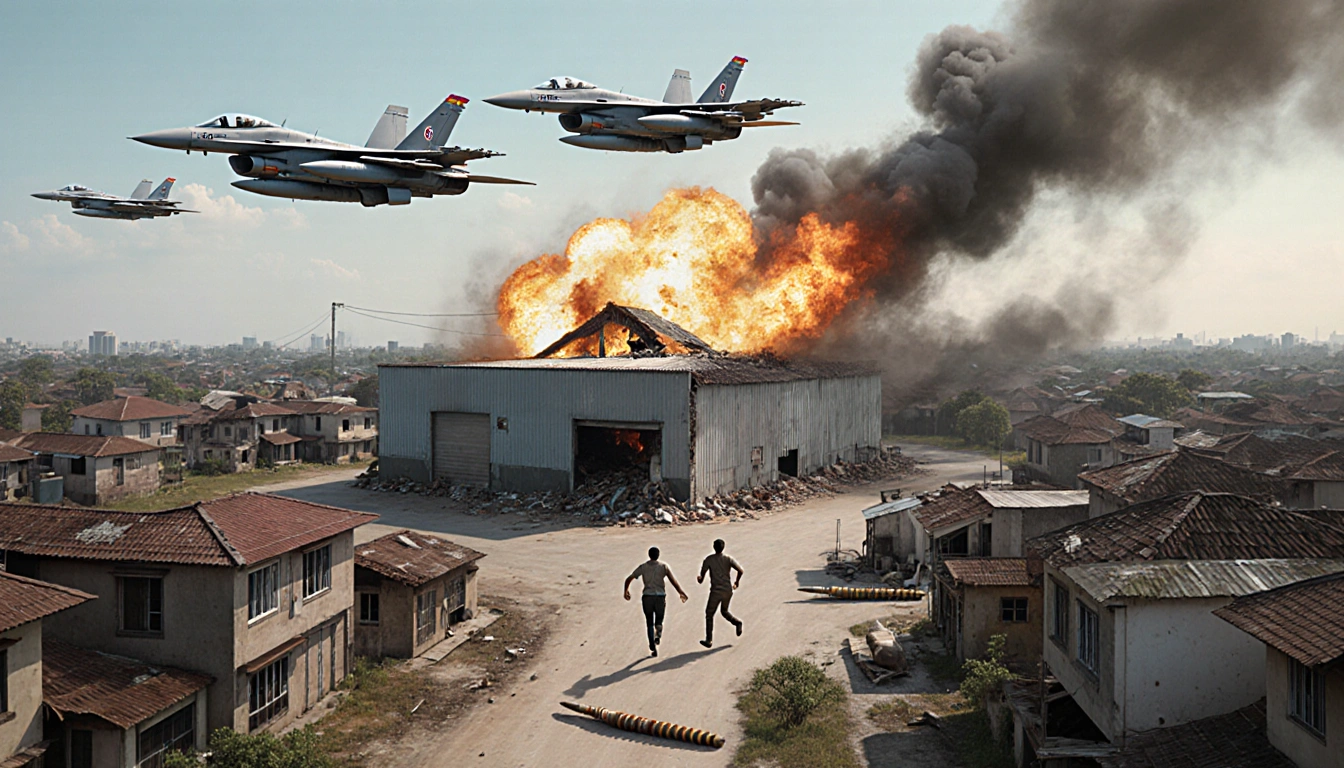
On Thursday, Thailand carried out additional airstrikes on Cambodia, striking a warehouse that stored BM-21 rockets used in the ongoing border war that erupted on Dec. 8.
Background of the Border Conflict
Since the border skirmish that wounded two Thai soldiers on Dec. 7, fighting has intensified along the disputed frontier. Both Thailand and Cambodia claim the same patches of land, including areas that contain ancient temple ruins damaged by recent clashes. Each side accuses the other of using the ruins as military bases, a claim that has fueled the conflict.
Latest Airstrikes and Targeted Warehouse
Thai F-16 fighter jets targeted a warehouse in Poipet, a key trade hub on the northwestern border. The strike dropped three bombs on a civilian residential neighborhood, damaging part of the warehouse and slightly injuring two civilians. Thai Air Force spokesperson Air Marshal Jackkrit Thammavichai said the targeted warehouse was attacked because it was used to store BM-21 rockets, and every effort was made to avoid injuring civilians.
Information Minister Neth Pheaktra later confirmed a second bombing hit Serei Sophaon, 46 kilometers east of Poipet in Banteay Meanchey province. Thailand acknowledged the Poipet bombing but claimed the target was on the outskirts, not the city center, as Cambodia had suggested.
Casualties and Evacuation Numbers
Media reports from Thailand list 21 soldiers killed since Dec. 8. Thai officials say one civilian died directly from combat, with 20 others dying in circumstances related to the conflict, such as stress during evacuation. Cambodia’s Interior Ministry reports 18 civilians killed and 79 injured in the same period. Cambodia has not announced military deaths, while Thailand estimates more than 200 Cambodian soldiers killed.
Displacement and Humanitarian Impact
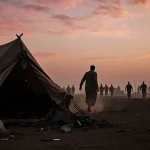
Hundreds of thousands of residents on both sides have fled to temporary displacement camps. Poipet, normally a bustling trade center, has been largely evacuated since the fighting began. The city’s evacuation has left many civilians without access to essential services, increasing the urgency for humanitarian assistance.
Diplomatic Efforts and Ceasefire Attempts
In July, a five-day conflict ended with a ceasefire promoted by U.S. President Donald Trump. Malaysia brokered the agreement, and Trump applied pressure by threatening to withhold trade privileges. The ceasefire was formalized in detail in October at a regional meeting in Malaysia that Trump attended.
Last week, Trump announced that Thailand and Cambodia had agreed to renew the ceasefire at his urging. Thai Prime Minister Anutin Charnvirakul denied any commitment, while Cambodia announced it was continuing to fight. Malaysia’s Prime Minister Anwar Ibrahim has kept pushing for peace, and China, a close ally of Cambodia, said it was sending a special envoy to both countries this week to seek an end to the fighting.
Ongoing Hostilities and Claims of Self-Defense
Each side blames the other for initiating the fighting and claims to be acting in self-defense. The conflict has spread to several fronts, with Thailand conducting airstrikes and Cambodia firing thousands of medium-range BM-21 rockets from truck-mounted launchers that can fire up to 40 rockets at a time.
Key Takeaways
- Thailand’s latest airstrikes targeted a warehouse storing BM-21 rockets in Poipet.
- Casualties include 21 Thai soldiers, 18 Cambodian civilians, and over 200 Cambodian soldiers estimated by Thailand.
- Diplomatic efforts by the U.S., Malaysia, and China continue, but a lasting ceasefire remains elusive.
The conflict remains volatile, with both sides continuing to exchange fire while international actors push for a negotiated settlement. The situation underscores the fragile security dynamics along Southeast Asia’s borders and the humanitarian toll of unresolved territorial disputes.
The border region has long been a flashpoint, with both governments citing historical claims to the land. Archaeological surveys have revealed temple ruins that date back centuries, and the recent shelling has further damaged these cultural sites, raising concerns among preservationists.
The Thai F-16 jets reportedly carried precision-guided munitions aimed at the warehouse, a target that had reportedly stored thousands of BM-21 rockets. The strike was described by Thai officials as a targeted operation intended to reduce Cambodia’s artillery capabilities.
Cambodian soldiers have responded by firing BM-21 rockets from truck-mounted launchers that can launch up to 40 rockets in a single salvo. The artillery barrage has targeted Thai border towns, causing significant damage and prompting further evacuations.
International observers have called for a ceasefire and a diplomatic solution, citing the humanitarian crisis unfolding along the border. Human rights groups report that many civilians are trapped in the conflict zone, with limited access to medical care.
The United Nations has urged both sides to refrain from further escalation and to allow humanitarian aid to reach affected communities. The UN spokesperson emphasized the need for a rapid de-escalation to prevent additional loss of life.
Meanwhile, the Thai government has reiterated its commitment to protecting its territory, while Cambodian officials insist they are defending their sovereignty. Both governments maintain that their actions are defensive in nature.
With the conflict still ongoing, the international community watches closely, hoping for a negotiated settlement that respects both nations’ territorial claims and safeguards civilians.
The situation remains fluid, and any shift in the balance of power could alter the trajectory of the conflict. Analysts warn that prolonged fighting could destabilize the broader region.
As the ceasefire negotiations continue, the fate of thousands of displaced civilians hangs in the balance, underscoring the urgent need for a comprehensive peace process.
In the meantime, both sides have increased patrols along the border, and the Thai military has deployed additional F-16s to the region. The Cambodian army has also mobilized artillery units in preparation for potential escalation.
The international community, including the United Nations and ASEAN, has called for restraint and urged both governments to engage in dialogue. The ASEAN summit scheduled for next month aims to address the crisis.
The Thai side has highlighted the strategic importance of the Poipet corridor, which serves as a major trade link between the two countries. Disruption of this corridor has significant economic implications.
Cambodia’s response includes strengthening border defenses and conducting joint patrols with local militia. The government claims these measures are necessary to prevent infiltration by hostile forces.
The conflict’s escalation has drawn international attention, with several countries expressing concern over potential spill-over effects in the region. Diplomatic channels remain open, but progress has been slow.
As of now, no definitive ceasefire agreement has been signed, and both sides continue to prepare for further military actions. The international community remains vigilant, hoping for a resolution that prevents further loss of life.
The situation remains highly dynamic, and any change in the status quo could trigger a rapid escalation. Stakeholders continue to monitor developments closely.
In light of these developments, the Thai government has urged its citizens to remain vigilant and to report any suspicious activity. The Cambodian government has called on its populace to stay calm and cooperate with authorities.
The international community continues to monitor the situation closely, with the United Nations and regional bodies calling for a swift and lasting resolution to protect civilians and restore stability.
The conflict, rooted in longstanding territorial disputes, remains a significant concern for regional security. The world watches as the situation unfolds, hoping for a peaceful resolution.