
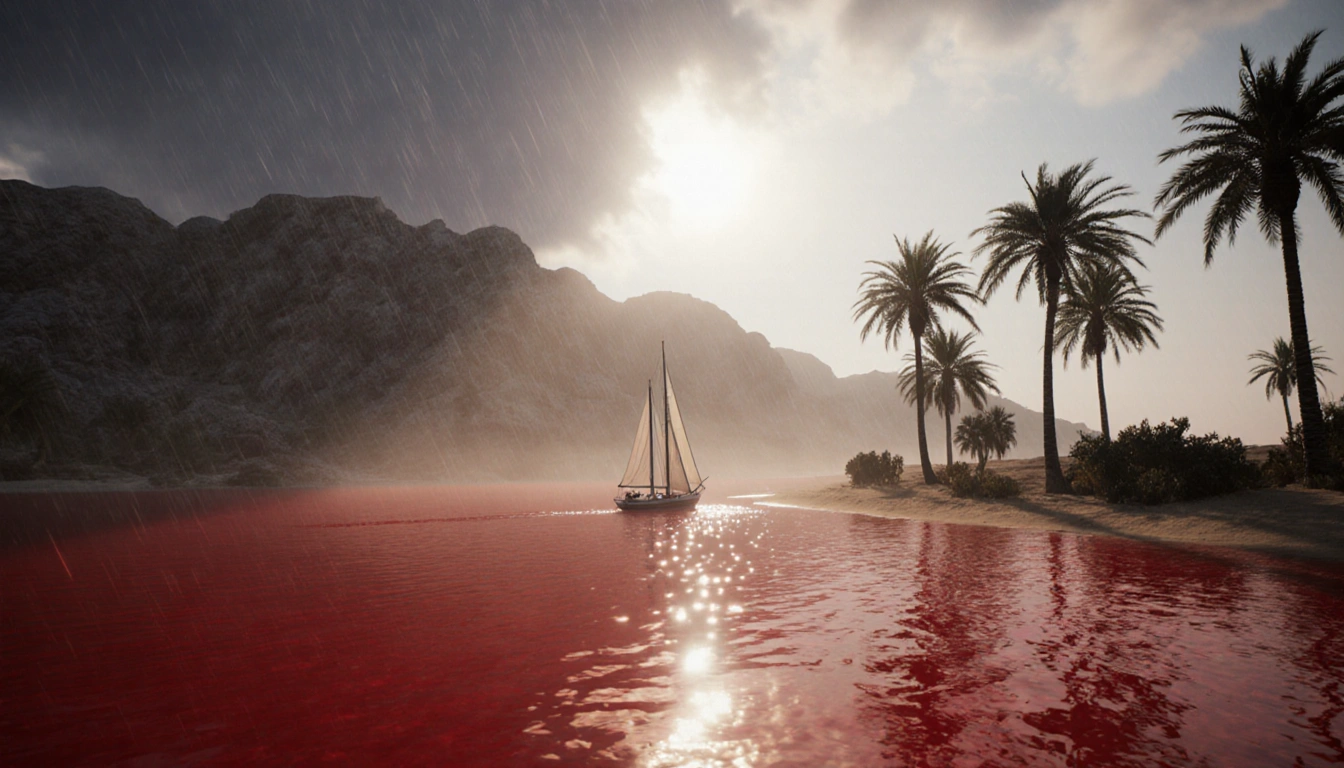
When rain fell on Hormuz Island this week, the famed Red Beach turned a living canvas of crimson, turning the sea itself a deep red that shocked locals and visitors alike.
The beach is renowned for its vivid red sand and cliffs, a striking color produced by high concentrations of iron oxide that give the landscape its unique hue.
Starting on Tuesday, rainfall sent streams of red soil-known locally as gelak-toward the shoreline, coloring both the beach and the surrounding Persian Gulf waters and creating a sharp contrast with the blue sea.
The phenomenon has become a regular magnet for tourists, photographers, and social media enthusiasts, who flock to witness the dramatic color shift whenever the rare rains arrive.
Beyond its visual appeal, the gelak is exported in limited quantities and finds use in the production of cosmetics, pigments, and some traditional products, adding an economic layer to the island’s natural wonder.
Hormuz Island lies in the Strait of Hormuz, where the Persian Gulf meets the Gulf of Oman, about 1,080 kilometers (670 miles) south of Iran’s capital, Tehran. Rainfall is relatively rare on the arid island, occurring mainly during winter and early spring.
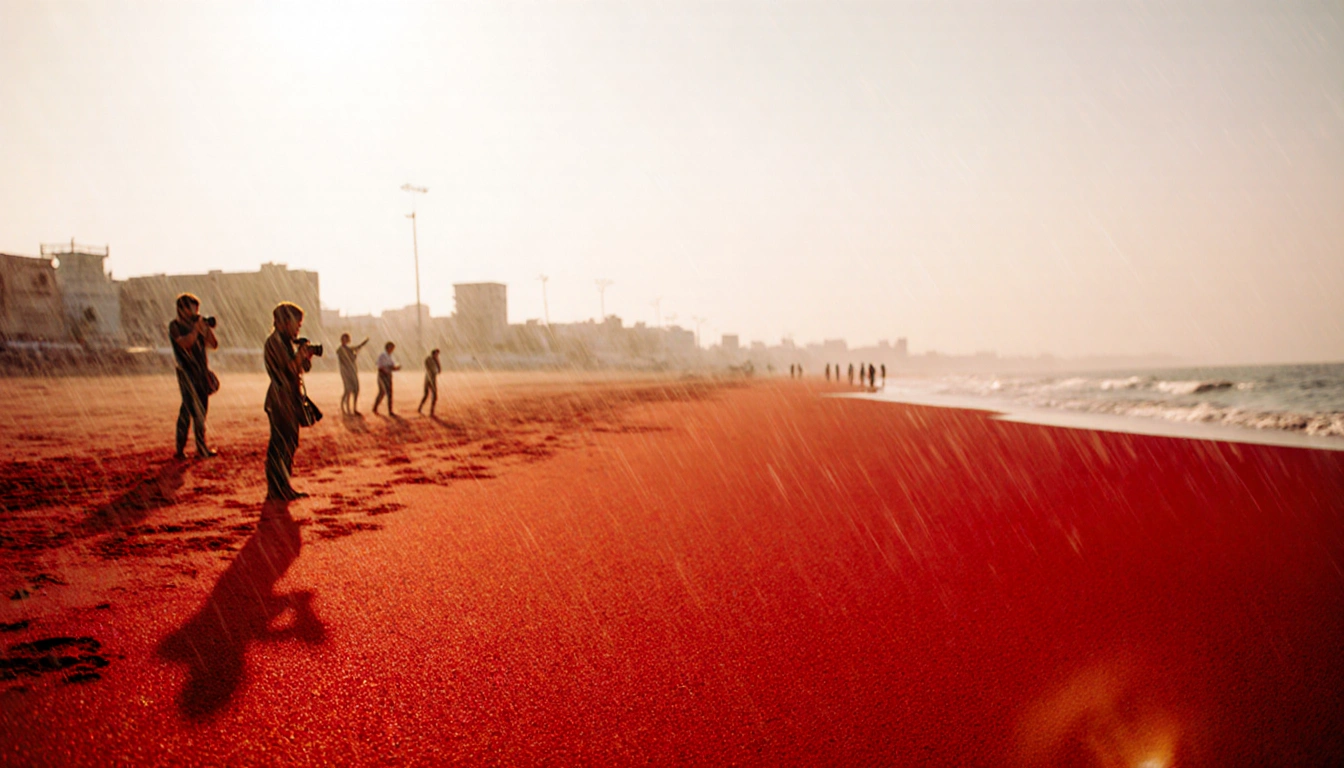
The island’s unusual landscapes have made it a popular destination, drawing visitors who seek to experience its distinctive scenery and the occasional rare spectacle of crimson waters.
Key Takeaways
- Rainfall on Hormuz Island turns its Red Beach and surrounding sea deep red.
- The red soil, called gelak, is exported for cosmetics, pigments, and traditional products.
- The island’s rare weather event attracts tourists, photographers, and social media attention.
While the crimson display was brief, it reminded everyone that even the most arid places can surprise with a sudden burst of color, turning a familiar beach into a breathtaking natural tableau that will be remembered by those who witnessed it.