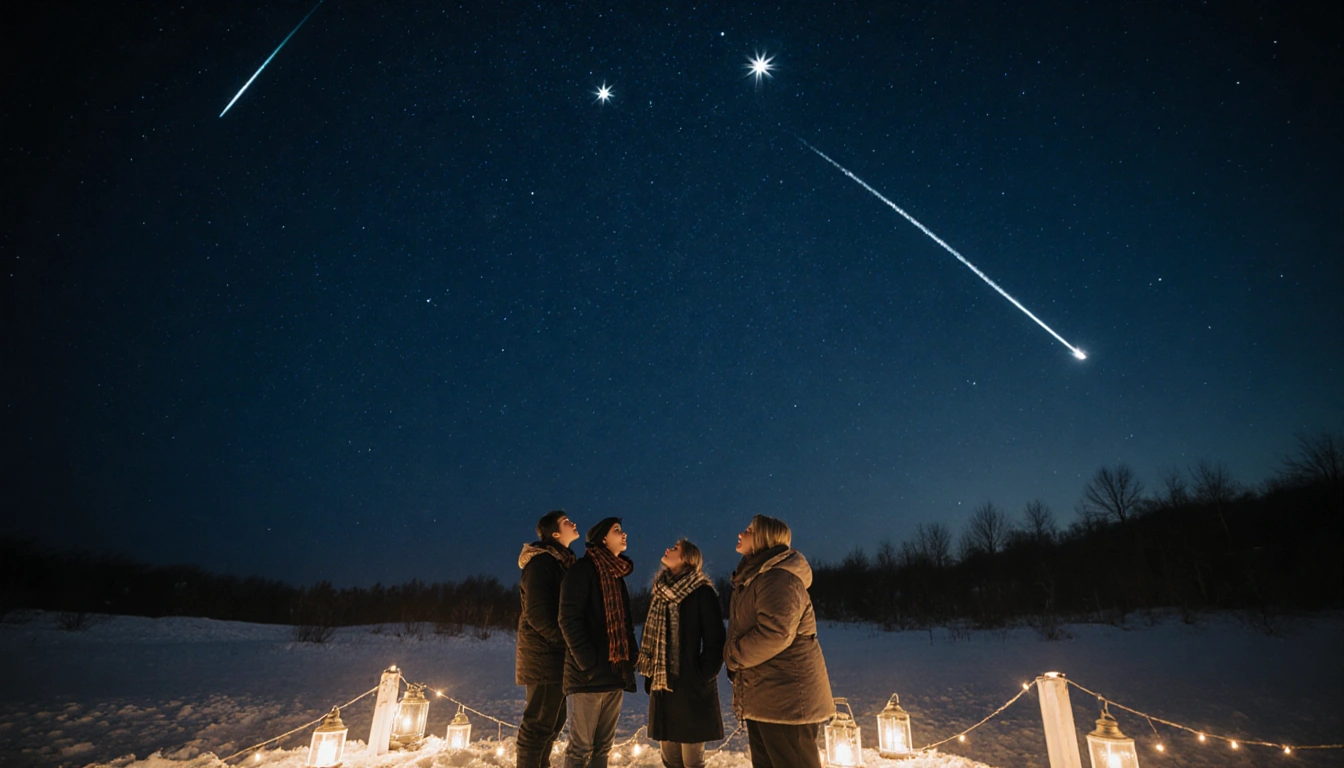
The last major meteor shower of the year, the Ursids, will peak Sunday night into Monday morning, offering a quiet but still worth-seeing display.
Peak and Visibility
The Ursids reach their maximum activity Sunday night into Monday morning and remain visible until Dec. 26 from the Northern Hemisphere. Observers can expect 5 to 10 meteors per hour at the height, with occasional outbursts of up to 25 per hour, according to the American Meteor Society. The narrow crescent moon will not be a major obstacle when the shower peaks.
How to Watch
No special equipment is required to see the Ursids. To catch the meteors, simply bundle up and find a location away from city lights. Peter Brown, an astronomer at Western University in Canada, advises, “The darker your sky, the better the shower is going to be.”
Tips for Best View
The meteors can be seen across the whole sky, but they all appear to radiate from a central point near the constellation Ursa Minor, the Little Dipper. Once it gets dark, avoid bright lights from cellphones, which will make it harder for your eyes to adjust.
About the Ursids
The Ursids originate from comet 8P/Tuttle and feature less space debris than other showers such as the Geminids. Despite the lower debris, the shower remains a worthwhile spectacle for skygazers.
Key Takeaways
- The Ursids peak Sunday night into Monday morning and stay visible until Dec. 26.
- Expect 5 to 10 meteors per hour, with outbursts up to 25 per hour.
- No special gear is needed; a dark sky away from city lights offers the best view.
So, if you’re looking for a calm but still impressive meteor display before the year ends, the Ursids offer a quiet celestial show that can be enjoyed from anywhere with a clear, dark sky.