
The Trump administration has declared the Supplemental Nutrition Assistance Program a hotbed of fraud, calling for a sweeping crackdown that has split states over data sharing.
The Scale of SNAP and the Fraud Narrative
The U.S. government spends roughly $100 billion a year on SNAP, with about $94 billion earmarked for benefits and the remainder covering administrative costs. Roughly 42 million people—about one in eight Americans—receive benefits averaging $190 per person per month. Those numbers are comparable to the 36 million people living in poverty by the traditional measure and 43 million under a more nuanced federal definition.
Under federal law, most households must report income and basic information every four to six months and undergo full recertification at least annually. The Trump administration has taken a hard‑line stance, demanding that states provide detailed data on individual recipients, including Social Security numbers, dates of birth, and immigration status, as part of its effort to root out fraud.
Data Sharing Dispute
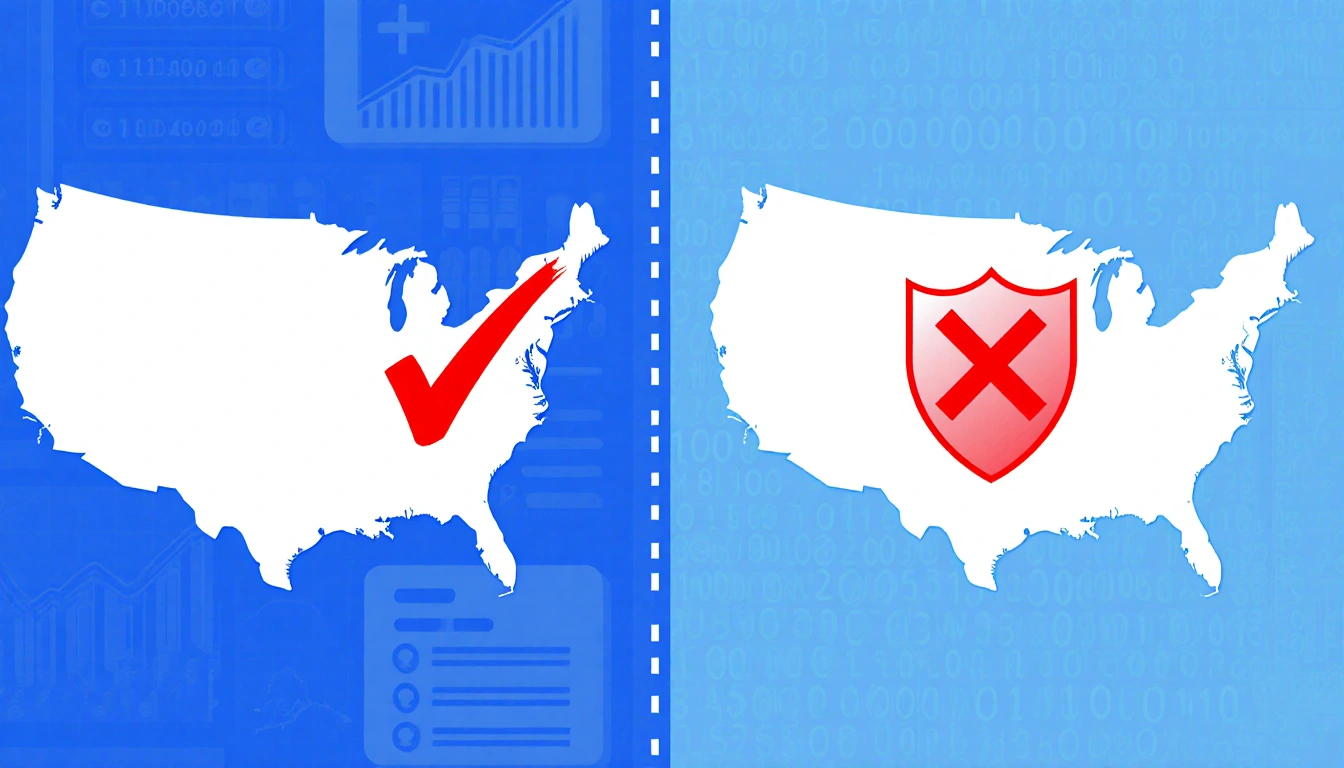
States with Republican governors, plus North Carolina, have complied with the request. Democratic‑led states argue that handing over such data would violate recipients’ privacy and have pushed back in court.
From the records that have been shared, the USDA identified 186,000 deceased participants—about 1 % of those in the participating states—and about 500,000 people—about 2.7 %—receiving benefits in more than one jurisdiction. The USDA has not released detailed reports on the data, nor broken down the estimates by type of alleged fraud. It also has not answered questions about how much of improperly awarded benefits was actually spent or how much sat unclaimed on EBT cards after recipients moved or died.
In a letter to the states that refused to turn over data, the USDA estimated that nationwide, the combined total of fraud and undetected errors could be $9 billion a year or more. Democratic‑led states responded in a letter last week that states already have systems to catch wrongdoing and that the USDA isn’t explaining how it’s crunching the numbers.
Types of Fraud and Real‑World Cases
Fraud takes many forms. Organized crime groups place skimmers on EBT readers to harvest card information, enabling the creation of copies of benefit cards or the application for benefits for fictitious people. A Romanian man who was in the U.S. illegally pleaded guilty last year to skimming cards in California, taking more than 36,000 numbers over three years.
A USDA employee pleaded guilty this year to accepting bribes in exchange for providing registration numbers for EBT card readers placed illegally in several New York delis, with more than $30 million passing through those terminals.
Three people were charged this year in Franklin County, Ohio, accused of using stolen benefits to order large quantities of energy drinks and candy—apparently to resell it.
Mark Haskins, who worked on USDA investigations from 2013 until leaving the department in August as branch chief of a special investigations unit, said there have been cases of retailers running similar operations. Several states are barring the use of SNAP for some junk food products with policies that kick in as soon as Jan. 1.
Haskins also says some legitimate recipients buy non‑grocery items with SNAP benefits by persuading a store employee to ring up the wrong item—generally one that costs more than what’s being bought—or to sell benefit cards. He thinks those forms of fraud are more costly than the ones run by organized criminal groups.
Haskins and Haywood Talcove, CEO of LexisNexis Risk Solutions Government, both believe fraud costs significantly more than the USDA’s $9 billion estimate.
> “The system is corrupt. It doesn’t need a fix here and there, it needs a complete overhaul,” said Haskins, who would like to see fewer retailers in the network and participants having to reapply, even if that makes it harder for qualified people to access benefits.
Government Response and Historical Data
The USDA last published a report on SNAP fraud in 2021. It covered what happened from 2015 through 2017 and found that about 1.6 % of benefits were stolen from recipients’ accounts.
The government replaced benefits that were stolen between Oct. 1, 2022 and Dec. 20, 2024. The value of replaced benefits over that time was $323 million—about 24 cents for every $100 in SNAP benefits, though that’s believed to be an undercount.
Advocates and researchers see a different system. Dartmouth College economist Patricia Anderson, who studies food insecurity, said in an email that the maximum benefits for a family of four are about $1,000 a month. “It really takes organized crime that is either stealing from the EBT cards or creating a lot of fake recipients out of whole cloth before the gain for the fraudster really starts to be worth it,” she said.
Jamal Brown, a 41‑year‑old food stamp participant who lives in Camden, New Jersey, said he’s witnessed people selling benefits to bodegas to get cash. He’s also had his benefits stolen by a skimmer.
> “It’s always something that goes wrong,” Brown said, “unfortunately.”
Key Takeaways
- The Trump administration claims widespread SNAP fraud and seeks state data to identify it.
- Democratic‑led states argue that providing such data violates privacy and have resisted the request.
- USDA estimates fraud and errors could cost $9 billion a year, but experts say the true cost may be higher.
The debate over SNAP fraud and data sharing highlights the tension between enforcing integrity in a large federal program and protecting the privacy and rights of its millions of beneficiaries.