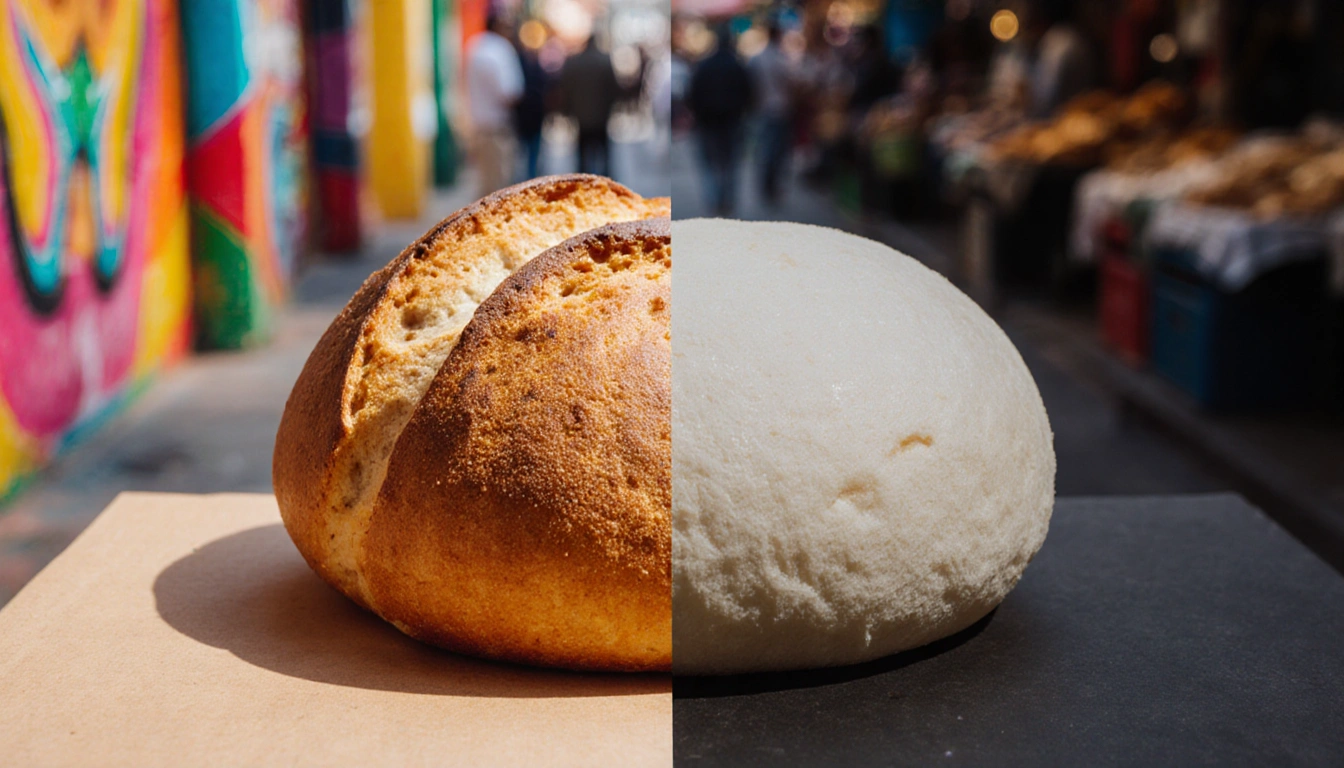
A British baker’s blunt remarks about Mexican bread ignited a social media firestorm that forced him to publicly apologize. In an interview for a food-themed podcast that resurfaced online, Richard Hart, co-founder of Green Rhino bakery in Mexico City, said Mexicans “don’t really have much of a bread culture,” adding that “They make sandwiches on these white, ugly rolls that are pretty cheap and industrially made.”
The Controversial Comments
Hart’s comments quickly spread across Instagram, TikTok and X. The remarks were perceived by many as dismissive and insulting toward Mexico’s traditional breads. “He offended the community of bakers in Mexico and all the people in Mexico who like bread, which is almost everyone,” said Daniela Delgado, a university student in Mexico City.
The Social Media Backlash
Social media erupted with memes, reaction videos and passionate defenses of Mexican bread. Users praised everyday staples-from the crusty bolillos used for tortas to the iconic conchas found in neighborhood bakeries. In many cases, these simple street foods act as a uniting factor across social groups and classes, and often cut to the core of the country’s cultural identity. A viral post on X warned, “Don’t mess with the bolillo,” and the phrase spread rapidly.
Cultural and Economic Context
While wheat bread was introduced to Mexico during the colonial period, the classic food staple evolved into a distinct national tradition, blending European techniques with local tastes and ingredients. Today, small neighborhood bakeries remain central to daily life in cities and towns, serving as social hubs as well as food sources. The incident prompted many to question why a foreign entrepreneur would publicly disparage a staple so deeply embedded in Mexican life. For many, Hart’s remarks echoed long-standing frustrations over foreign chefs and restaurateurs receiving disproportionate prestige, as well as concerns over gentrification in the capital. Hart previously worked at high-profile bakeries in the United States and Europe and has been part of Mexico City’s growing artisanal bread scene. That market caters largely to middle and upper-class customers, many of them foreigners, seeking sourdough loaves and European-style pastries, often at prices far above those of neighborhood bakeries.
The Apology and Aftermath
As criticism mounted, Hart issued a public apology on Instagram, saying his comments were poorly phrased and did not show respect for Mexico and its people. He acknowledged the emotional response and said he didn’t behave as a “guest.” “I made a mistake,” Hart said in his statement. “I regret it deeply.” The Associated Press reached out to Green Rhino, but representatives of the bakery declined to comment.
The apology did little to immediately quiet the debate. While some users accepted it, others said it failed to address deeper concerns about cultural authority and who gets to critique Mexican traditions. “If you want to be part of Mexican culture by owning a restaurant or bakery, you have to educate yourself,” Delgado said. Others, like Josué Martínez, a chef at the Mexican Culinary School, said he was happy that the debate was happening because it opened the door for a more robust and nuanced discussion. “It’s an opportunity to learn about the culture of Mexican breadmaking and pastry, to take pride in it, to highlight the richness of our ingredients, and to stop thinking that the so-called first world represents the ultimate standard,” Martínez said.
Key Takeaways
- A British baker’s harsh critique of Mexican bread sparked nationwide outrage and a public apology.
- The incident ignited a broader debate over food identity, foreign influence, and gentrification in Mexico City.
- Mexican bakers and culinary educators used the controversy to highlight the richness of local bread traditions and to call for respectful cultural dialogue.
The controversy underscores how a single comment can ignite a national conversation about heritage, identity, and the place of foreign voices in local culinary traditions. It also shows that even a well-intentioned apology may not fully resolve deep-rooted concerns about cultural authority and respect.