
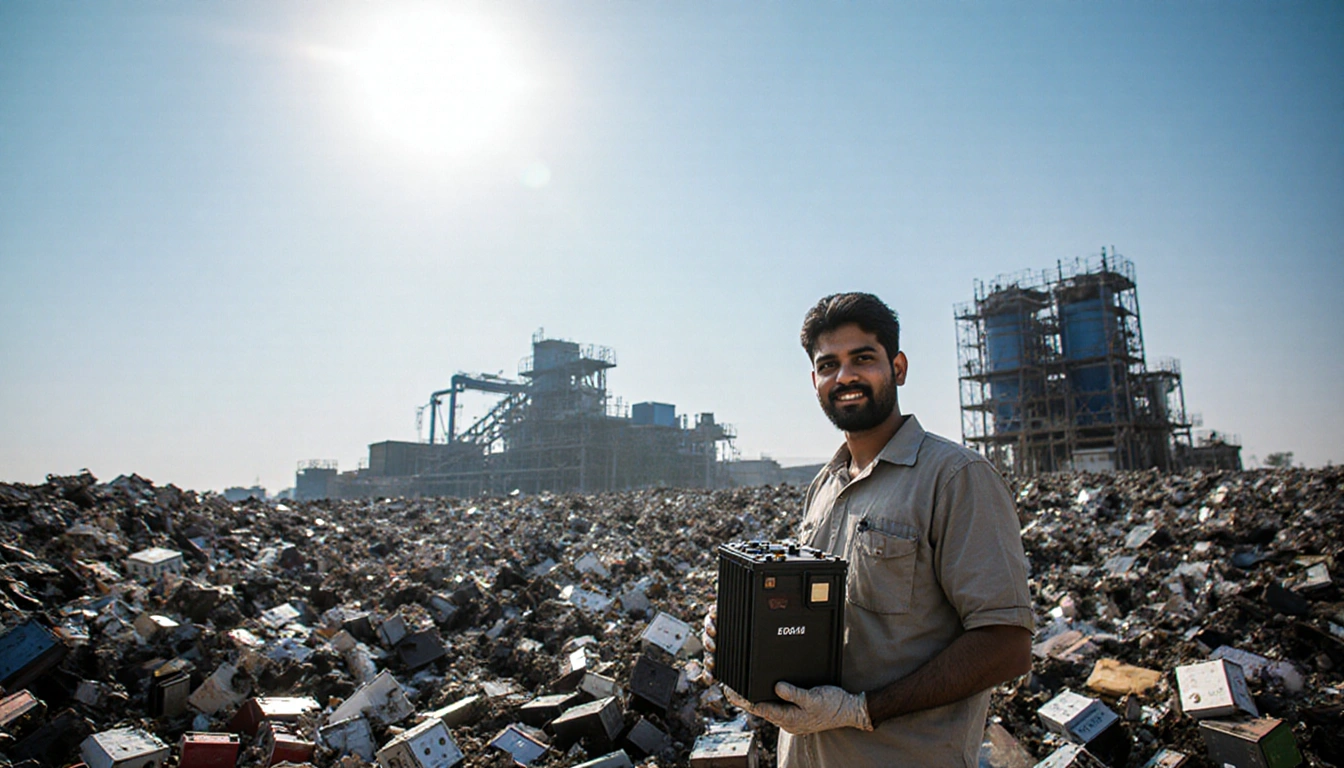
In a country where clean energy is surging, India’s battery recycling sector is growing from a nascent niche into a potential $9 billion industry.
The Promise of a Formalized System
A November study by the renewable-energy think tank RMI projects that a structured recycling industry could create 100,000 green jobs and satisfy nearly 40 % of the nation’s demand for critical minerals such as lithium, cobalt and nickel. The same report estimates the sector’s value at $9 billion as the country’s electric-vehicle (EV) market expands.
RMI’s Marie McNamara, who co-authored the study, highlighted the unique recyclability of battery materials: “What’s exciting about these materials is it’s not like plastics. You can recycle them for perpetuity and they can still have material strength and the quality you need once you refine them.”
The recycling of copper and aluminum already meets more than 40 % of India’s needs, according to Rajat Verma, founder and CEO of Lohum Cleantech. He added, “More than 40% of the country’s copper and aluminum needs are met by recycling scrap and we want to aspire for the same when it comes to lithium, cobalt and nickel.”
Current Capacity and the Informal Workforce
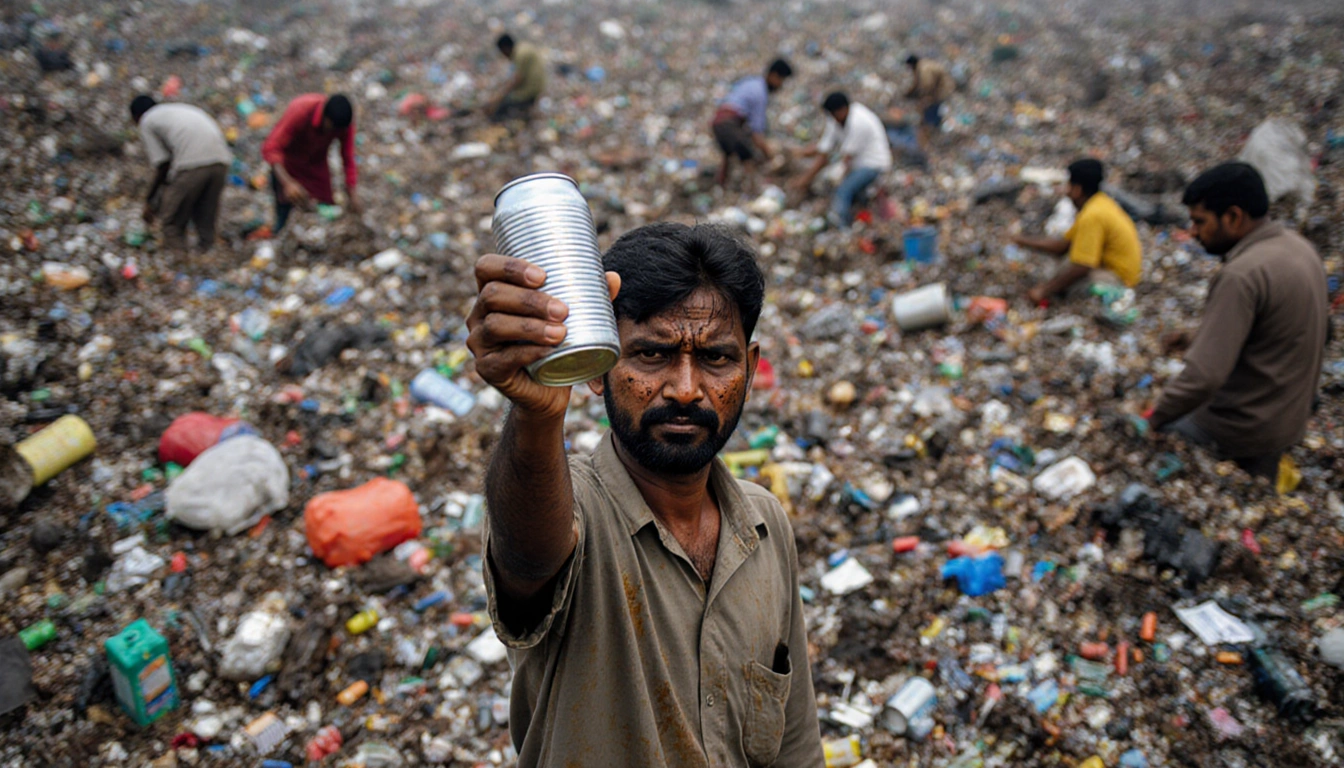
India currently operates 60,000 tons of battery-recycling capacity, yet much of it remains idle because supply chains that move recovered metals to manufacturers are still under development. A large portion of waste recycling is carried out by informal workers-estimates reach four million-who handle a range of scrap materials without formal contracts or safety guarantees.
The 2022 battery-waste-management rules mandate environmentally safe disposal and set collection and recycling targets for different battery types. The rules also impose heavy fines for non-compliance. However, the lack of designated recycling outlets forces each producer to build its own system, a challenge noted by Jaideep Saraswat of the Vasudha Foundation: “India has moved ‘surprisingly fast from a policy perspective,’ but the right battery recycling supply chain is still missing.”
How Recycling Works and the Environmental Stakes
An average EV battery measures about 1.5 meters (5 feet) long, weighs up to 400 kilograms (882 pounds) and is designed to last at least 160,000 kilometers (99,400 miles)-a lifespan that typically ends after 8 to 12 years of use. When recycled correctly, up to 90 % of the battery’s contents can be recovered.
Common methods include shredding modules into fine powder or smelting them in industrial furnaces. The resulting material is then treated with acids or other chemicals to isolate specific metals. Alternatively, used batteries can be repurposed as stationary storage for solar and wind power, a process that requires defect testing and component cleaning before resale.
Toxic contaminants are sometimes disposed of illegally, leading to environmental pollution. Nishchay Chadha, CEO of U.S.-based ACE Green Recycling, which operates in India, warned that improper recycling can emit carbon monoxide and other hazardous gases, and produce wastewater that may leach heavy metals into soil and water.
“We’ve not expanded much in India because we don’t see much appreciation for clean operations, whether it’s lead or lithium,” Chadha said.
The Need for Formalization and Training
RMI’s McNamara urged the government to establish training programs that would help informal scrap workers transition to formal jobs. She added that federal and state authorities should support businesses that hire these workers, stating, “Formalization will really help drive safety and accountability, especially considering that batteries are both defined by their toxicity as well as their potential.”
India currently lacks operational lithium mines and relies on China for many critical minerals. The International Energy Agency notes that China dominates the global supply chain through mining, refining and processing. Recovering minerals from used products could reduce India’s import dependence.
Chadha explained that China treats recycling as part of a broader value chain, even if it operates at a loss: “They also actually lose money on recycling, but they look at it as part of the whole puzzle where recycling is a critical part and they’re looking at making money across the whole value chain.”
Optimism for the Future
Despite the hurdles, industry voices remain hopeful. Verma of Lohum Cleantech said, “If the momentum that is there in India today continues, in my opinion, we can probably create five multibillion dollar giants in this industry.”
Key Takeaways
- India’s battery-recycling capacity sits at 60,000 tons, but supply-chain gaps limit its use.
- A formalized recycling industry could generate 100,000 green jobs and meet 40 % of the country’s demand for lithium, cobalt and nickel.
- Informal workers, environmental regulations, and lack of dedicated recycling outlets are the main obstacles.
India’s battery-recycling sector is at a crossroads: with the right policies, training and supply-chain infrastructure, it could become a cornerstone of the nation’s clean-energy strategy and a major economic driver.