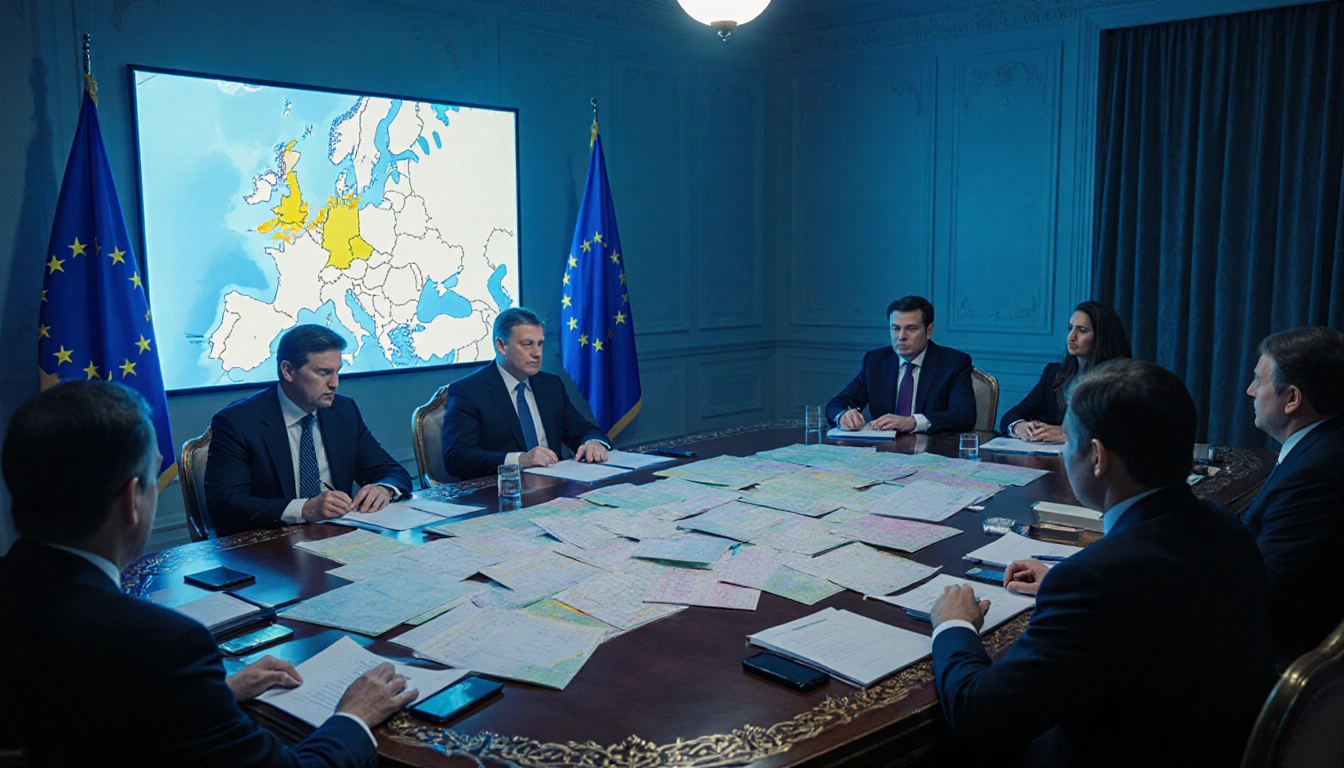
EU leaders paused early Friday as they debated a $106 billion loan for Ukraine, using frozen Russian assets, while Belgium demanded ironclad guarantees against Russian retaliation.
Loan Proposal
EU leaders discussed a reparation loan to fund Ukraine’s military and economic needs for the next two years. Kyiv would repay only after Russia ends the war and pays damages.
The plan would borrow 90 billion euros, with the United Kingdom, Canada and Norway willing to share risk. Russia’s claim on the assets remains, but the assets stay locked until the war ends.
Belgium’s Concerns
Belgium fears Russian counter-action and prefers raising funds on international markets. Frozen assets in other EU banks amount to about 25 billion euros.
Prime Minister Bart De Wever urged partners to guarantee a “parachute” for the loan, saying “Give me a parachute and we’ll all jump together.” He remains unconvinced by the safeguards set by the European Commission.
Allies’ Positions

Polish Prime Minister Donald Tusk framed the decision as “either money today or blood tomorrow.” German Chancellor Friedrich Merz said the loan was necessary and urged Belgium to address concerns.
Hungary and Slovakia opposed the loan; Hungary’s Viktor Orbán called it a “dead end” and warned that giving money equates to war.
Key Takeaways
- EU leaders stalled on a 90 billion-euro loan using frozen Russian assets, with Belgium demanding guarantees.
- The loan would be repaid only after Russia ends the war and pays damages, while Russia’s claim on the assets remains.
- Allies are divided: the UK, Canada and Norway are ready to share risk, but Hungary, Slovakia and possibly others oppose the plan.
The summit’s outcome will shape the EU’s role in ending the war and test the bloc’s consensus-based decision making, as the United States watches for firm financial support for Ukraine.