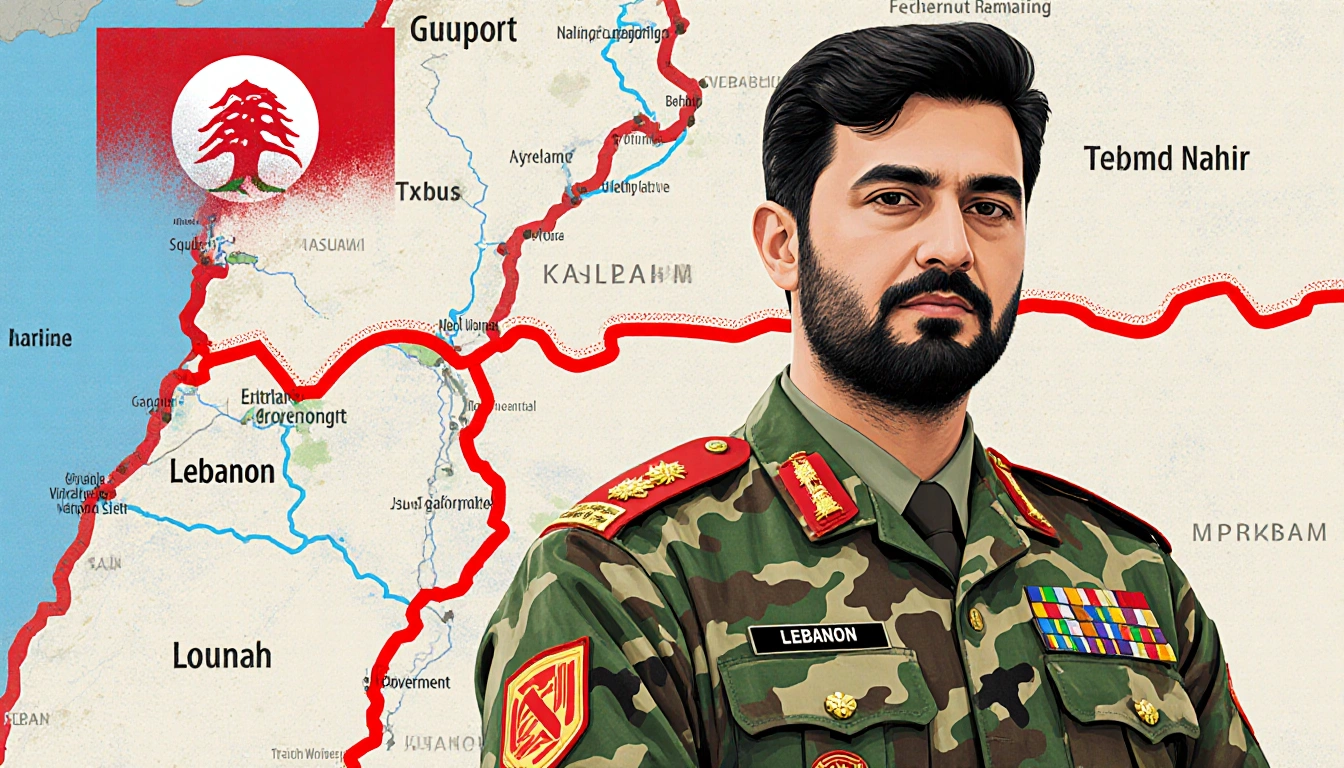
On Monday, a mixed delegation of Western and Arab diplomats visited a tense zone along Lebanon’s southern frontier with Israel. The trip aimed to showcase progress made by Lebanese forces and United Nations peacekeepers, who have been working for months to dismantle the armed presence of the militant group Hezbollah. The delegation included the ambassadors of the United States and Saudi Arabia, accompanied by Gen. Rodolph Haikal, commander of the Lebanese Armed Forces, and senior officers stationed in the border region. The visit underscored Lebanon’s commitment to restoring security in the area and highlighted the international community’s interest in the country’s stability.
Lebanese Army’s Commitment
According to the Lebanese government, the army plans to clear all sections of the border south of the Litani River from Hezbollah’s armed presence by the end of the year. Gen. Haikal emphasized that the primary objective of the forces is to guarantee stability in the region. In a statement quoted to the diplomats, Haikal said, “The main goal of the military is to guarantee stability.” He also explained that the tour was intended to demonstrate the army’s dedication to the ceasefire agreement that ended the Israel‑Hezbollah war in 2023.
Hezbollah’s Stated Intent
Meanwhile, Hezbollah’s leader Naim Kassem publicly stated that the organization will withdraw its military presence from the area south of the Litani River, but he reaffirmed over the weekend that weapons would remain in other parts of Lebanon. Kassem’s comments come after the group’s earlier declaration that it would end its armed activities in the southern zone while retaining the capacity to defend other regions. The statement reflects the ongoing tension between Hezbollah’s strategic objectives and the Lebanese government’s disarmament agenda.
Historical Context of the Border Zone
Before the current conflict, the zone south of the Litani River and north of the Israeli border had long been a Hezbollah stronghold. For years it remained off‑limits to both the Lebanese national army and United Nations peacekeepers that had been deployed there. The Lebanese army’s inability to enter the area was a direct consequence of Hezbollah’s entrenched armed presence. During the tour, the diplomats and military attaches were escorted to an army post that overlooks one of five hills inside Lebanon that were seized by Israeli troops during the 2023 war. Those hills had been strategically important because they provided a high‑ground advantage for monitoring cross‑border activity. The capture of the hills by Israel underscored the contested nature of the border and highlighted the challenges the Lebanese army faces in asserting authority over the territory, especially when the area is still under Hezbollah influence and the UN forces are limited in their operational scope. UN peacekeepers, operating under a mandate that excludes engagement with Hezbollah, have been unable to secure the area, leaving a security vacuum that the Lebanese army seeks to fill. This vacuum has prompted the army to increase patrols and establish observation posts, but the lack of resources hampers these efforts. The capture of the hills also allowed Israeli forces to monitor Lebanese movements, adding a layer of complexity to the ceasefire implementation.
Recent Conflict Timeline
The latest Israel‑Hezbollah war began on Oct. 8, 2023, a day after Hamas attacked southern Israel, and followed Hezbollah’s rocket fire in solidarity with Hamas. Israel’s response included a widespread bombardment of Lebanon in September of the previous year, which severely weakened Hezbollah, and a subsequent ground invasion. The war concluded in November 2024 with a ceasefire brokered by the United States, which set conditions for a comprehensive disengagement and the deployment of U.N. forces to monitor compliance. Since the truce, Israel has carried out almost daily airstrikes targeting Hezbollah members, while also killing 127 civilians, according to the office of the U.N. High Commissioner for Human Rights. On Sunday, the Israeli military reported the killing of three Hezbollah members in strikes on southern Lebanon. The continued airstrikes have disrupted local communities and strained the Lebanese army’s capacity to maintain security along the border.
U.S. Pressure and Diplomatic Dynamics
Over the past weeks, the United States has intensified pressure on Lebanon to accelerate the disarmament of Hezbollah and cancelled a planned trip to Washington last month by Gen. Haikal. U.S. officials expressed anger in November after a Lebanese army statement blamed Israel for destabilizing Lebanon and obstructing the deployment of Lebanese forces in the south. The U.S. has also highlighted the importance of securing the border to prevent further escalation, reinforcing its role as a broker in the ceasefire and a key partner in regional security. In addition, Washington has urged Lebanese authorities to comply with international disarmament norms and to enhance coordination with U.N. peacekeepers, emphasizing that the security of the border is essential for regional stability.
Upcoming International Meetings
According to a senior Lebanese army official speaking on condition of anonymity, Gen. Haikal will depart for France this week to attend a meeting with U.S., French, and Saudi officials. The gathering aims to discuss ways of assisting the Lebanese army in its mission to clear the border region. The official did not disclose the meeting’s agenda, but noted that international cooperation is essential to bolster the army’s capacity amid economic constraints.
Challenges Facing the Lebanese Army
The Lebanese army has been severely affected by the economic crisis that began in October 2019. The crisis has strained resources, hampered logistics, and limited the ability to maintain equipment and pay wages. The Lebanese currency has collapsed, and the army’s budget is constrained by a national debt that exceeds 150% of GDP. Consequently, procurement of spare parts for armored vehicles and aircraft has stalled, and many units rely on donated equipment that is often outdated. The shortage of fuel and maintenance supplies has further reduced operational readiness. These constraints compound the army’s efforts to disarm Hezbollah and secure the border, making the mission more difficult in a context where the population remains wary of foreign influence and internal security threats.
UN Peacekeepers and Local Communities
UN peacekeepers have been stationed along the Lebanon‑Israel border since the 2006 war, operating under a mandate that allows them to monitor ceasefire violations but prohibits engagement with armed groups. In the southern zone, their presence has been limited by Hezbollah’s control, leaving many villages in a precarious security situation. Local residents report that the peacekeepers are unable to provide effective protection against sporadic rocket fire or cross‑border incursions. The Lebanese army has sought to coordinate with the United Nations Mission in the Golan Heights (UNOG) and the United Nations Interim Force in Lebanon (UNIFIL) to improve situational awareness, but logistical challenges and political sensitivities have slowed progress. The ongoing airstrikes and the army’s constrained resources further complicate efforts to establish a stable security environment for civilians.
Key Takeaways
- Lebanese forces aim to clear Hezbollah presence south of the Litani River by year‑end.
- The U.S. remains a key pressure point, having brokered the ceasefire and pushing for rapid disarmament.
- Economic hardship hampers the army’s ability to execute its mission amid ongoing airstrikes and regional tensions.
While the diplomatic tour highlighted progress and international commitment, the situation remains fragile. Daily airstrikes, a contested border, and a strained army operating under economic duress create a complex environment. The success of Lebanon’s disarmament drive will hinge on sustained support, internal resolve, and the ability to navigate the delicate balance between national security and regional stability.