
At a Wednesday hearing before the House Committee on Foreign Affairs, U.S. State Department officials urged Mexico to invest more in its security forces and to confront China’s role in the fentanyl supply chain, while also critiquing the Mexican president’s foreign-policy stance.
Growing Cooperation, Yet More is Needed
The U.S. is receiving more cooperation from Mexico on law-enforcement matters than it has in many years, officials said. Yet they called for additional investment in Mexican security infrastructure and greater burden sharing. Chris Landberg, senior official for the Bureau of International Narcotics and Law Enforcement, stated:
> “U.S. law enforcement is working to build Mexican security forces operational proficiency. We are also insisting on greater burden sharing. Mexico must invest more on its own security infrastructure and sustain its capabilities on its own. Our assistance is catalytic, not perpetual.”
Landberg also urged the removal of corruption so that criminals be brought to justice.
China’s Role in the Fentanyl Supply Chain
China is the principal source of the chemicals Mexican drug cartels use to manufacture fentanyl. Landberg told the subcommittee:
> “We would like to have Mexico talk to China on a regular basis because all the precursor chemicals are coming from China.”
Since President Trump took office, fentanyl seizures at the border have fallen 53 % through the first half of 2025, data cited at the hearing. In some U.S. cities, the price of the illicit drug has risen due to the lower supply. Landberg said the decline is a result of aggressive U.S.-Mexico cooperation:
> “Seizures within Mexico have increased. Also, there is disruption within the supply chain, (our) focus on plaza bosses – I think that is the main thing. Over the next months it will become clear how effective Chinese controls over these precursors is and whether the cartels will find alternative sources of precursor chemicals.”
Mexico’s Political Stance and U.S. Concerns
Deputy Assistant Secretary Katherine Dueholm praised President Claudia Sheinbaum for sending 55 high-level drug cartel leaders to U.S. courts earlier this year and deploying 10,000 National Guard troops to the border. However, she questioned her reluctance to support hemispheric objectives. Dueholm said:
> “President Sheinbaum has been responsive to issues critical to U.S. interests. Unfortunately, in adhering to (Mexico’s) constitutional non-interference foreign policy, the current administration has often acted counter to what we believe to be our shared values and to U.S. objectives. We continue to urge Mexico to reconsider these positions.”
Sheinbaum has publicly opposed U.S. bombing of drug-carrying boats in the Caribbean and eastern Pacific, which have killed dozens of suspected traffickers, and has also opposed U.S. military intervention in Venezuela, where President Nicolás Maduro has been labeled by the Trump administration as the head of the designated Foreign Terrorist Organization Cartel de los Soles.
USMCA Review and Trade Measures
Dueholm noted that Chinese influence in Mexico will likely be discussed during next year’s scheduled review of the U.S.-Mexico-Canada Agreement. She added:
> “The USMCA review will help ensure reliable supply chain (for the United States) and keep out third-party actors. We are working with Mexico to stem ability of China to use Mexico as a transshipment point.”
Earlier, Mexico imposed tariffs on some Chinese imports and reportedly began sharing information on what is being shipped from China to Mexican ports of entry.
Key Takeaways
- U.S. lawmakers urge Mexico to boost security forces and curb China-linked fentanyl supply amid growing drug-trafficking cooperation.
- Mexico’s president faces criticism for non-interference foreign policy and opposition to U.S. actions in the Caribbean and Venezuela.
- The USMCA review will address Chinese influence and supply-chain reliability.
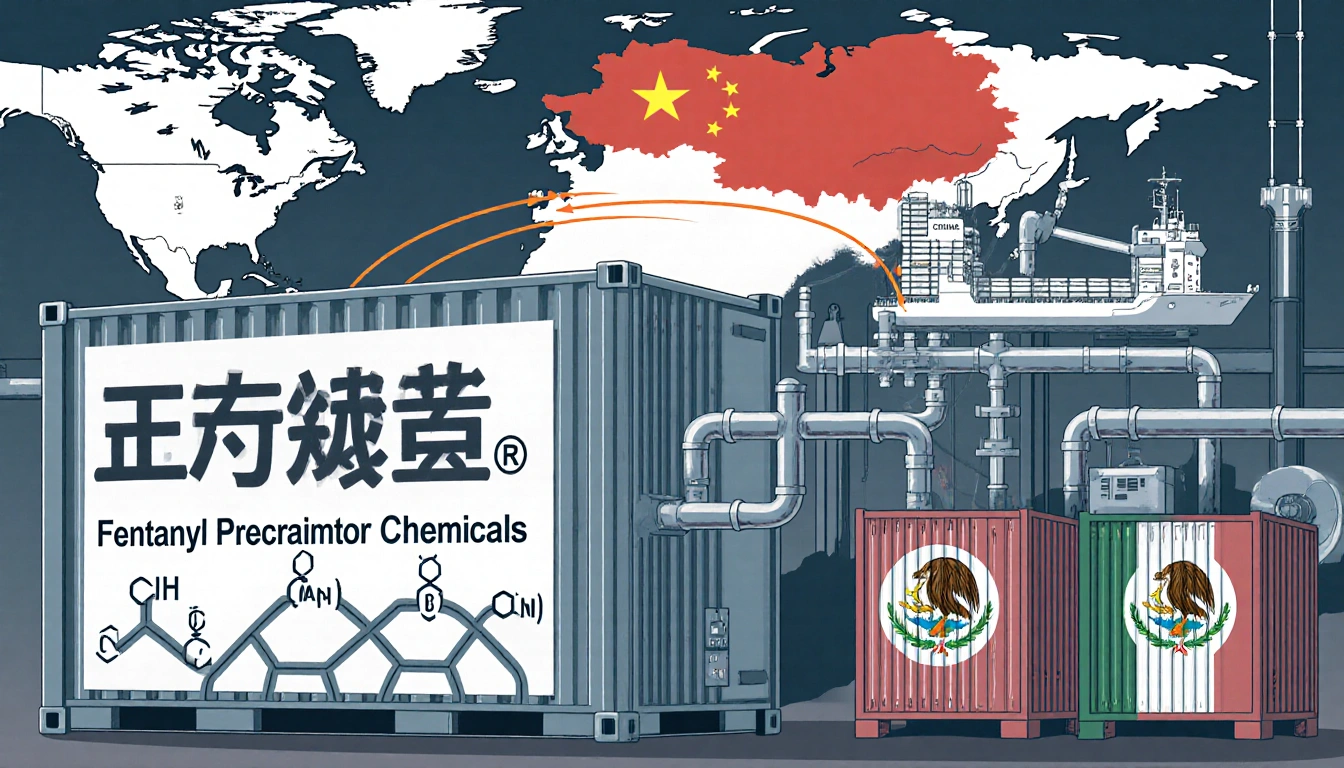
The hearing underscored the complexity of U.S.-Mexico cooperation on drug enforcement and highlighted the growing challenge posed by China’s role in the fentanyl supply chain.