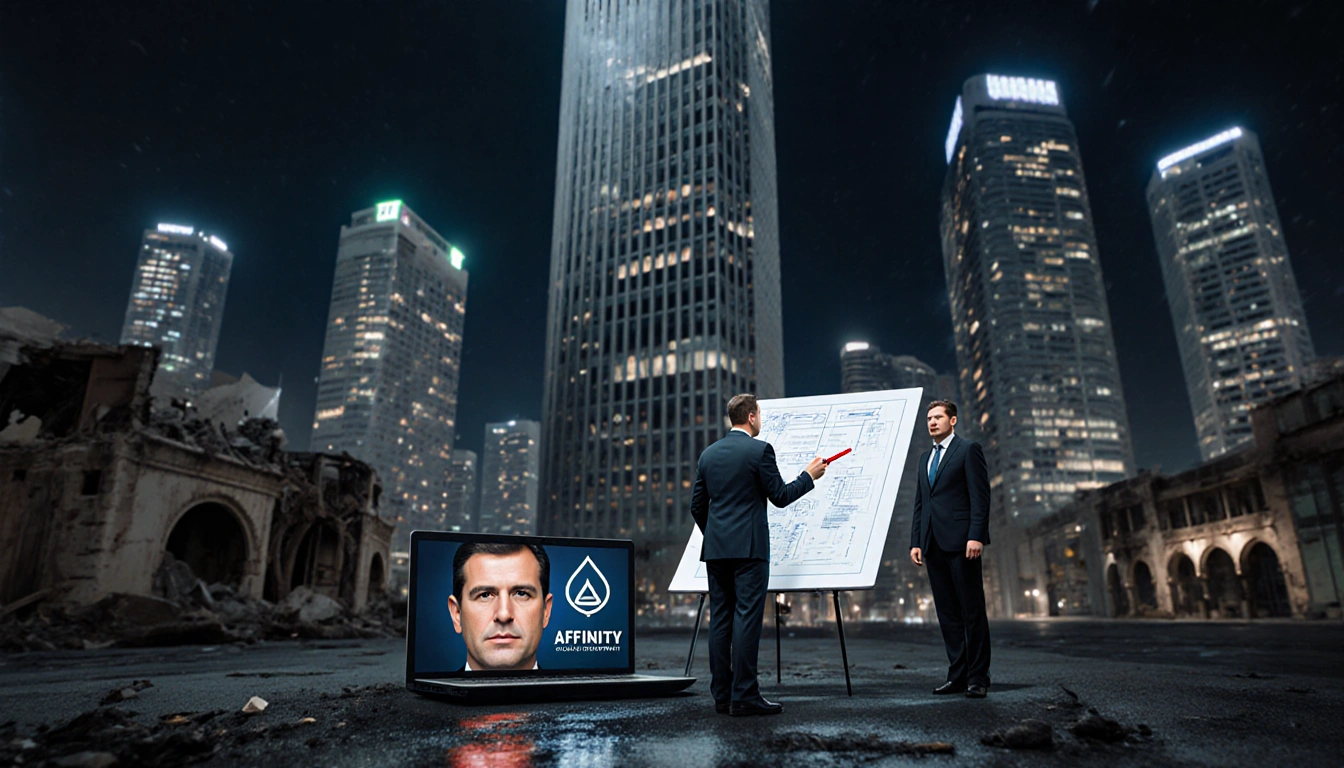
Serbian prosecutors for organized crime announced on Monday that Culture Minister Nikola Selaković and three other officials face charges of abuse of office and falsifying documents. The indictment alleges that the officials helped pave the way for a real‑estate project linked to Jared Kushner, the son‑in‑law of former U.S. President Donald Trump. The project, which would be financed by Kushner‑linked Affinity Global Development, is slated to cost $500 million and include a high‑rise hotel, luxury apartments, office space and retail shops. The charges come as the government has pursued the redevelopment of a bombed‑out military complex in central Belgrade that was previously protected as a cultural heritage zone.
The Public Prosecutor’s Office for Organized Crime released a statement on its official website outlining the accusations. It says that Selaković, a close ally of President Aleksandar Vučić, and three other officials allegedly illegally lifted the protection status for the site by forging documentation. The indictment also claims that the officials abused their positions to facilitate the lease agreement and subsequent construction plans. The prosecutor’s office has not yet announced a trial date, leaving the legal timeline uncertain.
The planned development will transform the former military complex into a luxury compound. According to the indictment, the project will feature a high‑rise hotel, a luxury apartment complex, office spaces and shops. Affinity Global Development, a company tied to Kushner, has confirmed that it intends to finance the $500 million project. The lease agreement, signed last year, grants the company a 99‑year lease on the site.
Last year, Serbia’s government signed a 99‑year lease agreement with Affinity Global Development, a Kushner‑linked firm. The agreement grants the company long‑term control over the bombed‑out complex in central Belgrade. Kushner has publicly confirmed that his company plans to finance the proposed $500 million development. The lease is central to the controversy surrounding the site’s redevelopment.
President Vučić has publicly endorsed the project, arguing that it would strengthen Serbia’s relations with the United States. He has also pledged to pardon anyone convicted in the case, saying, ”I am guilty,” he said recently. ”I am the one who wanted modernization of Serbia. I am the one who wanted to bring in a big investor.” The proposal has faced fierce opposition from experts both domestically and abroad, as well as from the Serbian public. Critics argue that the development threatens a protected cultural heritage site.
Despite the ongoing investigation, Serbian lawmakers passed a special law last month that cleared the way for construction. The law effectively removed the building’s protected status and authorized the project’s execution. The legal framework has been criticized for undermining heritage protection. The prosecutors’ charges highlight a potential conflict between the law and the alleged abuse of office.
The United States has imposed tariffs of 35% on imports from Serbia, a move that has added economic pressure to the country. Additionally, the U.S. administration has sanctioned Serbia’s monopoly oil supplier, which is controlled by Russia. These actions reflect broader geopolitical tensions involving Serbia and its foreign partners. The Kushner‑linked project has drawn scrutiny from international observers concerned about the intersection of business and politics.
The bombed‑out military complex is a prime example of mid‑20th‑century architecture in the former Yugoslavia. It was originally a protected cultural heritage zone, a status that the prosecutors claim was illegally revoked. The building’s symbolic value is tied to Serbia’s experience during the 1999 NATO bombing. The site has become a monument of resistance to what many Serbians view as unjust aggression.
Serbian public opinion remains strongly anti‑NATO, a sentiment rooted in the 78‑day bombing campaign that forced then President Slobodan Milošević to end his crackdown on ethnic Albanians in Kosovo. The proposed redevelopment of the military complex is particularly sensitive among many Serbians. Critics argue that the project would erase a symbol of national resistance. The controversy has amplified existing tensions about Serbia’s relationship with the United States.
It is not yet clear when a trial could be held, as the prosecutor’s office has not set a date. The charges could lead to significant legal consequences for Selaković and the other officials. The outcome of the case may influence future policy on heritage protection and foreign investment in Serbia.
Key Takeaways
- Serbia’s prosecutors have charged Culture Minister Nikola Selaković and three others with abuse of office and falsifying documents in a high‑profile case.
- The case centers on a $500 million real‑estate project linked to Jared Kushner, built on a former military complex that was a protected heritage zone.
- President Vučić has endorsed the project and pledged to pardon anyone convicted, while the Serbian public and experts oppose the redevelopment.
The unfolding legal drama underscores the complex interplay between politics, heritage protection, and foreign investment in Serbia. Observers will watch closely to see how the trial proceeds and what implications it will have for the country’s future development projects.