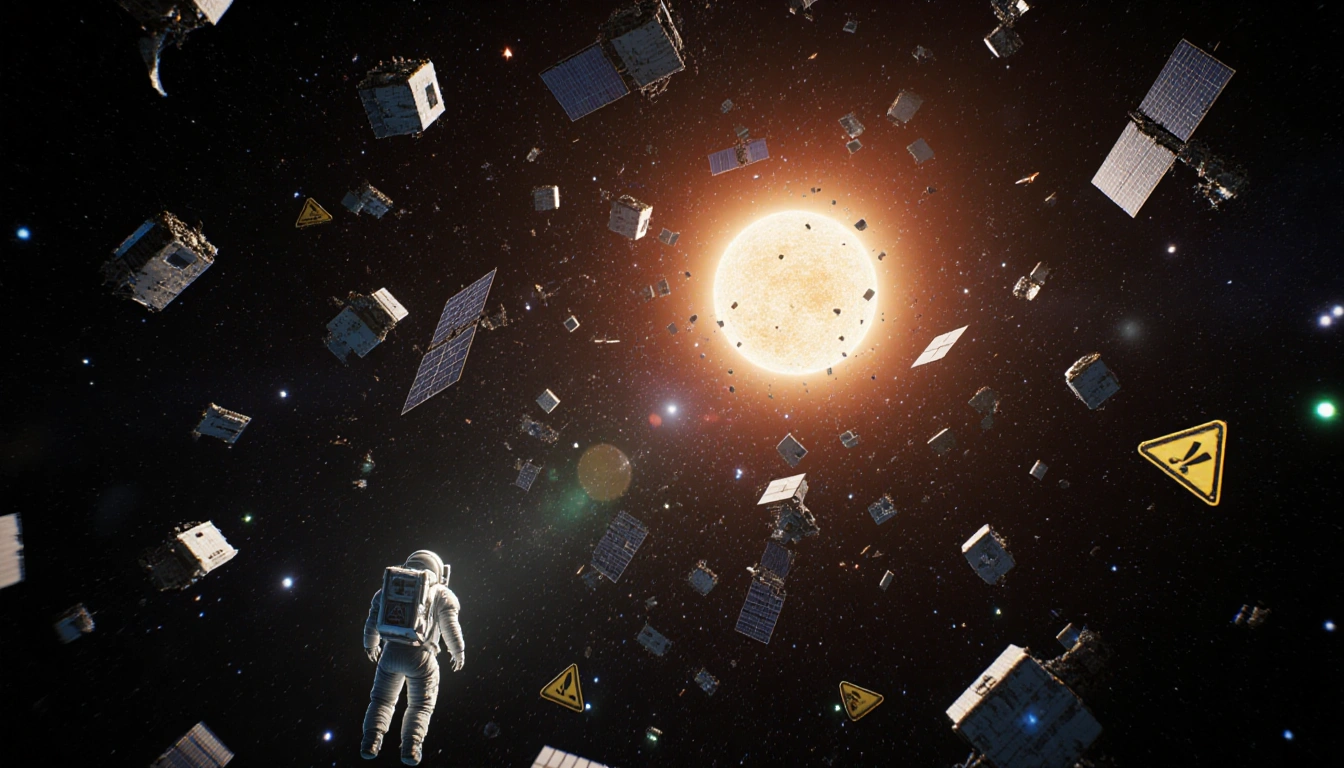
A recent study has warned that a powerful solar storm could collapse the planet’s satellite infrastructure in as little as three days, a dramatic acceleration from the 121-day window operators had in 2018.
Low-earth orbit now hosts roughly 14,000 satellites, a steep rise from about 4,000 in 2018.
Starlink, owned by Elon Musk, has been a major contributor to this congestion, adding thousands of active satellites to the orbital environment.
Operators must carefully choreograph their spacecraft to avoid collisions, a task that becomes increasingly complex as the number of objects grows.
A solar storm of sufficient magnitude could disrupt this delicate balance by disabling the systems that allow operators to track and maneuver satellites.
The new calculations show that if operators lose control, a catastrophic collision could occur in just “2.8 days”, sparking a cascading chain reaction of debris.
Such a debris avalanche would threaten essential services that depend on satellites, including GPS navigation and communication networks.
The study also notes that even a “24-hour” loss of control carries a 30% probability of triggering the same chain reaction, a phenomenon known as “Kessler Syndrome”.
The research paper, which has not yet undergone peer review, emphasizes that these risks are real and not hypothetical.
The Earth is currently in a period of solar maximum, during which coronal mass ejections are more frequent and intense.
These ejections have already produced auroras visible far to the south of their usual range, indicating the heightened activity.
When a solar storm reaches Earth, it can also sever communications and navigation systems, leaving satellite operators without a way to command the thousands of objects in orbit.
Historically, the Carrington Event of 1859 was the most powerful solar storm recorded.
During that event, auroras were observed as far south as Florida, and telegraph networks across Europe and North America suffered widespread damage.
Scientists believe that a modern storm of similar magnitude could trigger continent-wide electrical blackouts, with recovery times extending into weeks or longer.
The potential for such widespread disruption underscores the importance of developing more resilient satellite control systems.
If a solar storm were to incapacitate satellite control, the resulting debris could render certain regions of space inaccessible for extended periods.
Moreover, the loss of satellite services could hamper emergency response, navigation, and global communications during a crisis.
The findings suggest that space agencies and commercial operators must prioritize strategies to mitigate the effects of solar activity on satellite operations.
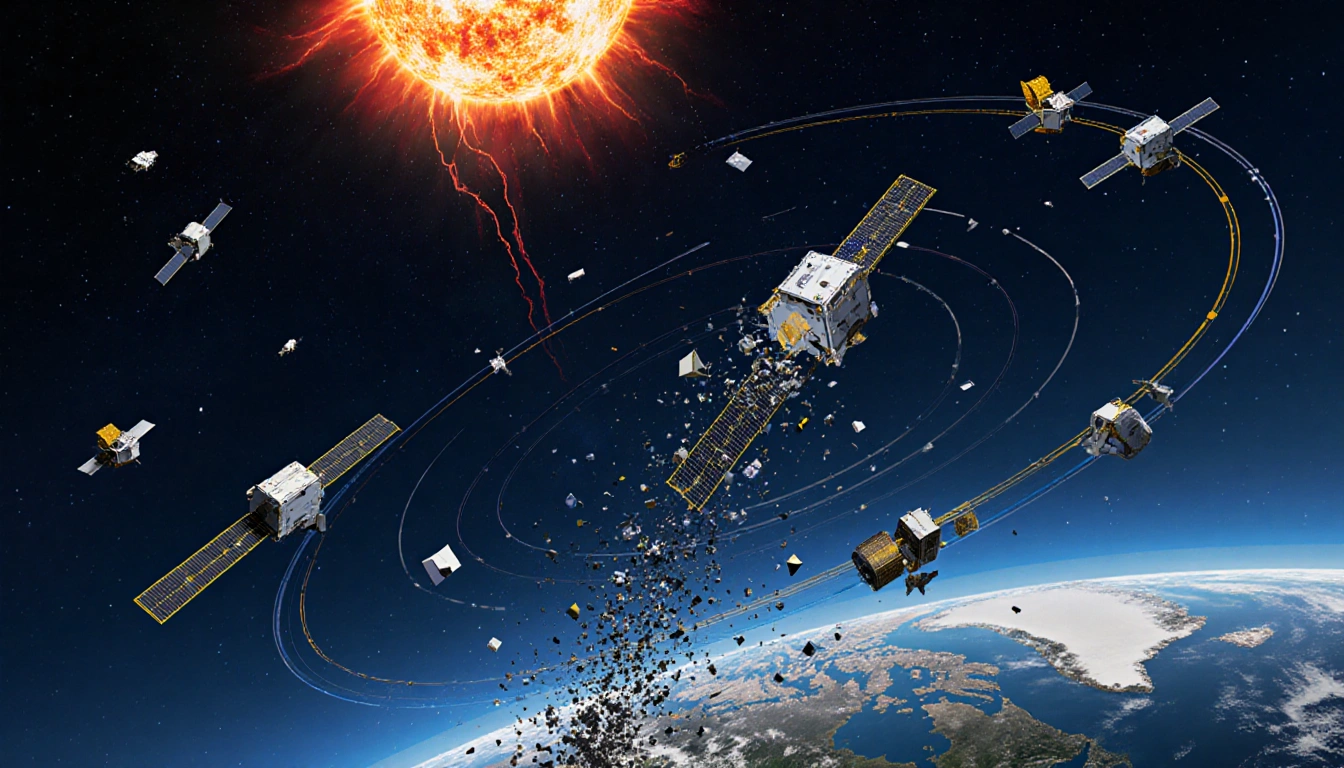
Until such measures are in place, the vulnerability of the satellite network to solar storms remains a pressing concern for both technology and society.
Key Takeaways
- 14,000 satellites orbit Earth, up from 4,000 in 2018.
- A solar storm could cause loss of control in as little as “2.8 days”, triggering a debris cascade.
- Even a “24-hour” loss carries a 30% chance of Kessler Syndrome.