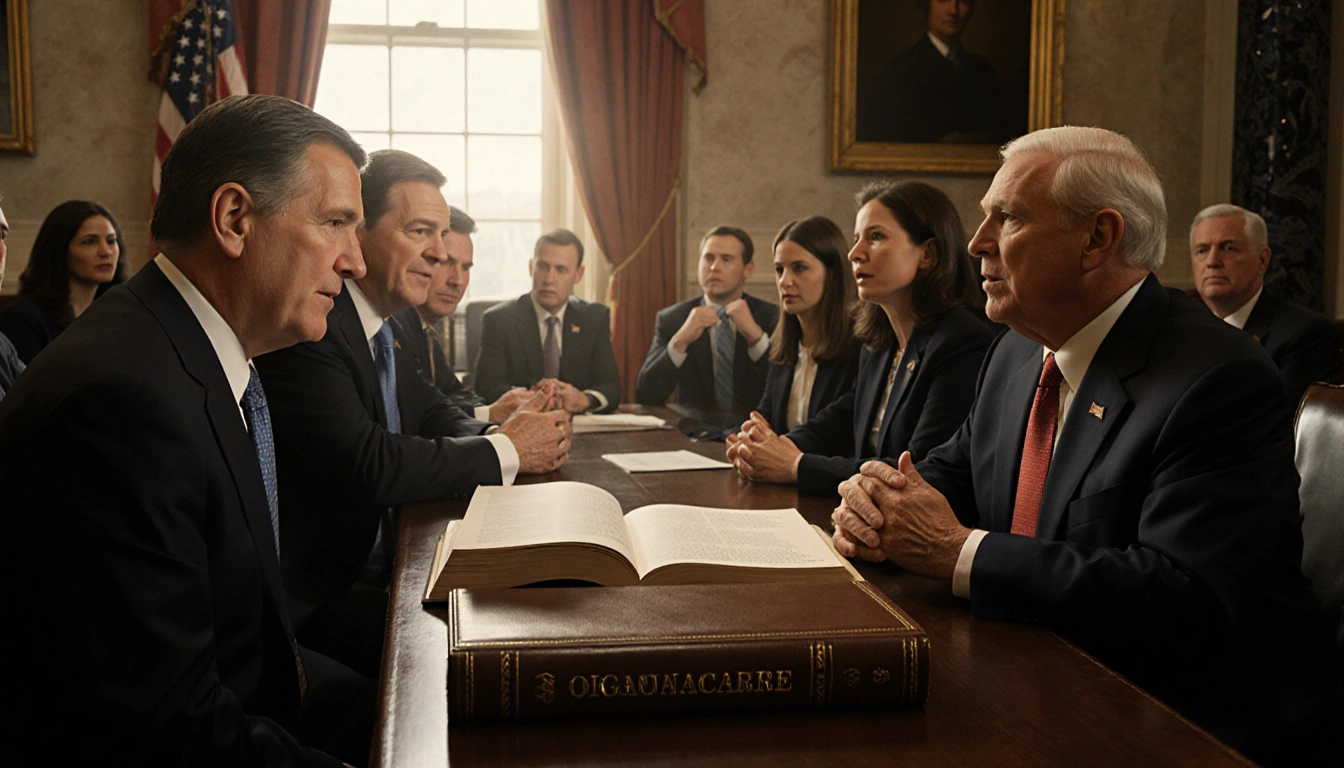
A sudden shift in House dynamics has unfolded as four moderate Republicans joined Democrats to force a vote on extending expiring Obamacare subsidies.
The Unexpected Move
On Wednesday, Representative Mike Johnson (R-La.) emphasized that he has not lost control of the House. “I have not lost control of the House, no,” Johnson said when asked about his grip on the chamber following the GOP rebellion.
He added that the chamber now holds the smallest majority in U.S. history and that “these are not normal times.” Johnson noted that procedures less frequently used in larger majorities are now in play.
Who’s Behind the Petition
The petition that triggered the vote was signed by four Republican representatives from swing districts:
- Brian Fitzpatrick (Pa.)
- Mike Lawler (N.Y.)
- Rob Bresnahan (Pa.)
- Ryan Mackenzie (Pa.)
They joined forces with House Minority Leader Hakeem Jeffries (D-N.Y.) to extend the expiring enhanced Obamacare subsidies for three years.
The Numbers That Matter
The petition gathered 218 signatures, the threshold required to force a House vote on the matter. That figure was reached after the four moderates and Jeffries’ leadership pushed for the signatures.
The same number of signatures also enabled a discharge petition last month to compel leaders to bring a vote on a bill releasing Jeffrey Epstein-related files.
Negotiations Fall Apart
Negotiations between the moderates and GOP leaders over a compromise amendment to include the subsidies in a separate House GOP health-care bill collapsed over the weekend and on Tuesday.
With the amendment dead, the petition’s 218 signatures forced a direct vote on the subsidies.
Johnson’s Response on the Floor
After the petition was signed, Johnson huddled with several moderate GOP rebels on the House floor. He described the meeting as an “intense fellowship” and declined to offer more details about next steps.
“Everybody stay tuned, we’re having conversations,” Johnson said as he left the floor.
Timeline If No Agreement Is Reached
Should the moderates and leadership fail to reach an alternative agreement, the House will need seven legislative days before members can call up the bill to extend the subsidies.
After that, GOP leaders would have to hold a vote within two legislative days. With the House scheduled to depart for a holiday break after Friday, the earliest the bill could reach the floor under that scenario is January.
Johnson’s Perspective on the Process
Johnson reiterated that the House is “working through very complex issues” and that “everybody’s working towards ideas, keeping this productive conversation going.”
He stressed that the chamber’s small majority makes certain procedures less common, but that the House remains functional.
Key Takeaways
- Four moderate Republicans joined Democrats to force a vote on extending Obamacare subsidies.
- The petition gathered 218 signatures, the minimum needed to trigger a House vote.
- Negotiations for a compromise amendment collapsed, leaving the direct vote in place.
- If no agreement is reached, the bill could not reach the floor until January.
Closing
The House’s current situation highlights the delicate balance between party leadership and moderate voices. With a small majority and an ongoing debate over health-care subsidies, the chamber’s leadership must navigate complex procedural rules while maintaining control. The next few weeks will determine whether a compromise can be reached or if the bill will be delayed until the new year.