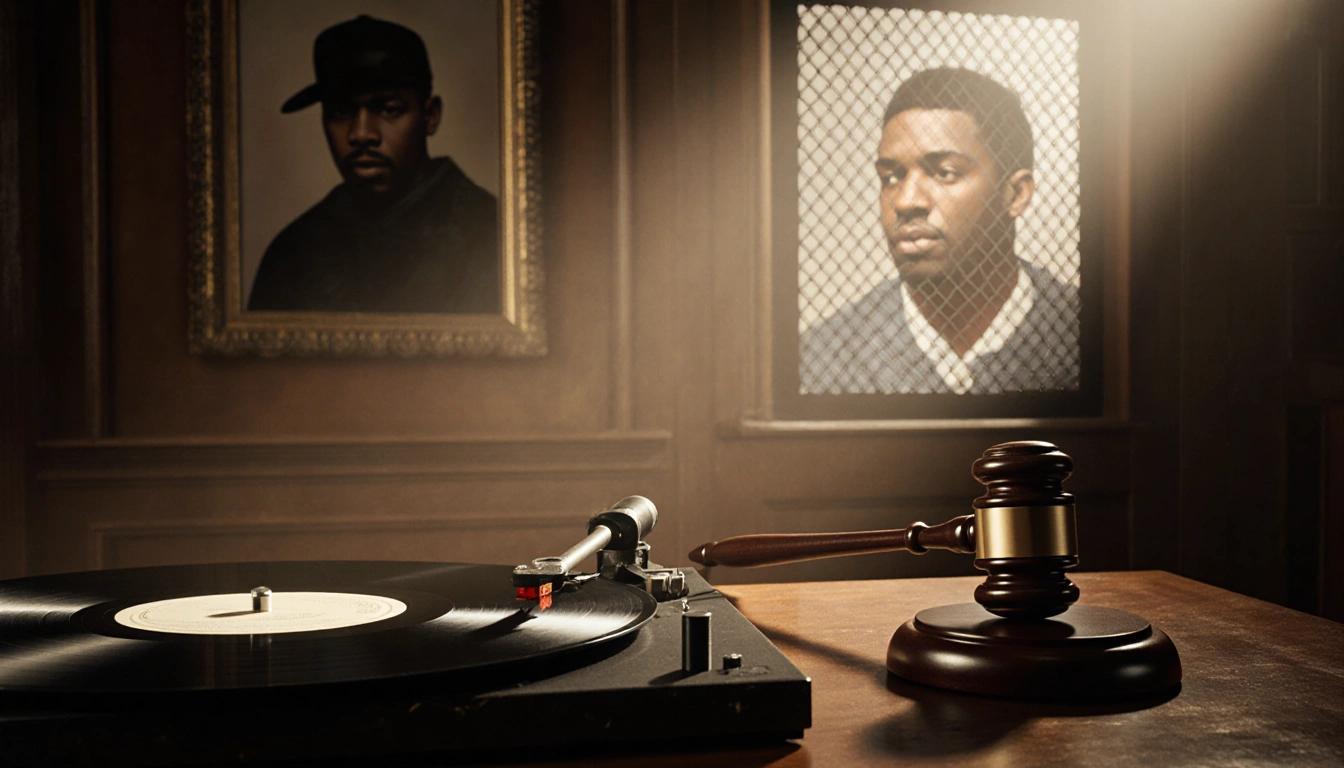
Brooklyn federal judge LaShann DeArcy Hall overturned the murder conviction of Karl Jordan Jr. in the 2002 killing of Run-D.M.C. star Jam Master Jay, citing insufficient evidence of motive, while upholding the conviction of co-defendant Ronald Washington.
Background of the Case
The death of Jason “Jam Master Jay” Mizell, a 37-year-old DJ who helped launch hip-hop to the mainstream with hits like “It’s Tricky” and a cover of Aerosmith’s “Walk This Way,” shocked the music world. His murder on October 30, 2002, followed the violent deaths of Tupac Shakur in 1996 and The Notorious B.I.G. in 1997, adding to a tragic string of losses for the rap community.
Nearly two decades after the shooting, investigators finally made two arrests in 2020. In 2024, a jury found both Karl Jordan Jr. and Ronald Washington guilty of murder. The convictions were hailed by authorities as a long-awaited moment of justice for one of rap’s pioneers.
The Judge’s Ruling
In a decision issued Friday, Judge Hall granted Jordan an acquittal on the murder charges-a request that had been denied during the trial. The judge’s ruling came from the same Brooklyn federal judge who had overseen the trial, nearly two years after the jury verdict.
Jordan’s lawyers had argued that the evidence did not support prosecutors’ claims about his alleged motive, which centered on revenge for a failed drug deal. The judge found that the prosecution had failed to show a motive strong enough to justify a murder conviction.
“We are really happy for Mr. Jordan and his family that justice was served,” attorney John Diaz said in an email.
Jordan has not yet been sentenced on the murder charges. He remains in custody awaiting trial on drug charges that stem from years after the killing.
Evidence and Motive Debate
An eyewitness testified that he saw Jordan shoot the DJ in his Queens recording studio on the day of the murder. A former tenant of Jordan’s home also testified that he overheard Jordan admit to the killing.
Despite these testimonies, Jordan’s defense presented more than 18 months of post-verdict evidence. They contended that the prosecution’s motive narrative-revenge over a broken drug deal-was unsupported by any concrete evidence.
The judge concluded that the evidence about a drug-beef motive was stronger against Washington than against Jordan. Testimony suggested that bad blood between Washington and a Baltimore-based drug seller disrupted a potential six-figure cocaine deal involving Jordan, Washington, and Mizell.
In the judge’s own words, “A jury could reasonably infer that Washington was excluded from a potentially lucrative Baltimore deal and sought to retaliate against Mizell for his exclusion,” but she asked, “from what evidence, then, could the jury have reasonably inferred that Jordan sought to retaliate against Mizell for the failure of the Baltimore deal? There was none.”
Impact on the Two Defendants
Washington’s bid for an acquittal or a new trial was denied. His lawyer, Susan Kellman, noted that he can pursue further appeals.
During the trial, neither Washington nor Jordan testified. Their defense focused largely on questioning the credibility of key prosecution witnesses and the reliability of their memories of the shooting, which took place almost two decades earlier.
Washington’s lawyers questioned why he would have any reason to kill an old friend who had helped him financially. Mizell’s sister reportedly allowed Washington, who was struggling financially, to live on her couch.
Future Proceedings
Prosecutors said they were reviewing the ruling. Meanwhile, a third suspect, Jay Bryant, was charged in Mizell’s killing in 2023. Prosecutors have said Bryant’s DNA was found on a hat at the shooting scene, and Bryant’s uncle testified that his nephew told him he shot Mizell.
Bryant has pleaded not guilty and is awaiting trial.
Broader Context and Legacy
Run-D.M.C. was the first rap group to earn gold and platinum albums and to have a music video in rotation on MTV. The group’s lyrics and public service announcements spoke out against drug use. After the group’s peak, Mizell reportedly fell into debt and worked as a cocaine-market middleman, according to prosecutors and trial testimony.
The case has drawn attention to the long-lasting impact of unresolved violent crimes in the music community and the challenges of proving motive after many years.
Key Takeaways
- Judge LaShann DeArcy Hall voided Karl Jordan Jr.’s murder conviction, citing insufficient motive evidence.
- Ronald Washington’s conviction was upheld, with the judge finding stronger motive evidence against him.
- Jay Bryant, charged in 2023, remains a pending defendant with DNA evidence linking him to the scene.
The reversal underscores the importance of motive in securing a murder conviction and leaves the legal fate of the remaining defendants still in question.
Closing
The judge’s decision marks another unexpected twist in a case that had lingered for nearly twenty years. While justice was achieved for one defendant, the fate of the other and the pending case of Jay Bryant will continue to unfold in the coming months.