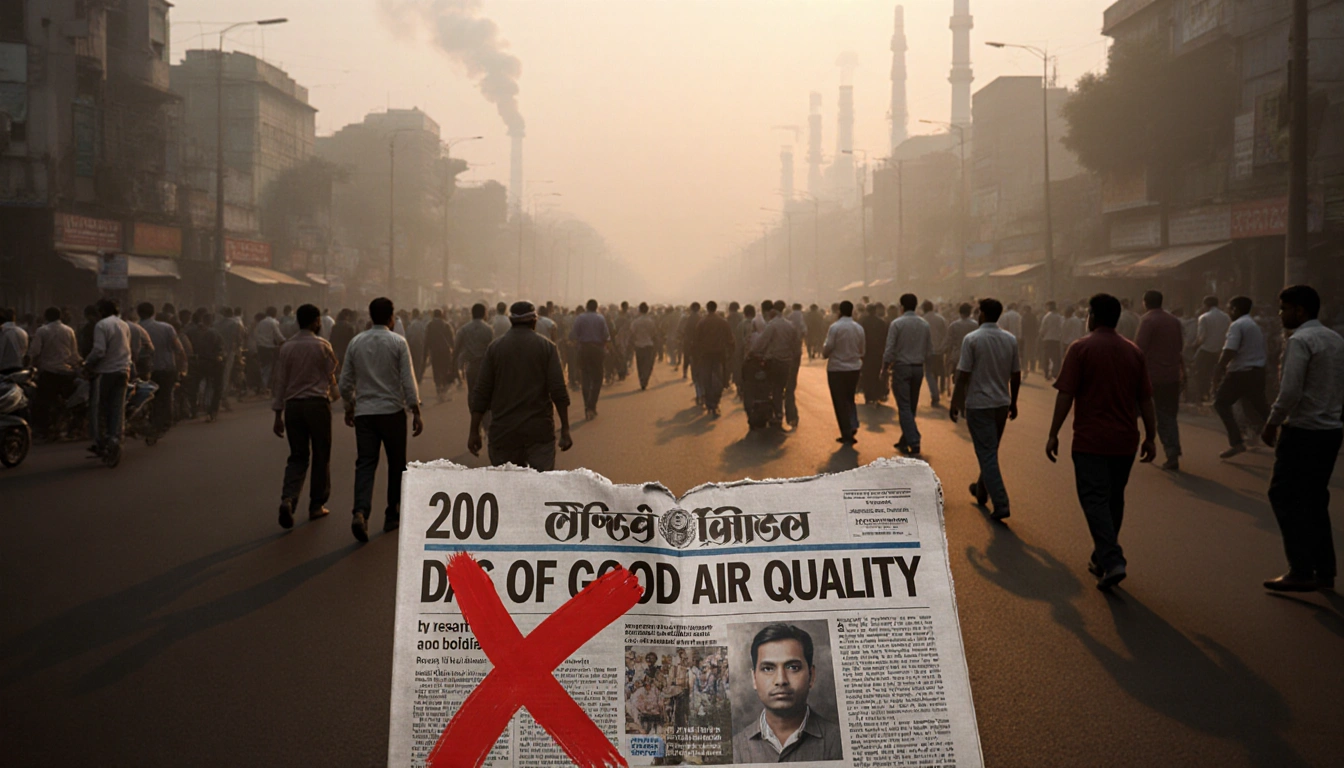
When Delhi’s Environment Minister Bhupender Yadav told Parliament that the capital has seen 200 days of good air quality, residents and experts were quick to call the figure misleading. The claim, made earlier this month, ignored the months when pollution levels spiked and was met with sharp criticism from opposition leaders and environmental specialists.
A Questionable Claim
Yadav’s statement was met with skepticism because the 200-day figure does not reflect the worst months of the year, when air quality readings are far below safe limits. Pollution experts argued that the number was cherry-picked and did not convey the true severity of the problem.
The Chief Minister’s Response
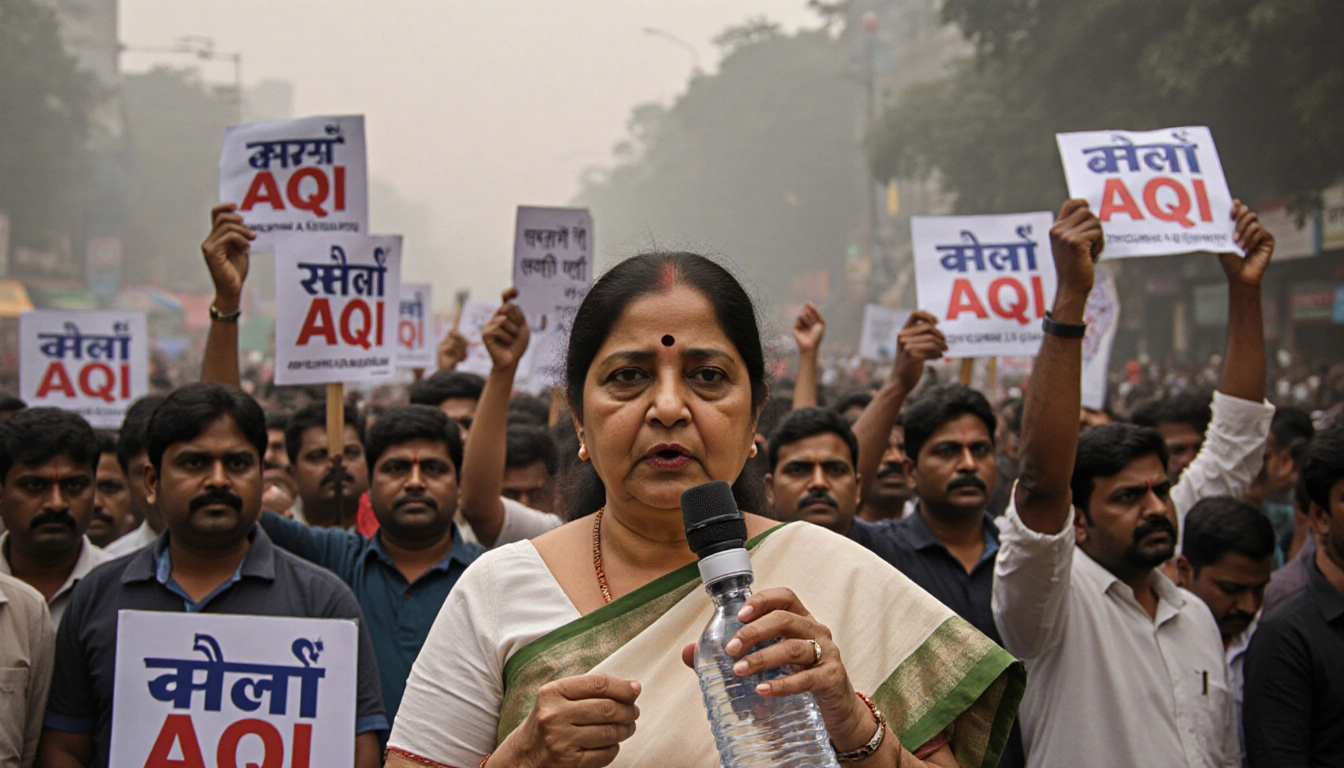
A week later, Delhi Chief Minister Rekha Gupta suggested that the air-quality index (AQI) was no different from a temperature reading and could be managed by spraying water. Her comments were met with jeers at a public event, where crowds shouted “AQI” to highlight the city’s poor air quality.
Gupta had also approved a cloud-seeding program earlier this year, claiming it could produce rain that would lower pollution. The approach lacks evidence that it would be effective.
Residents’ Frustration
“Instead of doing cloud seeding, I hope the government will wake up and take some real action,” said Anita, a 73-year-old resident who prefers to be known only by her first name. “It’s a shame.”
The residents of New Delhi and nearby areas, who have been living in toxic smog for months, see these statements as another example of officials denying the crisis.
Looser Standards and Public Trust
Environmentalists and data experts pointed out that India’s air-quality measurement standards are looser than those in countries such as the United States. Moderate readings can mask dangerous pollution levels, and India’s government standards are less stringent than World Health Organization guidelines.
These gaps, experts said, erode public trust even as few residents fully understand how harmful polluted air can be.
Monitoring Gaps
India monitors air quality through a nationwide network of sensors and satellite data. While the monitors collect robust data, there are too few of them, according to Ronak Sutaria, CEO of Respirer Living, a company that builds air-quality monitoring equipment. Sutaria said the system falls short of informing citizens about the true pollution levels in their neighborhoods.
The National Clean Air Program
In 2019, India launched the National Clean Air Program, setting targets to reduce pollution by up to 40 % in 131 cities by 2026. The program has seen relative success, providing millions of dollars for monitors and water-spraying machines to reduce dust from vehicles, construction activity, and desert sand.
However, air-pollution experts noted that the program has done little to curb pollution from carbon-spewing industries or vehicle emissions, which are among the biggest sources of dirty air. Other contributors include burning crop stubble, using wood and cow dung for cooking, and burning garbage.
Funding Allocation
A 2024 report by the Centre for Science and Environment, a New Delhi-based think tank, found that 64 % of the program’s funds went toward reducing dust, 12 % toward reducing vehicle pollution, and less than 1 % toward industrial air pollution.
“We are making huge investments in air-quality monitoring. And so when we are expanding, then it also becomes an imperative that we should be focusing on the quality,” said Anumita Roychowdhury, executive director at the think tank.
Health Impacts
A study last year by the medical journal Lancet linked long-term exposure to polluted air to 1.5 million additional deaths every year in India, compared to a scenario where the country met WHO standards.
Yet earlier this month, Prataprao Jadhav, India’s junior health minister, said there is no conclusive data available in the country to establish a direct correlation of death or disease exclusively to air pollution.
The Human Cost
Shweta Narayan, a campaign lead at the Global Climate and Health Alliance, said that air pollution is still not taken seriously as a public-health issue. “Deaths related to air pollution are not being counted. And the reason why it’s not being counted is because there are no systematic mechanisms to do so,” Narayan said.
Narayan added that pollution causes long-term health problems for everyone exposed, but it is especially bad for pregnant women, the elderly and children. “As a consequence of exposure to air pollution, we see a lot of preterm births, miscarriages, low birth weight. Exposure at this stage has a lifelong consequence,” she said.
Public Outcry
Earlier this month, New Delhi residents took to the streets to protest against dirty air and demand immediate government action in a relatively rare instance of public demonstrations.
“We do not know whether … citizens will be able to link air pollution to elections, but perhaps that’s where India is moving toward,” environmentalist Vimlendu Jha said in an interview. “Citizens are fed up.”
Jha said authorities are not being honest about the problem and that there is a lack of political will to address the issue. “There’s more headline and image management than pollution management,” he said, adding that the high levels of pollution have been treated as normal by political leaders.
The Everyday Toll
Regardless of whether policymakers act, the consequences of dirty air for the residents of India’s capital are evident. “Everyone feels the pollution. People are not able to work or even breathe,” said Satish Sharma, a 60-year-old auto rickshaw driver.
Sharma said he has reduced his work hours because his health has deteriorated in the last few weeks because of the pollution. “I want to tell the government to please do something about this pollution. Otherwise, people will move away from here,” he said.
Key Takeaways
- Delhi officials’ statements on air quality are being challenged by residents and experts.
- The National Clean Air Program allocates most funds to dust reduction, with minimal focus on industrial and vehicle emissions.
- Health studies link polluted air to millions of excess deaths annually, yet official data remains inconclusive.
The protests and outspoken residents highlight a growing demand for transparent data, stronger regulations, and decisive action to protect public health in India’s capital.