On Wednesday, the United States announced a sweeping expansion of its travel ban, adding 20 countries to a list that already included several African states.
Context of the Expansion
The new restrictions build on a June update and are broader and more punitive than those imposed during Trump’s first presidency, which largely targeted Muslim-majority countries and were reversed in 2021. Trump’s administration linked entry limits to security, documentation and visa-overstay concerns.
Full Ban List
The five countries whose citizens were added to the full ban list on Tuesday are:
- Burkina Faso
- Mali
- Niger
- South Sudan
- Syria
- People with travel documents issued by the Palestinian Authority
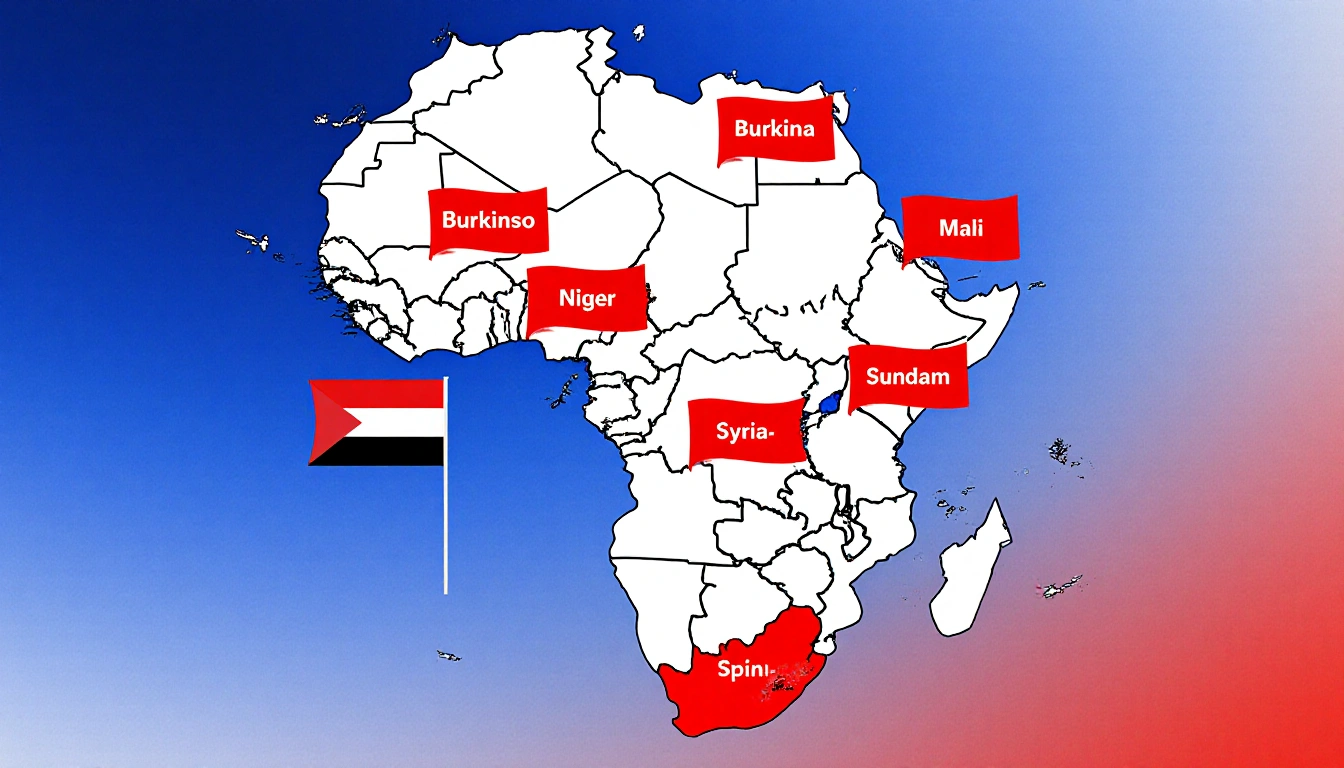
Sierra Leone was also moved to the full ban list.
Partial Restrictions
Twelve of the 15 countries that face partial restrictions are in Africa. They include:
- Angola
- Benin
- Ivory Coast
- Gabon
- Gambia
- Malawi
- Mauritania
- Nigeria
- Senegal
- Tanzania
- Zambia
- Zimbabwe
The remaining three are Antigua and Barbuda, Dominica and Tonga.
African Union Response
The African Union urged the United States to protect its borders in “a manner that is balanced, evidence-based, and reflective of the long-standing ties and partnership” between the U.S. and Africa, the bloc’s spokesman Nuur Mohamu said. The statement mirrored the AU’s June declaration when Trump revived the travel restrictions.
Sierra Leone’s Reaction
Sierra Leone said in a statement Wednesday that it hoped to engage Washington and get it to review the decision. The country pledged to “remain committed to strengthening international cooperation and addressing immigration concerns raised by the U.S. government,” adding that officials are “actively engaged in ongoing, constructive dialogue with U.S. authorities.”
Mali’s Position
In Mali, foreign ministry press officer Samuel Saye said it was “too early for us to comment,” a stance echoed by many other African officials.
Activists and Analysts
Several activists and analysts described the measures as unfair and a sign of incoherent U.S.-Africa relations. They warned that the ban could give Washington’s rivals such as Russia and China an opportunity to deepen ties with African states.
Nigerian Lawyer’s View
“I believe this position is unfair because it paints all Nigerians with the same brush,” said Ramlah Ibrahim Nok, a business lawyer in Nigeria’s capital, Abuja. She noted that many Nigerians travel for “education, business and tourism” and urged her own authorities to address visa-overstay issues.
Senegal Analyst’s Prediction
Beverly Ochieng, an analyst at Control Risks Group in Dakar, predicted that Trump’s ban will likely make relations between the U.S. and various African countries “incoherent, unpredictable and challenging.”
Malian Resident’s Concern
“It’s very unfortunate,” said Mohamed Keita, a 45-year-old Malian resident, adding that Washington’s “decision may penalize Malians who do business with the United States.”
Fear of Retaliation
Abdoulaye Fofana, 31, said he feared retaliation if Malian authorities “apply the principle of reciprocity, it is the bi-national Malians who will be affected.”
Sports Fans and the World Cup
Pape Seye, a taxi driver in Dakar, said he heard of “FIFA exemptions for the players and staff of the qualified teams” but was concerned whether “fans will be able to go as well” under the new measure.
South Sudan Activist’s Statement
Rajab Mohandis, a human rights activist in South Sudan, said the measure is “an open expression of increasing frustration of the Trump administration with the government” in the African country. He added that the ban is “a way of invoking diplomatic consequences” following U.S. concerns over the slow implementation of a 2018 peace agreement that ended five years of conflict and left more than 400,000 people dead.
Key Takeaways
- The U.S. travel ban now covers 20 countries, including several African states.
- The African Union warns of negative impacts on people-to-people ties, education, commerce and diplomacy.
- African officials and citizens express concerns over fairness and potential economic repercussions.
The expansion of the travel ban has drawn sharp criticism across the African continent, with governments and civil society urging a review and dialogue with Washington to mitigate the broader diplomatic fallout.