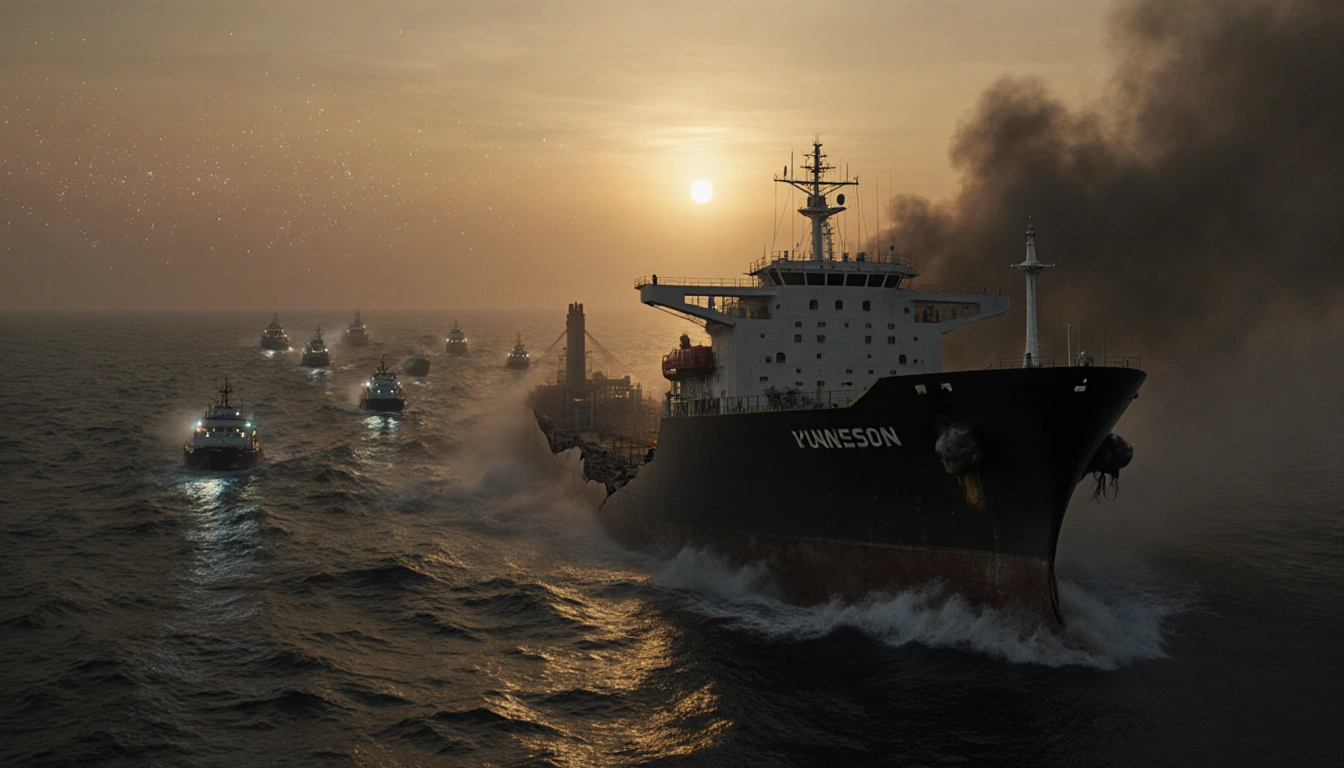
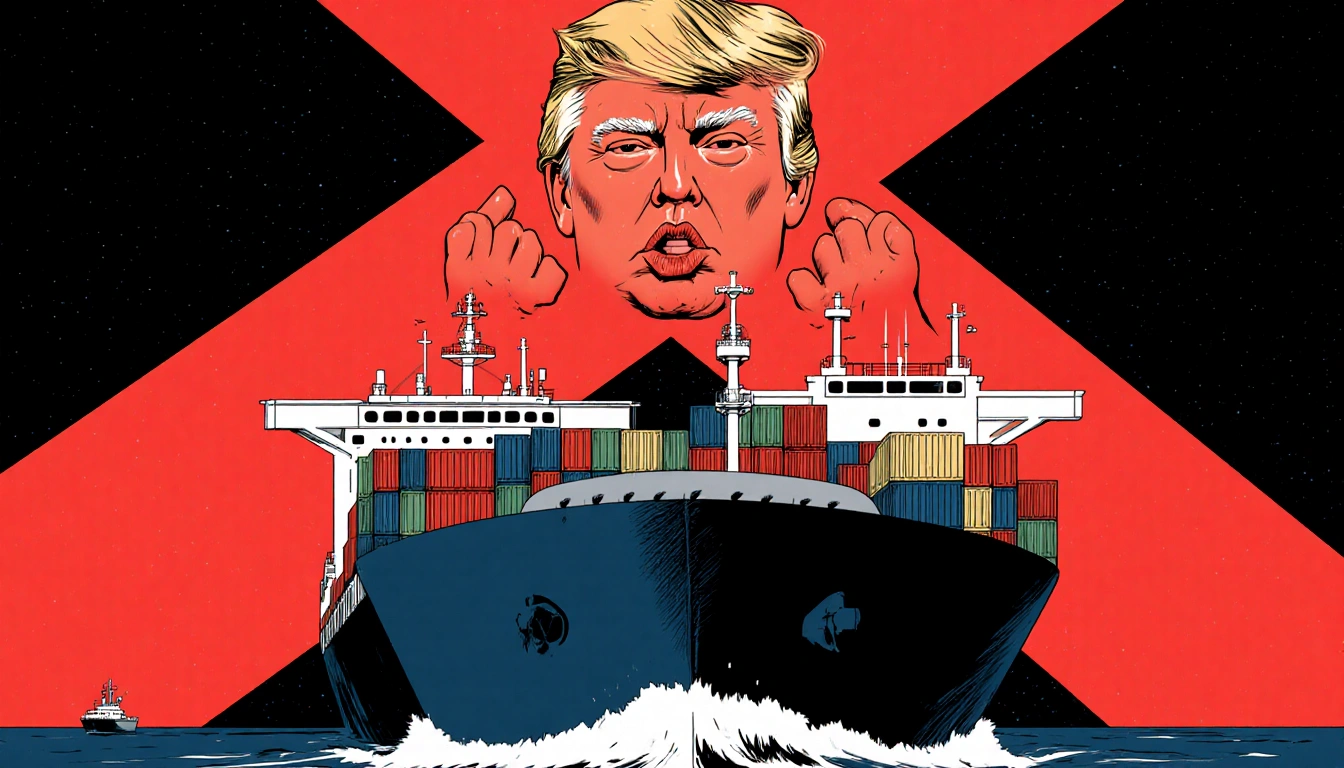
On Tuesday, President Donald Trump posted a stark warning on social media that could reshape the flow of Venezuelan oil. He declared a “total and complete blockade of all sanctioned oil tankers” entering or leaving the South American nation, a move that threatens to cut off revenue from the world’s largest oil reserves that underpin Nicolás Maduro’s rule.
Trump’s Blockade Threat
President Donald Trump, who has long opposed Venezuelan oil exports, used the platform to declare a blockade that could have immediate operational consequences for the country’s shipping industry.
Social Media Post
On Tuesday, Trump posted on social media in all caps, saying he is ordering a “total and complete blockade of all sanctioned oil tankers” into and out of Venezuela. The post was a dramatic escalation in the White House’s pressure campaign on leader Nicolás Maduro.
Sanctions Context
U.S. sanctions adopted during Trump’s first administration make it illegal for Americans to purchase Venezuela’s crude oil without a Treasury Department license. Hundreds of ships themselves have been sanctioned, forming a massive shadow fleet that transports oil on behalf of Iran, Russia, Venezuela and other U.S. adversaries under sanctions.
Shadow Fleet
These vessels are often aging and poorly maintained, yet they are essential to Venezuela’s ability to export oil. Since the first Trump administration imposed punitive oil sanctions on Venezuela in 2017, the Maduro government has leaned on a network of rogue tankers to smuggle a growing share of its roughly 900,000 barrels per day production.
Windward Data
Windward, a maritime intelligence firm that helps U.S. officials target the shadow fleet, reports that at least 30 vessels under sanctions are navigating near Venezuela. The firm’s senior analyst Michelle Wiese Bockmann said, “It’s quite clear that this has disrupted energy flows to and from Venezuela,” adding that they observe tankers deviating, loitering or changing behavior.
Vessel Hyperion
One of the flagged vessels is the Hyperion, which had been sailing toward the Jose port in Venezuela before making a 90-degree turn early Wednesday and heading north away from the South American mainland. The Hyperion had previously been part of Russia’s state-owned shipping fleet and was one of 173 sanctioned in the final days of the Biden administration for allegedly facilitating Russian oil sales in violation of sanctions over Moscow’s invasion of Ukraine.
Flag and Registry Changes
Following the penalties, the Hyperion changed its flag from the Comoros to Gambia. In November, the West African nation removed Hyperion and dozens of other vessels from its privately run ship registry for allegedly using false certificates claiming to have been issued by its maritime authority.
Ownership Obfuscation
The vessel’s ownership is hidden under multiple layers of offshore companies, some of them listed in Dubai, United Arab Emirates. Wiese Bockmann remarked, “It’s just screaming that it’s in a position to be seized.”
Impact on Energy Flows
The diversion of these tankers has already begun to disrupt energy flows to and from Venezuela, according to Windward analysts. The sudden change in routes is a direct response to the threat of seizure by U.S. forces, similar to the fate of the Skipper, a sanctioned vessel seized last week near Venezuela.
Venezuela’s Reliance on Rogue Tankers
Maduro’s oil exports depend heavily on these rogue tankers. The government has increased its reliance on the shadow fleet to maintain a growing share of its international shipments, as sanctions limit the use of state-owned vessels.
Shipment Percentages
Sanctioned tankers carried about 18% of Venezuela’s international shipments during the second half of this year, up from 6% in the first half, according to Jim Burkhard, global head of oil markets and mobility at S&P Global Energy. Burkhard added that while supplies to China, the main destination for most Venezuelan oil, could be affected, he does not expect any major disruption to oil markets.
Market Outlook
Burkhard said, “Volatility or uncertainty around Venezuela is not new, it’s not a shock,” and noted that markets react more when oil supplies are scarce. He emphasized that the market today is not tight, stating, “There’s plenty of oil.”
Heavy Crude to US
Venezuela also exports roughly 143,000 barrels per day of heavy crude to U.S. refineries along the Gulf coast. Much of this cargo is transported by Chevron, which has a waiver to operate in Venezuela.
Chevron Operations
Chevron’s spokesman Bill Turenne said, “Chevron’s operations in Venezuela continue without disruption and in full compliance with laws and regulations applicable to its business, as well as the sanctions frameworks provided for by the U.S. government.”
Industry Experts Reaction
Francisco Monaldi, a Venezuelan oil expert at Rice University in Houston, said, “There are already ships that have decided not to leave Venezuela for fear of being seized, and there are also ships headed to Venezuela to load crude oil that decided to turn back.”
Environmental Perspective
Wiese Bockmann added, “Many of these are no more than floating rust buckets,” noting that the diversion of these vessels is also beneficial for ocean safety, as many are poorly maintained and pose a threat.
Summary
Trump’s threat of a blockade has forced a significant portion of sanctioned tankers to alter their routes, highlighting the vulnerability of Venezuela’s oil export strategy and the effectiveness of U.S. sanctions. While the immediate market impact appears limited, the long-term effects on Venezuela’s revenue stream and on the global oil supply chain remain uncertain.
Key Takeaways
- Trump announced a “total and complete blockade of all sanctioned oil tankers” into and out of Venezuela.
- At least 30 sanctioned vessels are now deviating from routes near Venezuela, including the Hyperion.
- Sanctioned tankers accounted for 18% of Venezuela’s international shipments in the latter half of the year, up from 6% earlier.
Closing
With the international shipping community watching closely, the unfolding situation will test the resilience of Venezuela’s oil export network and the reach of U.S. sanctions. The next days will reveal whether the blockade threat translates into a broader disruption of global oil flows.