
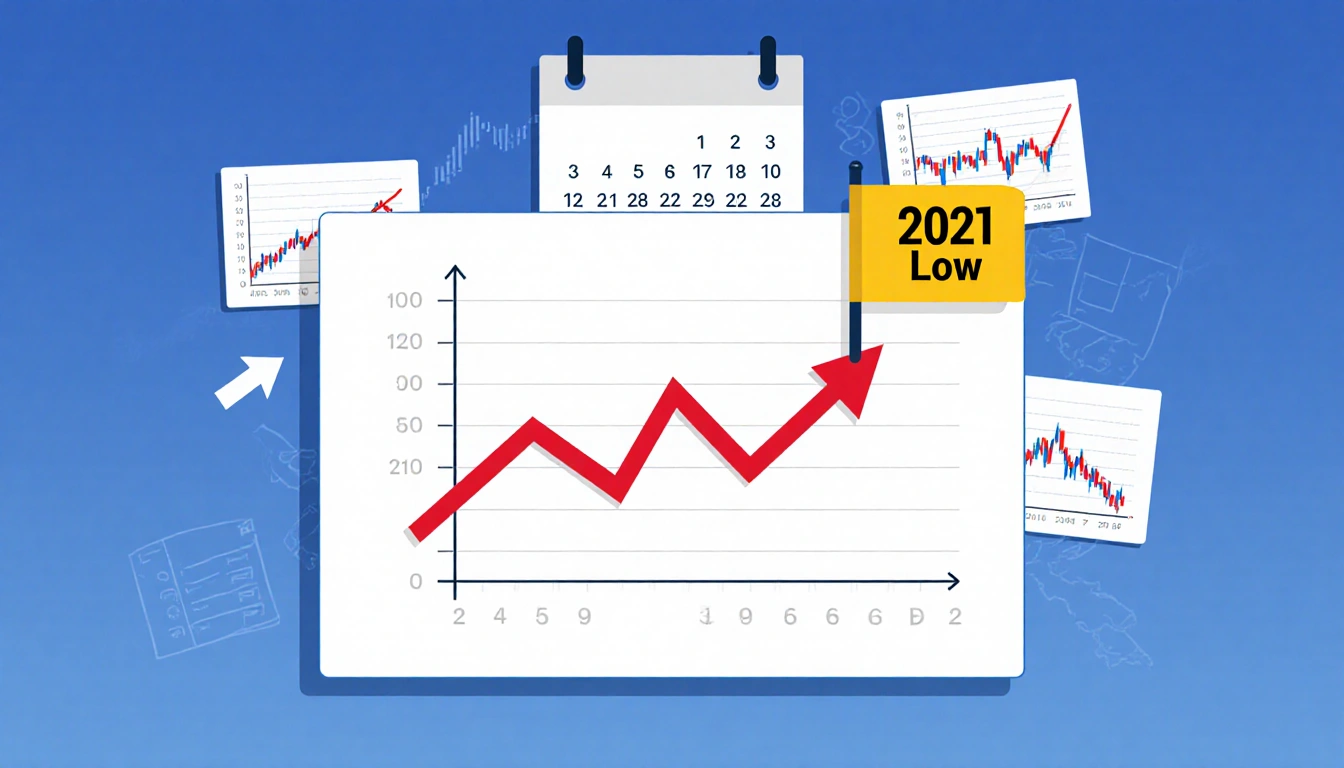
Oil prices on Tuesday fell to their lowest level since early 2021, with U.S. benchmark West Texas Intermediate trading at about $55 per barrel.
Oil Prices Reach 2021 Low
This dip is significant because it marks a reversal from the earlier week’s gains. The price level signals that market participants are adjusting to new supply data. The movement underscores the sensitivity of the oil market to global economic signals.
The earlier rise to $58 a barrel was driven by a brief tightening of supply expectations. Market watchers noted that the increase was short-lived, as subsequent data indicated a surplus. The subsequent decline to $55 a barrel reflects the market’s correction.
The early 2021 low was tied to widespread lockdowns that cut travel and industrial activity. The pandemic created a unique environment where demand fell sharply. The recent price drop echoes that historical context.
Gasoline Prices Follow Trend
The gasoline average of $2.91 a gallon is the lowest seen in the past few weeks. The drop from $2.95 a week earlier highlights the volatility in retail fuel prices. Consumers may see short-term relief on their fuel bills.
OPEC Production Target Hikes
Business Insider’s tracker aggregates data from major exchanges to provide real-time pricing. The tracker’s reporting of $55 a barrel aligns with other market sources. The figure represents the average price across the U.S. market. The production target hikes were announced by OPEC in a statement earlier this year. The group of exporting countries has historically influenced global supply levels. The hikes aimed to adjust output in response to changing demand conditions.
Market Dynamics
The increased production has added to the overall supply pool. This addition has put downward pressure on prices as the market adjusts. The effect is visible in the current price levels. The current price level underscores the sensitivity of the oil market to production decisions.
Domestic Policy and Global Factors
The Trump administration highlighted the low prices as a benefit for consumers. The administration acknowledges that global factors largely control market dynamics. The administration’s messaging focuses on consumer savings. The current price level underscores the sensitivity of the oil market to production decisions.
Consumer Impact
The current price level underscores the sensitivity of the oil market to production decisions. Demand fluctuations also play a role in shaping prices. No single entity can dictate the outcome of the market. Investors are monitoring the situation closely. Policymakers are evaluating the impact of OPEC decisions. Consumers are watching for potential changes in fuel costs.
Supply and Demand Sensitivity
The recent dip also reflects broader market sentiment. Traders weigh geopolitical developments. Supply-side dynamics shape pricing. The market is sensitive to new data.
Stakeholder Monitoring
With WTI at $55 a barrel, the oil market remains in flux. Supply and demand factors continue to interact on a global scale. The market is sensitive to new data. The oil market remains volatile, with price swings reflecting both supply announcements and demand forecasts.
Broader Market Sentiment
The ongoing price dip may prompt further adjustments by OPEC and other producers as they assess market conditions. Analysts suggest that any additional supply changes could reinforce the current trend. Meanwhile, consumers may benefit from lower fuel costs in the short term, but long-term outcomes will depend on global economic activity and policy decisions. For traders, the market remains volatile, with price swings reflecting both supply announcements and demand forecasts. The oil market’s sensitivity to global events continues to make it a key indicator for economic watchers worldwide.
Current Market State
In summary, the drop to $55 per barrel marks the lowest oil price level since the pandemic-era downturn of 2021. The decline follows OPEC’s earlier production target hikes and reflects the broader influence of global supply and demand forces. While the Trump administration has highlighted the benefit to consumers, the market remains largely governed by international dynamics. As the oil market continues to evolve, stakeholders will monitor supply decisions and demand indicators closely.
Key Takeaways
- Oil prices fell to their lowest level since early 2021, with WTI at $55 a barrel.
- The dip follows OPEC’s production target hikes and reflects global supply dynamics.
- Consumers may see short-term relief on fuel costs, while the market remains sensitive to international factors.
Conclusion
Oil prices dip to the lowest level since early 2021, with U.S. benchmark WTI trading at $55 a barrel and gasoline at $2.91 a gallon. OPEC’s production hikes and global supply factors shape the drop. The market remains sensitive to production decisions and demand shifts, and stakeholders will continue to monitor the evolving dynamics closely.