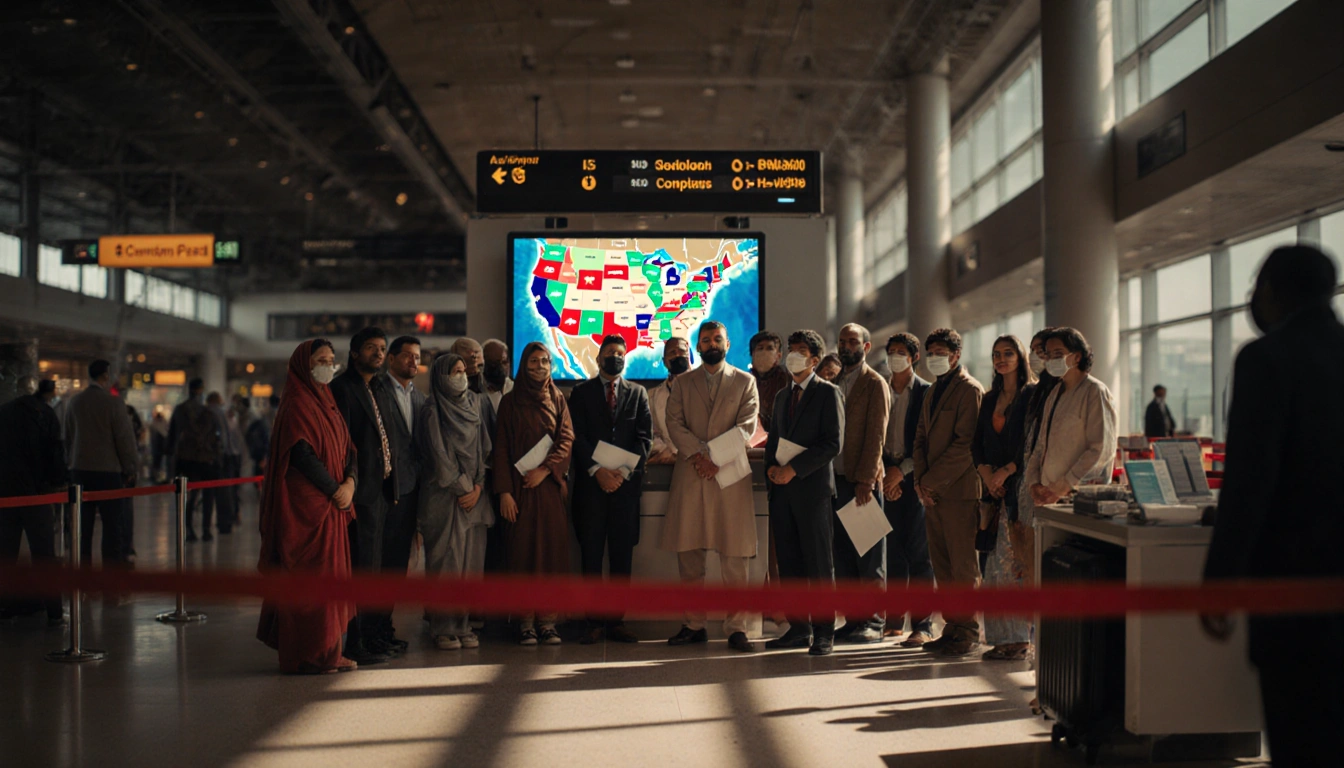
On Tuesday, the Trump administration announced a sweeping expansion of U.S. travel restrictions, adding 20 new countries and tightening limits on Palestinians, with changes set to take effect on Jan. 1.
Expanded Ban
The move doubles the number of nations affected by earlier limits announced in June. Five additional countries-Burkina Faso, Mali, Niger, South Sudan and Syria-were added to the full-ban list, while people traveling on documents issued by the Palestinian Authority were also placed under a complete ban. 15 other countries-Angola, Antigua and Barbuda, Benin, Ivory Coast, Dominica, Gabon, Gambia, Malawi, Mauritania, Nigeria, Senegal, Tanzania, Tonga, Zambia and Zimbabwe-were added to the partial-restriction list.
Scope and Exemptions
The restrictions apply to both visitors and those seeking to emigrate. Those who already hold visas, are lawful permanent residents, or fall into special categories such as diplomats, athletes, or individuals whose entry serves U.S. interests are exempt. The proclamation states the changes will be enforced beginning Jan. 1.
Administrative Rationale
The administration cited widespread corruption, fraudulent or unreliable civil documents, criminal records, high visa-overstay rates, refusal to repatriate citizens, and a general lack of stability and government control in the affected countries. It also referenced immigration enforcement, foreign policy and national security concerns. The decision was reportedly prompted by the arrest of an Afghan national suspected in the shooting of two National Guard troops over Thanksgiving weekend.
Criticism and Responses
Critics argue the ban uses national security as a pretext to exclude people from a broad range of countries. Laurie Ball Cooper, vice president of U.S. Legal Programs at the International Refugee Assistance Project, said: “This expanded ban is not about national security but instead is another shameful attempt to demonize people simply for where they are from.”
Advocates for Afghans who supported the U.S. war effort warned that the new ban removes the Special Immigrant Visa exception for Afghans who assisted U.S. forces. No One Left Behind, an agency supporting that visa program, expressed deep concern, stating: “Though intended to allow for review of inconsistent vetting processes, this policy change inadvertently restricts those who are among the most rigorously vetted in our history: the wartime allies targeted by the terrorists this proclamation seeks to address.”
Governments of the newly affected nations have begun to evaluate the announcement. Dominica said it was treating the issue with “utmost seriousness and urgency” and was contacting U.S. officials for clarification. Antigua and Barbuda’s ambassador to the United States, Ronald Saunders, described the matter as “quite serious” and said he would seek more information.
Additional Adjustments
The administration also upgraded restrictions on Laos and Sierra Leone, previously on the partially restricted list, and eased some restrictions for Turkmenistan, citing improvements. All other travel restrictions announced in June remain unchanged.
Key Takeaways
- The ban now covers 20 new countries and imposes a full ban on Palestinian Authority-issued passports, effective Jan. 1.
- Exemptions include existing visa holders, lawful permanent residents, diplomats, athletes, and those serving U.S. interests.
- Critics highlight the removal of the Special Immigrant Visa exception for Afghans and question the use of national security as justification.
The expansion reflects the administration’s ongoing effort to tighten U.S. entry standards amid concerns over document fraud, overstay rates, and security threats linked to recent incidents.