
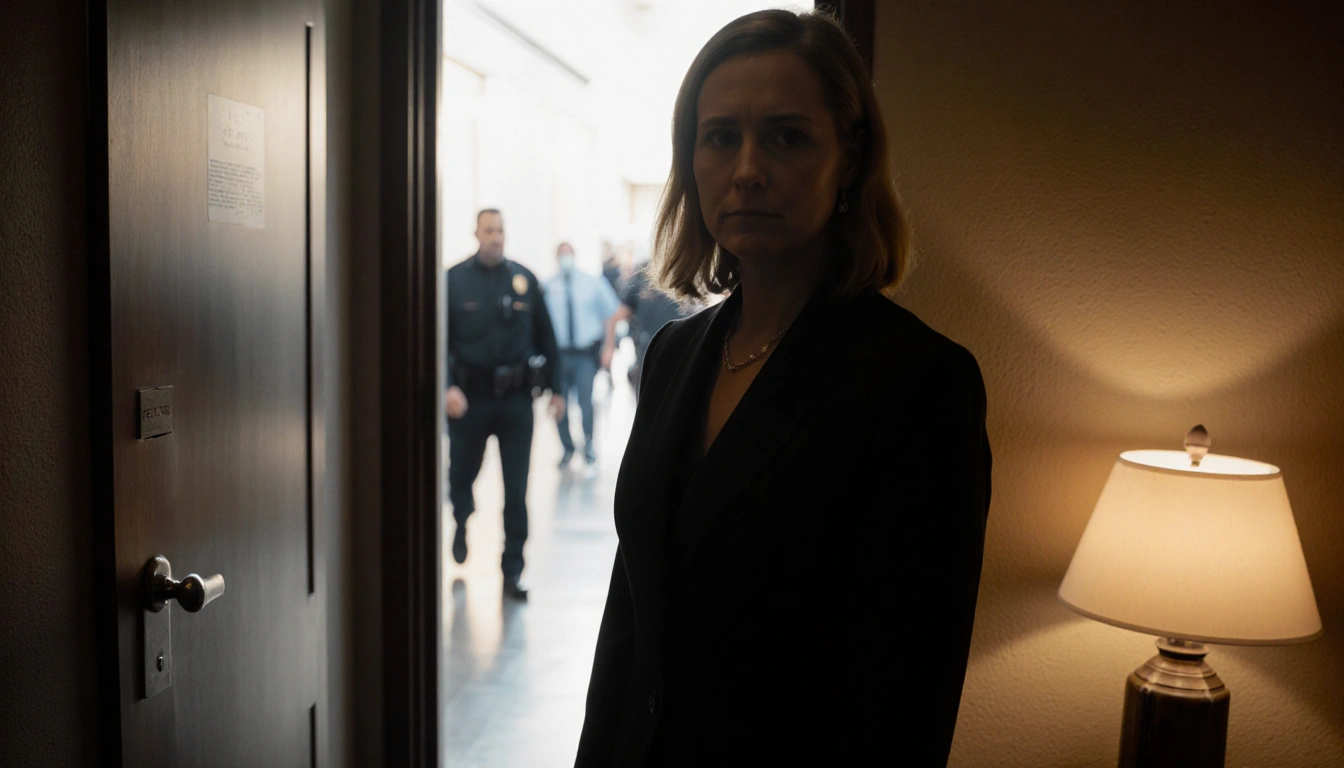
Prosecutors used courtroom audio on Monday to show that Milwaukee County Circuit Judge Hannah Dugan knew federal agents were waiting to arrest an immigrant and still directed him through a private back door.
On April 18, a team of six federal agents and officers entered the Milwaukee County courthouse to arrest Eduardo Flores‑Ruiz, 31, for unlawful presence. Flores‑Ruiz was also facing state battery charges and was scheduled to appear before Judge Dugan that morning. The agents planned to arrest him when he emerged from the hearing.
According to an FBI affidavit, Judge Dugan learned that the agents and officers were in the hallway waiting for Flores‑Ruiz. She left the courtroom and told them to consult with the chief judge. After several agents left to see the chief judge, she led Flores‑Ruiz out of her courtroom through a private back door.
The private door led Flores‑Ruiz back to the public hallway. Agents followed him outside and eventually arrested him after a brief foot chase. He was deported months later.
Courthouse video shows Judge Dugan directing members of the arrest team toward the chief judge’s office and she hasn’t disputed that she led Flores‑Ruiz out of the courtroom. The case hinges on whether she was intentionally trying to prevent his arrest.
Prosecutors opened her trial Monday in federal court in Milwaukee by working to show that the judge told the agents to see the chief judge to create an opening for Flores‑Ruiz to escape.
FBI Special Agent Erin Lucker testified that while agents were in the chief judge’s office, Judge Dugan moved Flores‑Ruiz’s case to the top of her docket, scheduled another hearing for him and told him he could appear via Zoom before directing him out through the back door. All this was done within minutes, Lucker said.
Prosecutors played audio from her courtroom in which Judge Dugan and her court reporter discussed who should lead Flores‑Ruiz out of the courtroom. After the reporter offered to help him, Judge Dugan said that she’d do it.
“I’ll get the heat,” Judge Dugan said.
The arrest team “did not expect a judge, sworn to uphold the law, would divide their arrest team and impede their efforts to do their jobs,” Assistant U.S. Attorney Keith Alexander told jurors.
Defense attorney Steven Biskupic countered that the judge had no intention of obstructing agents. He said during his opening statements that Judge Dugan was following a draft courthouse policy that called for court personnel to refer immigration agents looking to make an arrest in the courthouse to supervisors.
Biskupic said Dugan didn’t obstruct the team, pointing out that two agents who didn’t go to the chief judge’s office could have arrested Flores‑Ruiz as soon as he stepped into the public corridor but instead followed him outside before trying to apprehend him.
“Now, after the fact, everyone wants to blame Judge Dugan,” Biskupic told the jury.
The government’s case is expected to run through Thursday, with roughly two dozen witnesses expected to testify. The maximum sentence for the more serious charge, obstruction, is five years in prison, though federal judges have much discretion to go lower.
Ahead of the trial, U.S. District Judge Lynn Adelman declined to dismiss the charges, saying there was no firmly established immunity for Judge Dugan.
Democrats say Trump is looking to make an example of Judge Dugan to blunt judicial opposition to immigration arrests. Judge Dugan told police she and her family found threatening flyers at their homes this spring. The administration has branded her an activist judge.
Republican U.S. Rep. Tom Tiffany, a fierce Trump loyalist running for Wisconsin governor next year, urged authorities to “lock her up” in a recent tweet.
The trial will examine whether Judge Dugan’s actions constituted obstruction of justice or were simply a procedural misstep. Prosecutors argue that the judge’s instructions created a clear opportunity for Flores‑Ruiz to evade arrest.
Biskupic maintains that the judge was merely following policy and that the agents’ failure to act promptly was the decisive factor in the escape.
Both sides will rely heavily on the audio recordings and the FBI affidavit to support their narratives. The recordings capture the judge’s decision‑making process in real time.
The case has drawn national attention, with political leaders on both sides weighing in. Some view the trial as a test of judicial independence, while others see it as a necessary check on immigration enforcement.
The court will also consider whether Judge Dugan’s actions violated federal law or whether they fell within the scope of her judicial duties.
The trial’s outcome could set a precedent for how judges interact with federal agents in immigration matters. It may also influence future policy regarding courthouse procedures.
The proceedings are expected to conclude by the end of the week, after which a decision will be announced. The case remains a focal point for debates over immigration enforcement and judicial conduct.
In the meantime, Judge Dugan remains on the docket, with the federal case pending.
Key Takeaways
- Judge Dugan faces obstruction charges after directing an immigrant through a private back door during a federal arrest.
- The trial will examine whether her actions were intentional or procedural.
- The case has sparked national debate over judicial conduct and immigration enforcement.
The trial will shed light on the intersection of federal immigration policy and state court procedures, and its outcome could influence how courts handle similar situations in the future.