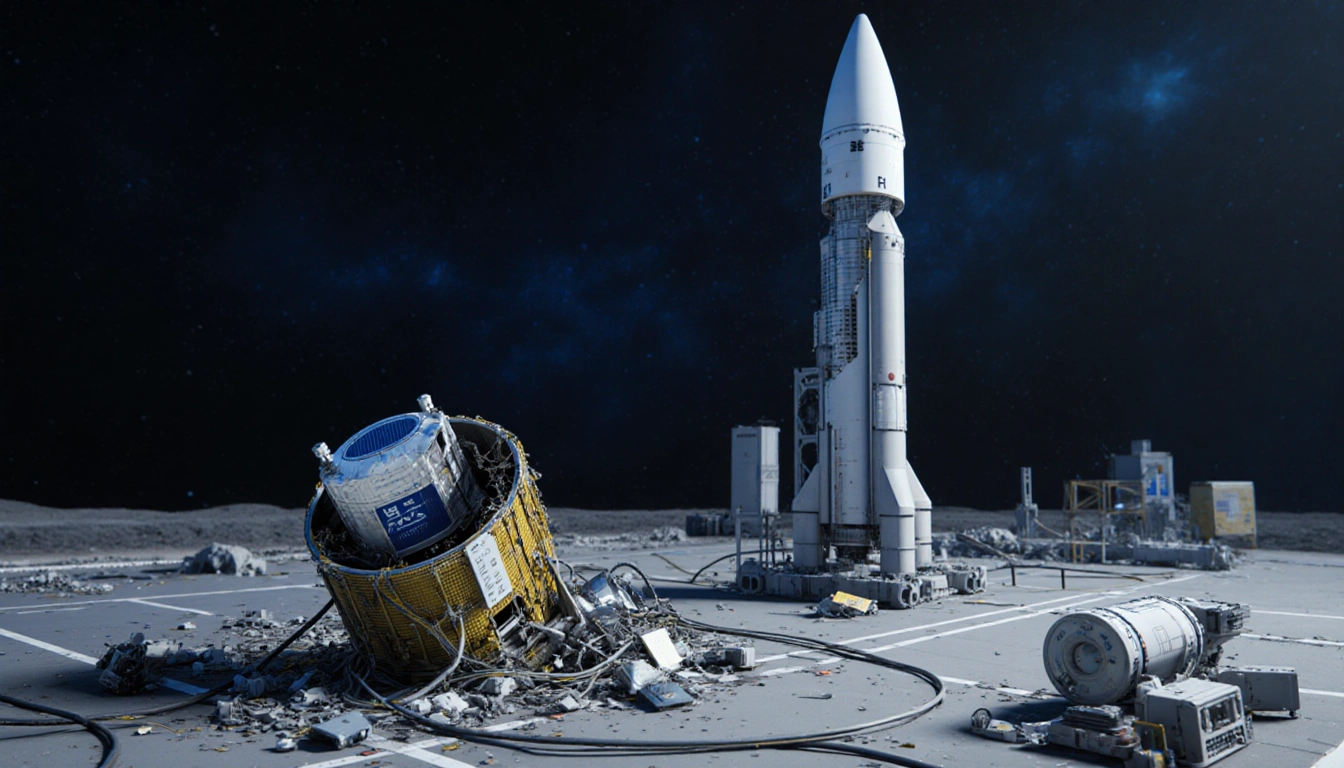

Japan’s new flagship rocket, the H3, failed to place the Michibiki 5 navigation satellite into orbit, marking a second setback for the vehicle and delaying the country’s push for an independent satellite navigation system.
The Launch and Immediate Failure
The launch, which began from Tanegashima Space Center on a southwestern Japanese island, occurred on Monday. The H3 carried the Michibiki 5 satellite as part of Japan’s plan for a more precise location positioning system of its own. The vehicle’s second-stage engine burn unexpectedly had a premature cutoff. The subsequent separation of the satellite from the rocket could not be confirmed.
Investigation and Response
Masashi Okada, a JAXA executive and launch director, told a news conference that the engine cutoff happened before the planned burn time and that the satellite’s release could not be verified. He added that the data from the launch were being examined to determine the cause. Okada said the investigation would look into all available telemetry. The outcome would clarify where the failure occurred.
JAXA is investigating the data to determine the cause and other details, Okada said. The agency has not yet identified a specific fault but is reviewing every piece of information from the launch. JAXA’s H3 project manager, Makoto Arita, emphasized that the new flagship is still in the early stages of operation. Arita said it can be globally competitive if the issues are resolved.
Impact on Japan’s Navigation System
Jun Kondo, an official at the Ministry of Education, Culture, Sports, Science and Technology, told reporters that the failure was “extremely regrettable.” He said the government had set up a task force to investigate the cause and take necessary measures as soon as possible. Kondo added that the task force would work to “regain credibility.” The ministry’s statement underscored the seriousness of the setback.
Japan currently has the quasi-zenith satellite system, or QZSS, with five satellites for a regional navigation system that first went into operation in 2018. Michibiki 5 was to be the sixth of its network, extending coverage and accuracy. The satellite’s failure delays the planned expansion of the QZSS constellation. The delay affects Japan’s goal of a seven-satellite system by March 2026.
Importance of Independent Navigation
Japan relies partially on American GPS and wants to have a seven-satellite network system by March 2026 and an 11-satellite network by the late 2030s. The independent navigation system would support smartphones, maritime navigation and drones without relying on the U.S. GPS system. The delay in launching Michibiki 5 could postpone these applications. The plan to reduce dependence on foreign systems is a key national priority.
Design and Strategic Context
The H3 rocket is designed to be more cost-competitive in the global space market. Japan sees a stable, commercially competitive space transport capability as key to its space program and national security. The H3 replaced the earlier mainstay H-2A, which had a near-perfect success record. The new rocket’s early failures highlight the challenges of developing a new launch vehicle.
Japan’s strategy to make the H3 more cost-competitive is evident in its design, which aims to lower launch costs and enhance competitiveness.
JAXA’s View on Stability
JAXA’s H3 project manager, Makoto Arita, said the new flagship is still in the early stages of operation but can be globally competitive. He added, “We will pull ourselves together so that we won’t fall behind rivals.” Arita also said, “We’ll fully investigate the cause and put H3 back on track.” The statement emphasized the agency’s commitment to recovery.
Arita emphasized that the H3’s early challenges do not diminish its potential to meet international standards once issues are resolved.
Past H3 Issues
In its debut flight in March 2023, H3 failed to ignite the second-stage engine. Monday’s launch came five days after JAXA aborted just 17 seconds before liftoff, citing an abnormality of a water spray system at the launch facility. That abort followed an earlier problem with the rocket. The series of issues has raised concerns about the vehicle’s readiness.
The aborted launch five days earlier was caused by an abnormality in a water spray system at the launch facility, a concern that had been flagged during preflight checks. That incident followed an earlier problem with the rocket, adding to a pattern of technical difficulties that have prompted heightened scrutiny of the H3 program.
Next Steps
JAXA will analyze the data from the launch to determine the cause and other details. The government task force will investigate the failure and take necessary measures as soon as possible. Measures will aim to regain credibility and restore confidence in Japan’s launch capabilities. The H3 is expected to return to the launch schedule once the issues are addressed.
The task force will also examine the launch sequence and any factors that may have contributed to the premature engine cutoff.
Key Takeaways
- The H3 rocket failed to place the Michibiki 5 satellite into orbit, marking a second setback for the vehicle.
- Japan’s independent navigation system plans are delayed, affecting smartphone, maritime and drone applications.
- JAXA and the government are investigating the cause and working to regain credibility.
The failure underscores the challenges of developing a new launch vehicle and the importance of rigorous testing before each mission.