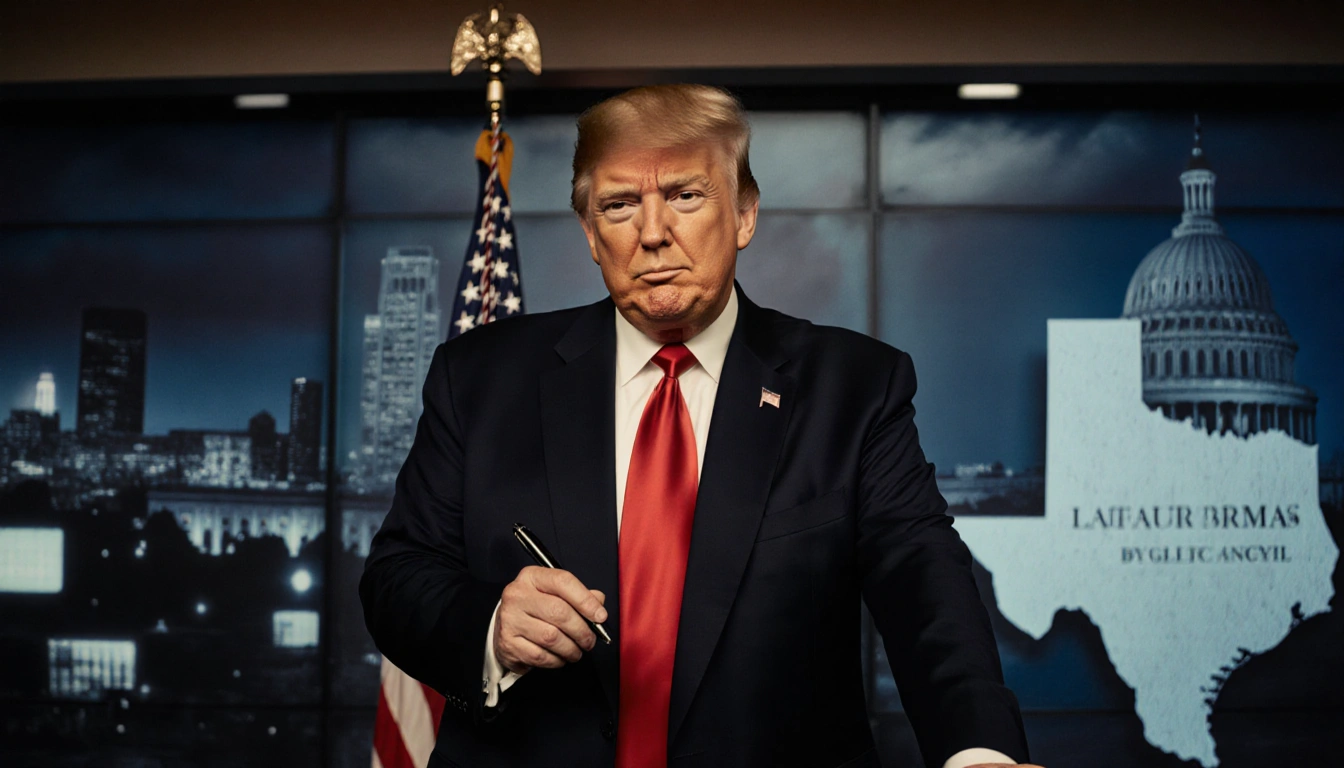
In a decisive move that could reshape the nation’s approach to cannabis, President Donald Trump has directed the federal government to reclassify marijuana from Schedule I to Schedule III. The change, announced in an executive order issued last week, aims to unlock research and therapeutic use. Experts say the shift could lead to larger clinical studies on marijuana’s medical applications.
“Americans deserve access to the best medical treatments and research infrastructure in the world,” Trump said in the opening line of his executive order issued last week. “Yet decades of federal drug control policy have neglected marijuana’s medical uses. That oversight has limited the ability of scientists and manufacturers to complete the necessary research on safety and efficacy to inform doctors and patients.”
Schedule I drugs are considered to have no safe and accepted medical use and come with a high risk for abuse, according to the Texas State Board of Pharmacy (TSBP). In Texas, marijuana, heroin, and crack cocaine are classified as Schedule I. The classification limits research and commercial development of the substance.
Texas remains one of the states that keeps marijuana on the most restrictive schedule, despite growing public demand for medical access. The state’s laws mirror federal policy in treating the drug as having no recognized medical benefit. This stance has spurred advocacy groups to push for change.
Schedule III substances are considered to have less of an abuse risk than Schedule I and II and also have safe and accepted medical uses in the United States, according to TSBP. The shift to this schedule would signal federal acknowledgment of marijuana’s therapeutic potential. It would also align the drug with other prescription medications that are regulated for medical use.
Dr. David Rabin, a board-certified psychiatrist in neuroscience, explained that changing the classification from Schedule I to Schedule III will really open up the scientific research of marijuana. “The reclassification to Schedule III allows it to actually be used as, number one, a therapeutic for patients, and, number two, it unlocks the ability to do large-scale research studies,” Rabin said. His statement highlights the potential for new clinical trials.
Rabin specializes his studies on trauma and addiction. He views marijuana as a medicine and is happy with the decision by the president to reclassify it as such. His expertise lends credibility to the claim that research opportunities will expand.
“It’s one of the most powerful tools in our toolbox for treating chronic pain, PTSD and many other challenging chronic illnesses that we have struggled to treat in our field with other tools that we have available,” Rabin said. He believes marijuana can fill gaps left by conventional therapies. This perspective aligns with the president’s emphasis on medical access.
Rabin said the reclassification would unlock the ability to conduct large-scale studies. He emphasized that the new schedule would allow researchers to test safety and efficacy in controlled settings. This could accelerate evidence-based guidance for clinicians.
Rabin’s research focus includes comparing plant-based cannabis to opiates and other pain medications. He notes that 1 in 4 American adults experience some form of chronic pain, a statistic highlighted in the executive order. The opioid crisis has intensified the need for alternative pain management options.
The biggest area of research in Rabin’s eyes is to compare plant-based cannabis to opiates and other pain medications. He believes that such studies could demonstrate whether cannabis is as effective or safer than current opioid treatments. This comparative work could influence prescribing practices.
The president’s executive order mentions 1 in 4 American adults are experiencing some form of chronic pain as the country deals with a rise in opioid overdoses in the past decade. Rabin said some studies suggest cannabis users with a chronic illness report using less opiate medication. This observation supports the need for rigorous trials.
Rabin said some studies suggest cannabis users with a chronic illness report using less opiate medication. He pointed out that reduced opioid use could lower overdose risk. The findings underscore the potential public health benefits of reclassification.
“I think that’s where we really see an opportunity of looking at cannabis compared to what we’re doing now and actually be able to prove – not just looking at the population and how it’s impacting the population’s engagement with different other treatments and street drugs or illicit drugs – but to actually look at comparative scientific trials showing, proving that this medicine is as good or as effective and safer than many of the other tools we’re using that have a lot of side effects,” Rabin said. His statement calls for direct evidence to guide treatment.
Diane Carlson is a co-founder of One Chance to Grow Up, a non-profit focused on advocating for regulations that protect and prevent access of marijuana to children. She expressed concerns about the executive action. Carlson’s perspective highlights the debate over youth safety.
“We just worry that it sends the message to our youth that, ‘Hey, all this stuff that’s being sold as marijuana, it’s safe, it’s healthy,'” Carlson said. “It’s not really bad for you when there’s a lot of data and evidence showing otherwise, especially for the developing brain.” She underscores the potential misperception among adolescents.
She notes that the developing brain is particularly vulnerable to the effects of marijuana. Carlson points out that the evidence shows negative outcomes for adolescents. Her stance reflects a cautionary approach to policy changes.
Carlsen said if the federal government decides to reschedule the drug she hopes more regulations are put in place, like requiring potency limits on products. She advocates for clearer labeling and dosage controls. This would aim to mitigate risks associated with high-potency strains.
Even if the federal government takes action to reschedule marijuana, the state of Texas still classifies the drug as Schedule I. The state’s laws would remain unchanged until a separate action is taken. This discrepancy could create legal uncertainty.
Rabin predicts states like Texas will follow the federal government’s direction if the action follows through. He believes that federal rescheduling would set a precedent for state policy. The outcome could lead to broader medical access across the country.
Trump directed U.S. Attorney General Pam Bondi to reschedule marijuana “in the most expeditious manner.” This instruction signals an urgency to move the process forward. Bondi’s role is to oversee the rescheduling effort.
Experts are not clear on when that could actually happen. The rescheduling process involves multiple agencies and reviews. The timeline remains uncertain.
The reclassification could accelerate research into medical applications of marijuana. It would also allow physicians to prescribe the drug under regulated conditions. Patients could gain access to alternative therapies.
Opponents worry that the change may increase youth exposure and misuse. They fear it could send a message that marijuana is harmless. Regulatory safeguards would need to be strengthened to address these concerns.
With Schedule III status, researchers could conduct large-scale clinical trials. This would generate robust data on efficacy and safety. The findings could inform evidence-based guidelines.
If cannabis proves to be a viable alternative, it could reduce opioid prescriptions. Lower opioid use may decrease overdose deaths. The policy shift could contribute to public health improvements.
The move would require updates to federal scheduling regulations. It would also prompt revisions to state laws that currently treat marijuana as Schedule I. Compliance would involve coordination across agencies.
Medical professionals largely support the reclassification. Advocacy groups for patients with chronic pain welcome the possibility of new treatments. Some regulatory bodies remain cautious.
The scheduling of controlled substances is governed by the Controlled Substances Act. The executive order does not automatically change state law. Legal challenges could arise during implementation.
The Food and Drug Administration may need to evaluate new clinical data. It could also develop guidelines for prescribing Schedule III marijuana products. The agency’s involvement will shape the practical application of the new schedule.
The TSBP defines Schedule III substances as having accepted medical uses. It monitors the pharmacy practice related to controlled substances. The board’s stance will influence state compliance.
Other states have already reclassified marijuana for medical use. Texas remains one of the few states that have not adopted such changes. The federal shift could level the playing field.
Marijuana was originally placed in Schedule I in 1970. Over the decades, public opinion has shifted toward acceptance of medical use. The current proposal reflects that evolution.
Should the reclassification proceed, it could open a new era of research and therapeutic use. The long-term effects on public health remain to be studied. Stakeholders will monitor the implementation closely.
Trump’s executive order signals a potential turning point in federal drug policy. The decision to reclassify marijuana to Schedule III could unlock research, expand medical access, and influence the opioid crisis. The final outcome will depend on the actions of federal and state agencies and the regulatory process.