Israel launched a series of airstrikes on Hezbollah positions in Lebanon on Thursday, just a day before a Paris meeting on the enforcement of a U.S.-brokered ceasefire.
Airstrikes Target Hezbollah Infrastructure
The Israeli military said the strikes hit Hezbollah infrastructure and launching sites in a military compound used for training and courses. It also struck several structures where weapons were stored and from which Hezbollah members had operated recently. The attacks stretched from Mount Rihan in the south to the northeastern Hermel region that borders Syria, according to the state-run National News Agency (NNA). A drone strike on a car near the southern town of Taybeh wounded four people, NNA reported.
Paris Talks and Lebanese Army Support
In Paris, Lebanese Army commander Gen. Rodolph Haikal met with U.S., French and Saudi officials to discuss ways to boost the army’s presence along the border. Haikal began the talks with French military officials. Gen. Fabien Mandon, the French armed forces’ chief of staff, posted on X Thursday that he discussed the strategic environment and security challenges in Lebanon and the region. Mandon said France’s help to the Lebanese army is guided by a common objective: “to contribute to maintaining stability and lasting peace, in respect with Lebanon’s sovereignty.”
The French Foreign Ministry said political parties meeting in Paris on Thursday agreed to hold a conference in February aimed at supporting the Lebanese armed forces. The talks focused on how to demonstrate progress toward Hezbollah’s disarmament, as French, Saudi and U.S. officials met with the head of the Lebanese army to work on a road-map for a disarmament mechanism. A Lebanese army statement quoted Haikal as telling Mandon that Lebanon’s military is committed to implementing the first phase of the ceasefire deal near the border with Israel “within the specified time frame.”
Context and Background
The latest Israel-Hezbollah war began on Oct. 8, 2023, a day after Hamas-led militants attacked southern Israel, after Hezbollah fired rockets into Israel in solidarity with Hamas. Israel launched a widespread bombardment of Lebanon in September 2024 that severely weakened Hezbollah, followed by a ground invasion. Israel has carried out almost daily airstrikes since then, mainly targeting Hezbollah members, but also killing 127 civilians, according to the office of the U.N. High Commissioner for Human Rights. Over the past several weeks, the U.S. has increased pressure on Lebanon to work harder on disarming Hezbollah.
Parliamentary Speaker Nabih Berri said the strikes were “This is an Israeli message to the Paris meeting aiming to support the Lebanese army.” He added that “the fire belt of Israeli airstrikes is to honor the mechanism’s meeting tomorrow (Friday).”
Key Takeaways
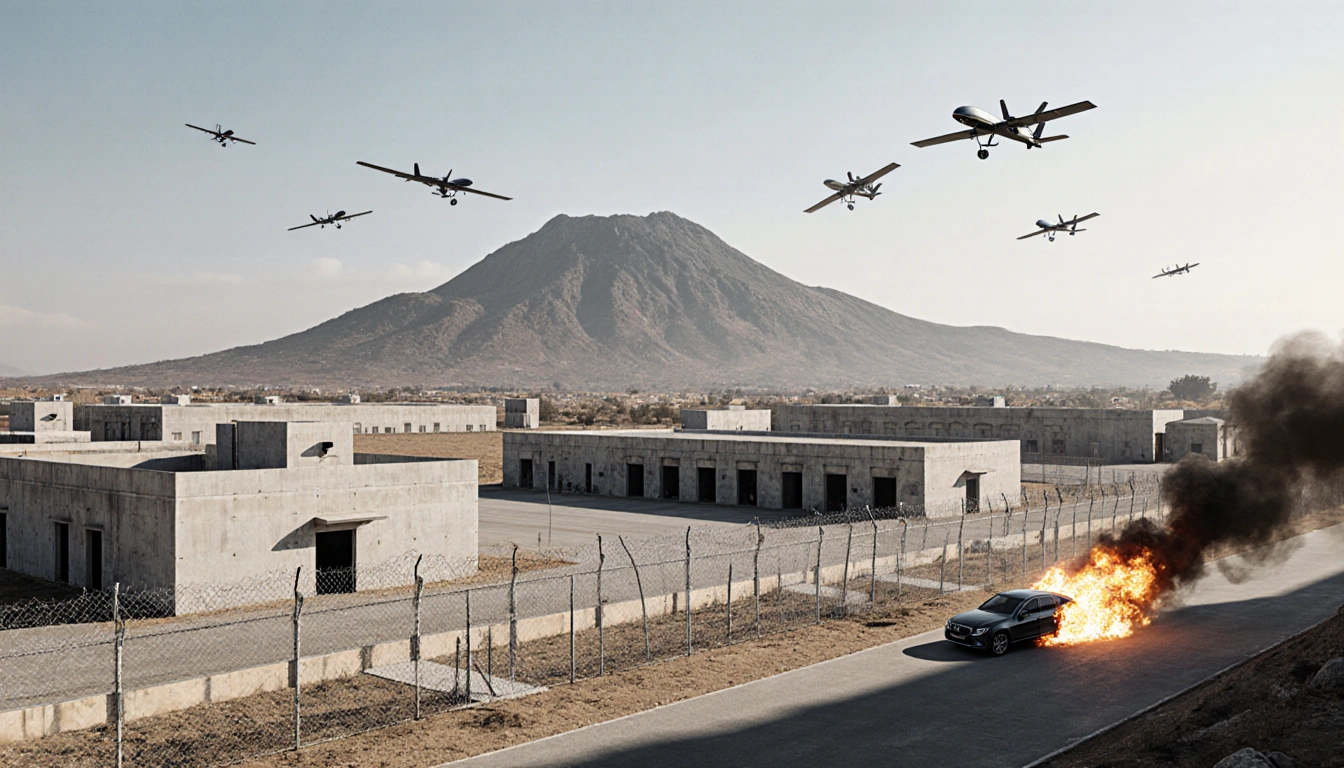
- Israel’s airstrikes targeted Hezbollah infrastructure and weapons storage sites in southern and northeastern Lebanon.
- Lebanese Army commander Gen. Haikal met with U.S., French and Saudi officials in Paris to secure support for border operations.
- The attacks come just before a Paris meeting on the enforcement of a U.S.-brokered ceasefire and amid ongoing U.S. pressure for Hezbollah disarmament.
Israel’s latest offensive underscores the tense situation along the Israel-Lebanon frontier and the international community’s focus on enforcing the 2023 ceasefire agreement.