
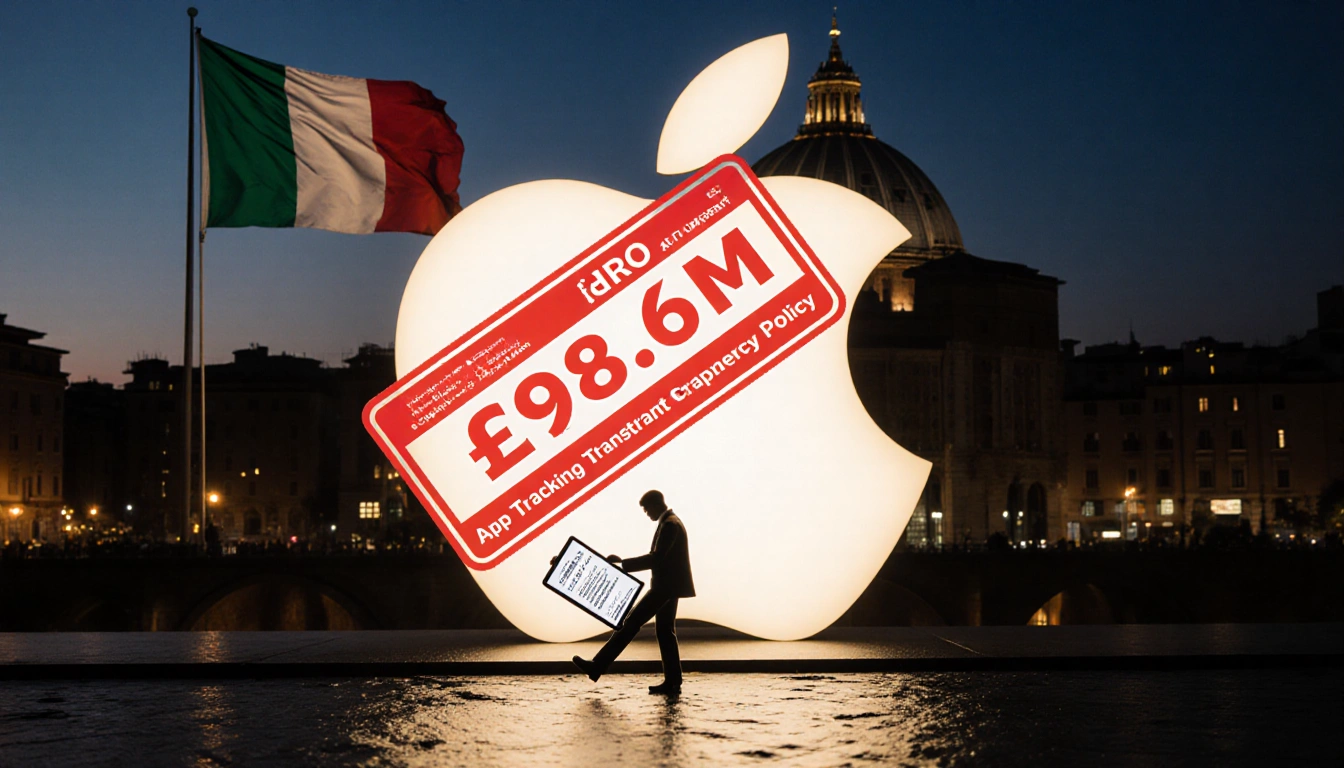

Apple was slapped with a €98.6 million fine by Italy’s antitrust authority on Monday, a decision that the Cupertino-based tech giant says it will challenge.
Overview of the Fine
The fine, amounting to 98.6 million euros ($116 million), was imposed after the authority concluded that Apple’s App Tracking Transparency (ATT) policy restricted competition within the App Store.
This determination followed a review of how the policy forces third-party apps to seek user consent before collecting data for personalized advertising.
Apple has announced its intention to appeal the sanction, arguing that the policy protects privacy rather than stifles competition.
App Tracking Transparency Policy
ATT was introduced in April 2021 as part of an update to the iOS and iPadOS operating systems, and it requires apps to obtain explicit permission before tracking a user across other apps and websites.
The feature was designed to tighten privacy controls for mobile users, but it has faced criticism from competitors who claim it makes it harder for smaller apps to survive without charging consumers.
Apple maintains that ATT gives users a simple way to control whether companies can track their activity, and that the rules apply equally to all developers.
Double Consent Issue
The Italian regulator did not criticize the ATT policy itself, but it focused on the fact that Apple’s system requires third-party app makers to ask users for consent twice in order to comply with Europe’s strict privacy rules.
“As a result, such double consent requirement is harmful to developers, whose business model relies on the sale of advertising space, as well as to advertisers and advertising intermediation platforms,” the authority said.
The regulator described the double consent as “disproportionate” to the stated goal of data protection.
Impact on Developers
Developers who rely on advertising revenue feel that the double-consent requirement hampers their ability to serve targeted ads, which can reduce the value of their apps for users and for advertisers.
Smaller developers, in particular, argue that the policy levels the playing field against larger companies that can afford to absorb the costs of additional consent steps.
The authority’s statement highlighted that the policy’s impact is not limited to developers but also extends to advertisers and advertising intermediation platforms.

Apple’s Response
Apple said it strongly disagreed with the finding and would appeal the decision, stating that the regulator disregarded the privacy protections of the policy in favor of ad tech companies and data brokers who want unfettered access to users’ personal data.
“At Apple, we believe privacy is a fundamental human right, and we created App Tracking Transparency to give users a simple way to control whether companies can track their activity across other apps and websites,” Apple said in a statement.
“These rules apply equally to all developers, including Apple, and have been embraced by our customers and praised by privacy advocates and data protection authorities around the world.”
Comparison to French Fine
The Italian antitrust finding mirrors a similar action taken by the French competition watchdog, which in March fined Apple 150 million euros ($162 million) over the same consent feature.
Both cases highlight the growing scrutiny of Apple’s privacy mechanisms by European regulators.
The French fine was also centered on the double-consent requirement that the authority in France deemed excessive for the protection of user data.
Regulatory Context
The European Union’s competition framework allows member states to enforce rules that prevent dominant firms from abusing their market position, and both Italy and France are exercising this power.
In the Italian case, the antitrust authority determined that Apple’s ATT policy created a barrier to competition by imposing an extra consent step on third-party apps.
The French regulator reached a similar conclusion, emphasizing that the double-consent requirement was excessive for the purpose of protecting user data.
Developer Perspectives
Developers who depend on ad revenue feel that the double-consent requirement reduces the effectiveness of targeted advertising, which can lower user engagement and revenue streams.
Smaller developers worry that the added consent steps increase operational complexity and cost, potentially making it harder to compete with larger companies that can absorb these costs.
The antitrust authority’s assessment highlights that this regulatory approach could shift the competitive balance in the App Store ecosystem.
Advertiser Concerns
Advertisers express concern that the double-consent model diminishes the precision of data collection, which can affect campaign performance and return on investment.
The policy’s impact on the supply side of the advertising market may lead to higher costs for advertisers as they seek alternative targeting methods.
The antitrust authority’s statement indicates that the regulation also harms advertising intermediation platforms that rely on data to match advertisers with suitable audiences.
Privacy Advocates View
Apple’s statement emphasizes that privacy is a fundamental human right and that ATT was designed to empower users to control cross-app tracking.
The company claims that the rules apply equally to all developers and have received praise from privacy advocates and data protection authorities worldwide.
However, the Italian regulator’s focus on the double-consent requirement suggests that even privacy-oriented measures can be scrutinized if they affect market competition.
Legal Basis
The European Union’s competition framework allows member states to enforce rules that prevent dominant firms from abusing their market position, and both Italy and France are exercising this power.
In the Italian case, the antitrust authority determined that Apple’s ATT policy created a barrier to competition by imposing an extra consent step on third-party apps.
The French regulator reached a similar conclusion, emphasizing that the double-consent requirement was excessive for the purpose of protecting user data.
Potential Impact on App Store
If the fine is upheld, Apple may need to modify the ATT implementation to reduce the double-consent burden on developers.
Such changes could alter the user experience by simplifying the consent process or by adjusting the timing of permission requests.
The outcome may also influence how other European regulators approach similar privacy-competition intersections in the future.
Future Outlook
Apple’s appeal will be closely monitored by developers, advertisers, and regulators as it tests the balance between privacy protections and market competition.
The Italian decision, mirrored by the French penalty, signals that European competition authorities are willing to challenge Apple’s privacy mechanisms when they are viewed as restrictive to app developers.
The final ruling could set a precedent for how privacy-related consent requirements are evaluated in the context of antitrust law.
Key Takeaways
- Apple faces a €98.6 million fine in Italy for its App Tracking Transparency policy.
- The double-consent requirement is deemed harmful to developers, advertisers, and intermediation platforms.
- The Italian fine aligns with a recent French penalty of €150 million for the same feature.
Apple’s decision to appeal the fine underscores the tension between privacy safeguards and competitive dynamics in the app ecosystem. As European regulators continue to scrutinize the company’s practices, developers and advertisers will watch closely how the outcome shapes the future of mobile advertising and privacy controls.