
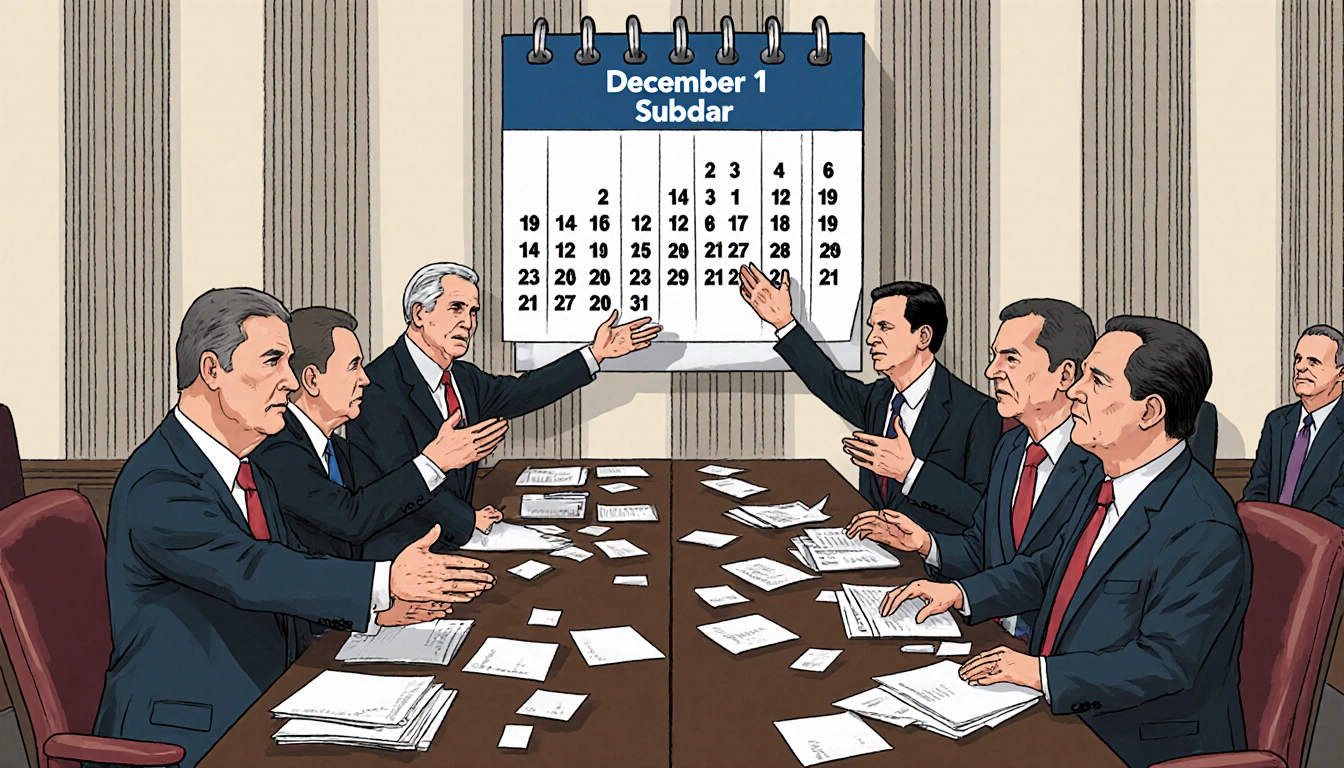
As the Dec. 31 deadline for the Affordable Care Act’s enhanced subsidies approaches, Senate negotiators are left on a high-wire act, having departed Washington for the holidays without a resolution.
The Dec. 31 Deadline
The chamber has been consumed for months by a fight over the future of the expiring ACA subsidies, which were at the center of a record-breaking government shutdown and the subject of multiple votes and extensive negotiations in the weeks since. The deadline is set to pass in the coming days, and a bipartisan group of lawmakers is trying to keep hopes alive that a deal could come together next month. They face numerous headwinds, chief among them being the fraught nature of health-care rhetoric and the looming midterms.
Last Week’s Votes
The Senate voted on two competing health-care proposals on Dec. 11. Both failed, though four Republicans crossed the aisle to vote in favor of a Democratic bill to extend the subsidies for three years. Senators on both sides of the aisle have spent the days since trying to pick up the pieces and find a deal. The Senate adjourned without a health-care framework.
Bipartisan Negotiation Efforts
A group of nearly two dozen members occupying various political lanes across each party convened early last week with an eye toward unveiling a possible deal next month. Some even indicated hopes that a framework agreement could come by the end of the holiday work period. Sens. Susan Collins (R-Maine) and Bernie Moreno (R-Ohio) were among the organizers of the meeting. Their bill calling for a two-year extension of the subsidies paired with conservative-leaning reforms served as a basis for the discussion.
Political Pressures and Midterm Implications
Both sides also have political considerations that could scuttle discussions at any time. Numerous Republicans have signaled they have little to no appetite to vote on any type of extension of the enhanced subsidies, no matter the reforms that could make the package more palatable. They have also indicated that language concerning the Hyde Amendment, which bars federal funds from going toward abortion in any health-care package, remains a major sticking point. Democrats are also quick to note that Republicans have continuously opposed the ACA. The minority party has indicated they plan to pin the blame on the GOP for the premium hike that millions of Americans are set to experience in the lead-up to the midterms.
House Discharge Petition
There are other considerations that could shake up negotiations. Chief among them is that four Republicans signed on to a Democratic discharge petition that tees up a vote on a plan that would extend the subsidies for three years. While the Senate already voted on a similar bill as part of their health-care exercise earlier in the month, some Democrats believe this could give negotiations a shot in the arm when they return. “If the House sends something over, that puts pressure on us to do something,” Kaine said. “It’s completely different when the number of people on the [GOP] side who said to me, ‘Why would we do something if the House is just going to kill it anyway?'”
Senate Leadership’s Perspective
There were no signs that the leadership would force a vote or offer a compromise. “There’s a lot of things that have to come together,” said Senate Majority Leader John Thune (R-S.D.). “I’m not saying it’s likely, and I’m not saying it’s impossible.” The Senate adjourned without a health-care framework, and the uncertainty remains.
Key Players and Their Views
Sen. James Lankford (R-Okla.) said, “Since ObamaCare’s passage, any conversation about anything on health care has been a big lift. Everybody sees the problems and, at times, my Democratic colleagues will admit, ‘OK, yeah, that’s a problem.’ But trying to vote on it has been tougher, so no matter what we do tweaking this thing out, it’s going to be hard.” Sen. Tim Kaine (D-Va.) labeled the meeting a “productive discussion,” noting, “There was a simple concept on the table when we walked in. It was within the range of reason, but then it got more complicated. … The complicators, conceptually, might be OK [or] might not.” Sen. Thom Tillis (R-N.C.) added, “I know that there are a lot of voices on the Democrat side that are saying, ‘We gave it a shot, now let’s move into the political season.’ Do I think that there’s enough Democrats who genuinely want to avoid the problem that we know [is] going to occur? But I’m guessing some of their political leaders … would prefer to have the issue and not the outcome.”
What’s Next?
Attendees said that they expect future meetings, but whether they continue to push the ball up the field-and keep talking during the two-week holiday break-remains an open question. The political calculus on both sides could scuttle discussions at any time, and the looming midterms add another layer of complexity. As the Senate returns, the question remains whether a compromise can be forged before the Dec. 31 deadline.
Key Takeaways
- The Dec. 31 deadline for ACA subsidies is imminent, with no resolution in sight.
- Bipartisan talks have stalled; the Senate adjourned without a framework.
- Political pressures, the Hyde Amendment, and a House discharge petition complicate negotiations.
The Senate’s health-care negotiations have reached a standstill, leaving lawmakers to grapple with a complex mix of policy, politics, and an approaching deadline.
Meta Description
Senate negotiators face a high-wire act as the Dec. 31 deadline for ACA subsidies looms, with bipartisan talks stalled, political pressures mounting, and no framework in place.
Categories
[“Political News”, “Health News”]