In a decisive move that has set the 2028 Republican primary alight, Turning Point USA CEO Erika Kirk announced her endorsement of Vice President Mike Vance. Kirk’s support comes at a time when the GOP is still solidifying its lineup of potential candidates.
Early Endorsement Signals Vance’s Heir Status
Kirk’s backing of Vance is significant because the organization wields considerable influence among conservatives. Vance, who has not yet declared a 2028 campaign, is widely viewed as Trump’s heir apparent. The endorsement underscores the perception that Vance is the most likely nominee.
Polls Show Vance Leading the Field
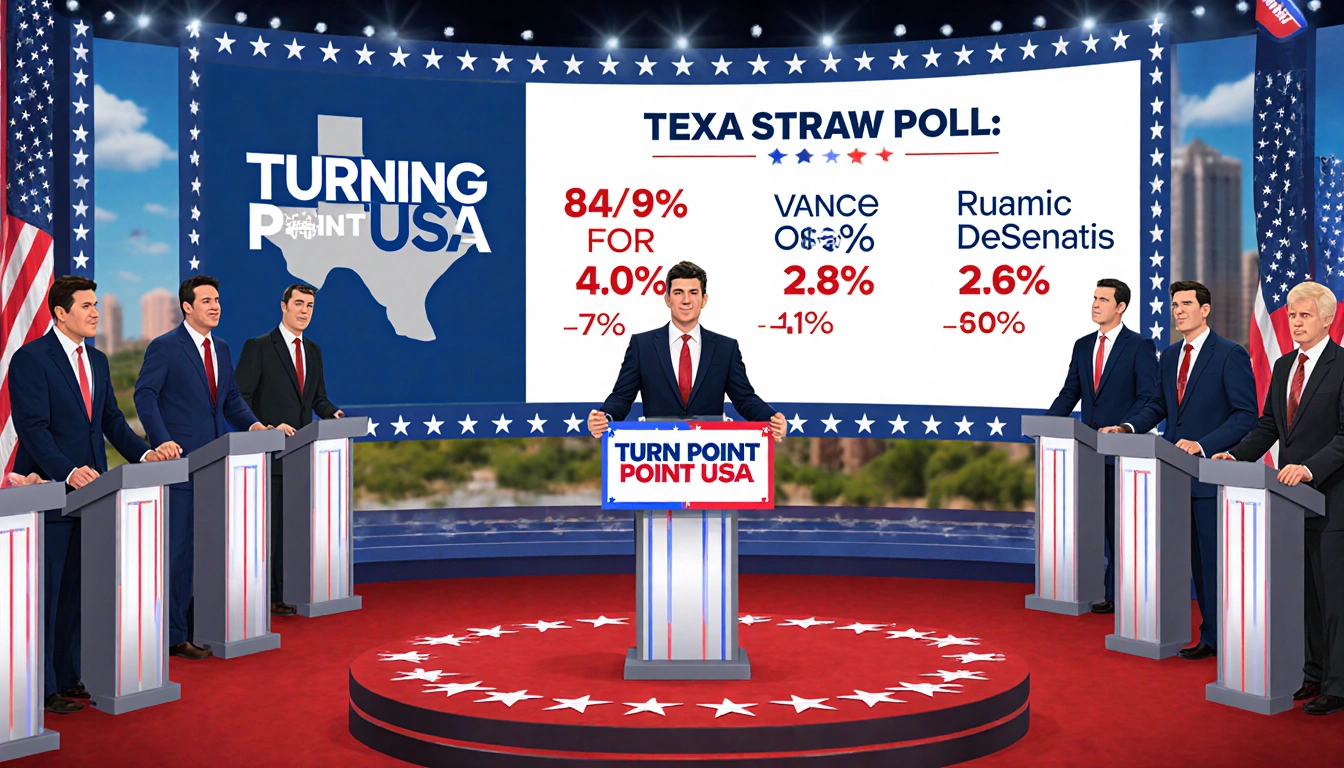
A hypothetical AtlasIntel poll for the 2028 Republican primary found Vance at 47% support, with Marco Rubio at 23% and Ron DeSantis at 13%. Turning Point USA’s own 2028 straw poll further highlighted Vance’s dominance, garnering 84.2% of votes, compared to Rubio’s 4.8%, DeSantis’s 2.9%, Trump Jr.’s 1.8%, and Cruz’s 0.3%. Only 2.5% were undecided and 3.1% chose “someone else.”
GOP Infighting Over Ideology and Strategy
Beyond candidate selection, the GOP is wrestling with how to address free speech, bigotry, and the embrace of conspiracy theories. Some factions fear that the next leader will face mounting obstacles in balancing controversial rhetoric with broader electoral appeal.
Vance’s Focus on Midterms, Not 2028
Sources close to the vice president emphasized that Vance remains “entirely committed to the midterms” and will not decide on a 2028 run until after Election Day. In a speech at Turning Point’s AmericaFest, Vance rallied the base around the administration’s achievements and the stakes of losing either house of Congress. “We cannot exhaust ourselves infighting when there’s so much at stake,” a source told The Hill.
Strategic Viewpoint from GOP Operatives
Ford O’Connell, a Republican strategist, said Kirk’s endorsement “makes sense” because Vance is seen as the most likely heir. O’Connell also noted that Vance and Rubio have brushed off talk of rivalry, keeping the field open. Another strategist remarked, “I appreciate the spin because you have to say that spin, but the 2028 race is already well underway,” adding that “2026 is just going to help color it a bit.”
Historical Context and Midterm Challenges
O’Connell drew parallels to George H.W. Bush’s 1988 victory, noting that a loss in the House could halt a presidential trajectory. Bush, one of only four vice presidents to become president, still faced Democratic majorities in both chambers. The Trump administration’s allies are likely to confront an uphill climb in the next year’s midterms, a pattern historically seen when a sitting president’s party underperforms.
Public Opinion on Trump and Vance
A CBS News/YouGov poll released Sunday found only 18% of respondents believed Trump’s policies were improving their finances, while 45% thought the opposite for 2026. However, a polling average from The Hill and Decision Desk HQ shows Trump’s approval rating at 44.8%, a 3.5-point increase from last month. Vance’s approval also rose from roughly 44% in November to just over 45% this month.
The Road Ahead
Vance’s upcoming appearances in battleground Pennsylvania highlight his focus on inflation and economic issues. While he appears best positioned to carry on Trump’s legacy, those close to him say he would welcome a competitive primary if he decides to run. “If he chooses to run, he knows there’s not going to be a coronation. Nobody wants that,” a source said, adding, “The more the merrier.”
Key Takeaways
- Turning Point USA’s Erika Kirk endorses Vice President Mike Vance, signaling early 2028 primary momentum.
- Polls show Vance leading, with significant support in both hypothetical and straw poll data.
- GOP factions debate free speech, bigotry, and the balance between controversial rhetoric and electability.
- Vance remains focused on the 2028 midterms, deferring a presidential decision until after Election Day.
- Public approval for Trump and Vance shows a modest rebound, but economic concerns persist.
The endorsement marks a pivotal moment in the GOP’s 2028 strategy, setting the stage for a contested primary that will test the party’s unity and electoral priorities.