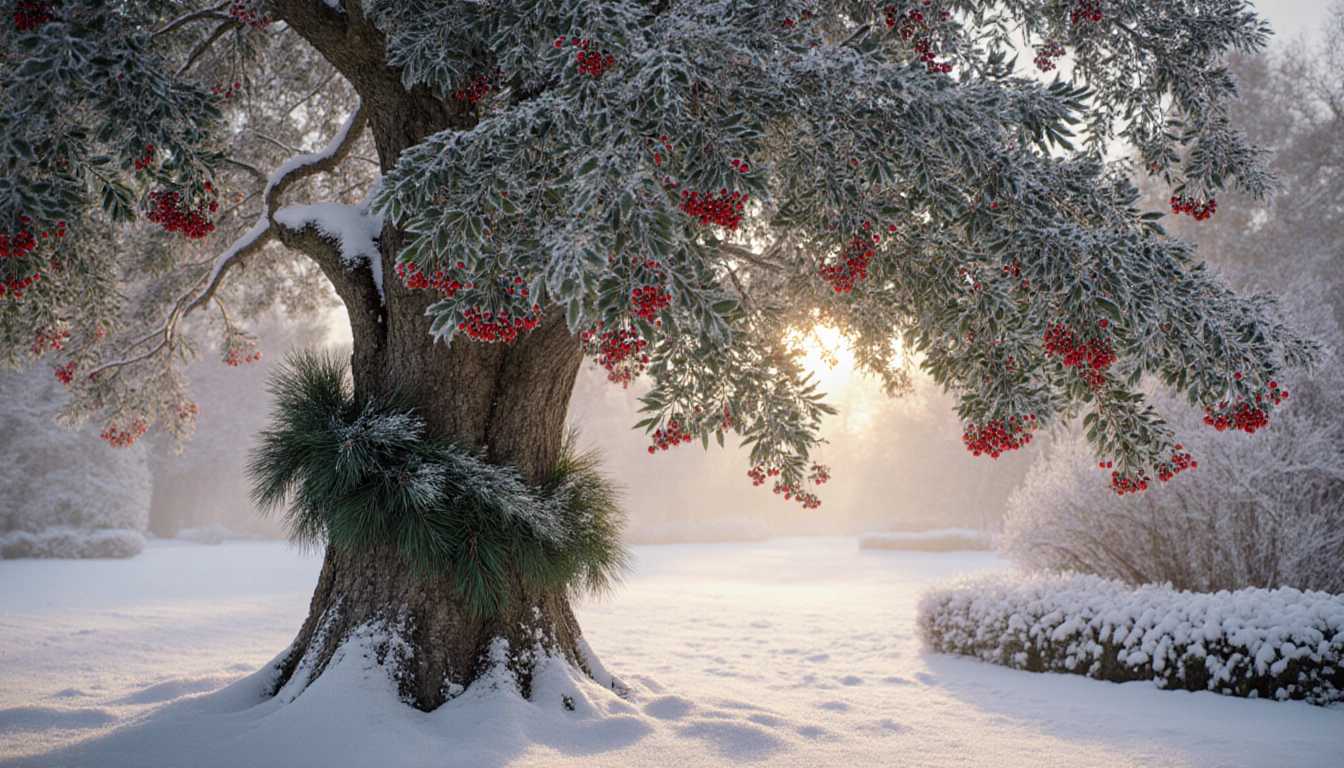

Evergreen, red berries, deep-green foliage – hollies have long been a staple of holiday décor, but their appeal extends far beyond the Christmas tree.
The Allure of Hollies
Hollies belong to a family of plants that includes hundreds of species and hybrids from China, Japan, South America, Europe and North Africa. More than a dozen of these species are native to the continental United States, giving American gardeners a wide range of choices.
Historical lore credits ancient pagans with crafting evergreen branches into wearable crowns, believing that placing them indoors would ward off evil spirits and bring spring sooner. Early Christians later adopted the plant, using its perpetual green to symbolize eternal life.
In addition to their cultural resonance, hollies offer a striking visual contrast. Their bright red berries and glossy, spiny leaves echo the traditional colors of the holiday season, making them attractive year-round garden staples.
Birds and wildlife also benefit. The berries provide an important winter food source, although most hollies are toxic to humans.
Planting and Care
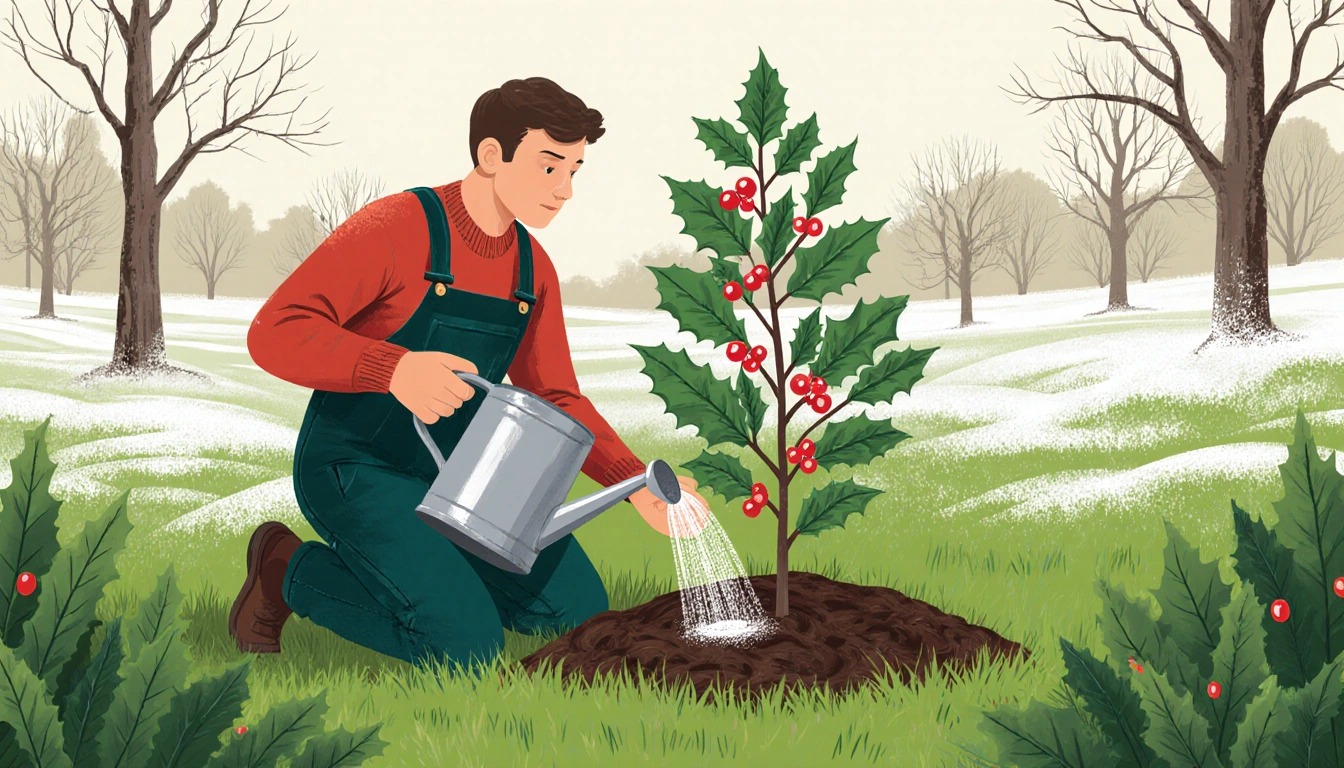
The optimal time to plant hollies is early spring, after the last hard freeze (if applicable) but before summer heat sets in. During the first year, watering the plant regularly helps roots establish themselves.
Because many hollies are dioecious-meaning individual plants are either male or female-gardeners must consider sex when planning for fruit. A single male plant can pollinate roughly ten female plants within a 50-foot (15-meter) radius, sometimes more.
Plant tags may not indicate sex, but the variety name can offer clues. For example, the variety “China Girl” is female, so a nearby “China Boy” is needed for fruiting. The variety “Greenleaf” is also female. When in doubt, ask nursery staff.
Understanding Dioecious Nature
The male-female dynamic is key to a successful holly garden. Without a male plant in proximity, female plants will not set berries. This requirement is especially important for gardeners who want the ornamental fruit that hollies are famous for.
One male plant can effectively pollinate about ten female plants within 50 feet (15 meters). In some cases, a male may pollinate more, but the 10-to-1 ratio is a useful guideline.
Top Holly Varieties to Grow
Yaupon Holly (Ilex vomitoria)
This long-living species naturally occurs along the United States’ southern Atlantic coast and across the Southeast and Southwest. Gardeners can choose dwarf, weeping or upright varieties to grow trees, shrubs or pruned hedgerows.
Yaupon Holly is hardy in USDA horticultural zones 7-9. It tolerates both sun and shade and thrives in any soil type and pH, provided the soil remains moist and well-draining.
American Holly (Ilex opaca)
Native along the entire East Coast and west to Missouri and Texas, this slow-growing, pyramidical holly can reach 25-60 feet (8-18 meters) tall at maturity. Also known as Christmas holly, the spiny-leafed plant is hardy in zones 5-9.
It tolerates both sun and shade but requires acidic, moist, well-draining sandy or loamy soil.
Blue Holly (Ilex x meserveae)
Also called Meserve holly, this European hybrid features blue-green spiny leaves. It grows 2-8 feet (0.6 to 2.4 meters) tall and 6-8 feet (1.8 to 2.4 meters) wide, with larger dimensions in some climates.
Suitable for zones 5-7 (possibly 8), the shrubby plant should be planted in full sun to part shade in well-draining, moist, acidic soil.
Winterberry Holly (Ilex verticillata)
Unlike the other species on this list, winterberry holly is deciduous, not evergreen, and loses its foliage in autumn. Its winter interest comes from the profusion of red-orange berries that appear on bare, thin branches.
Native to the eastern U.S. and Canada, it is a slow grower that tops out at 3-8 feet (0.9 to 2.4 meters). It can be planted in zones 3-9, in sun to shade, and in well-draining, moist, acidic soil.
A Cautionary Tale: English Holly (Ilex aquifolium)
English or common holly is native to Europe, West Asia and North Africa. Since its introduction to the U.S. in the 1800s, it has spread into wild areas, choking out native vegetation from Vancouver to the Pacific Northwest and into California.
Its toughness, long life, evergreen habit and rapid spread made it a popular landscape plant. Those same qualities now classify it as an invasive species in many parts of the country and a “weed of concern” in others.
Gardeners should avoid using English holly in problematic regions and proceed with caution elsewhere.
Key Takeaways
- Hollies offer year-round beauty and winter food for wildlife, but most berries are toxic to humans.
- Planting in early spring and watering during the first year helps establish roots.
- Because hollies are dioecious, a male plant is needed to pollinate up to ten female plants within 50 feet.
- Yaupon, American, Blue and Winterberry hollies each have distinct growth habits, soil preferences and hardiness zones.
- English holly is invasive in many U.S. regions; use it cautiously or avoid it.
Hollies combine historical symbolism, practical gardening benefits and striking aesthetics. By choosing the right variety, respecting their dioecious nature, and being mindful of invasive potential, gardeners can enjoy these evergreen wonders for decades.