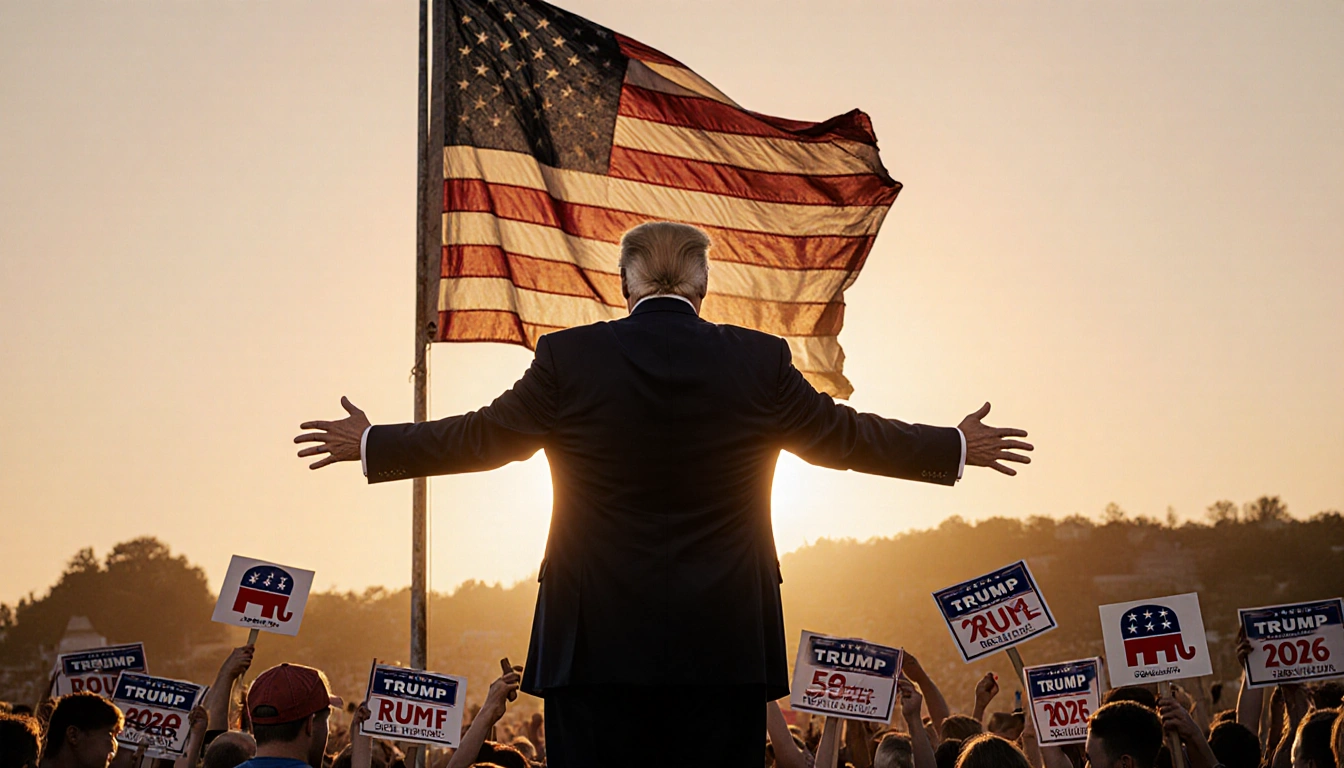
Trump’s recent trip to Pennsylvania marked the beginning of a busy campaign schedule as he gears up for the 2026 midterms, drawing both applause and criticism.
Pennsylvania Stop Highlights Risks and Rewards
Trump appeared in a key Pennsylvania county, energizing a crowd while sparking debate over his remarks on immigrants and affordability. He addressed criticism that he is too focused on foreign travel, insisting that those trips bring investments back to the U.S. and that there was no reason to return to the stump because he had won the election.
He said, “When you win you say, ‘I can now rest,’” Trump said. “So Susie Trump, do you know Susie Trump? Sometimes referred to as Susie Wiles. She’s the great chief of staff. … She said, ‘We have to start campaigning, sir.’”
Republicans Rely on Trump’s Presence
Matt Terrill, a Republican strategist and former chief of staff on Marco Rubio’s 2016 campaign, noted that “When President Trump is on the ballot, Republicans tend to do well. When he’s not on the ballot, Republicans don’t do as well.” He added, “He’s able to energize the Republican base and MAGA movement in a way no one else can,” and that he “has crossover appeal” that helped in the 2024 general election.
A White House official said Trump is expected to make another speech outside Washington before year‑end focused on the economy and affordability, though details of the trip remain unavailable.
White House Signals Shift to Domestic Campaigning
Chief of staff Susie Wiles said, “He’s going to campaign like it’s 2024 again,” and that “he doesn’t help everybody, but for those he does, he’s a difference maker.” She also remarked, “And he certainly is a turnout machine. So the midterms will be very important to us.”
Approval Ratings and Public Perception
An Associated Press‑NORC poll released Thursday found only 31 percent of surveyed adults approve of Trump’s handling of the economy, the lowest mark the poll has recorded in either of his terms. The poll also showed 38 percent approve of his handling of immigration, down from 49 percent in March, and 43 percent approve of his handling of crime, down from 53 percent in March.
Trump’s comments about affordability have drawn criticism. He called the focus on affordability a “hoax” and suggested Americans could buy fewer dolls for their children. Rep. Pete Aguilar (D‑Calif.) posted on X, “Donald Trump says affordability is a ‘hoax’ – well try telling that to the American people. Families are struggling to afford groceries, housing, clothes and other goods thanks to Trump’s economic policies. It’s shameful.”
Historical Context and Midterm Trends
Trump narrowly won the 2016 election, narrowly lost in 2020, and won 2024 by sweeping the seven major battleground states, becoming the first Republican since 2004 to win the popular vote. Midterm elections have historically been tougher for Republicans without Trump on the ballot: Democrats gained 40 House seats in 2018, expanded their Senate majority by one seat and picked up two governorships in 2022, while Republicans netted only nine House seats to secure a narrow majority.
Trump told reporters on Wednesday that, “For whatever reason, and nobody’s been able to give me an answer, when you win the presidency, you seem to lose the midterms,” adding, “Even if you win the presidency by a lot and you do a great job as president. Some presidents have done good and they’ve lost.”
Key Takeaways
- Trump’s Pennsylvania stop underscores his dual role as energizer and polarizer for the GOP.
- Approval ratings on the economy, immigration, and crime are declining, while his remarks on affordability fuel Democratic criticism.
- Historical midterm trends suggest that a presidential win often precedes a congressional loss, a pattern Trump acknowledges.
The 2026 midterms will hinge on how effectively Trump can translate his popularity into voter turnout amid these challenges.