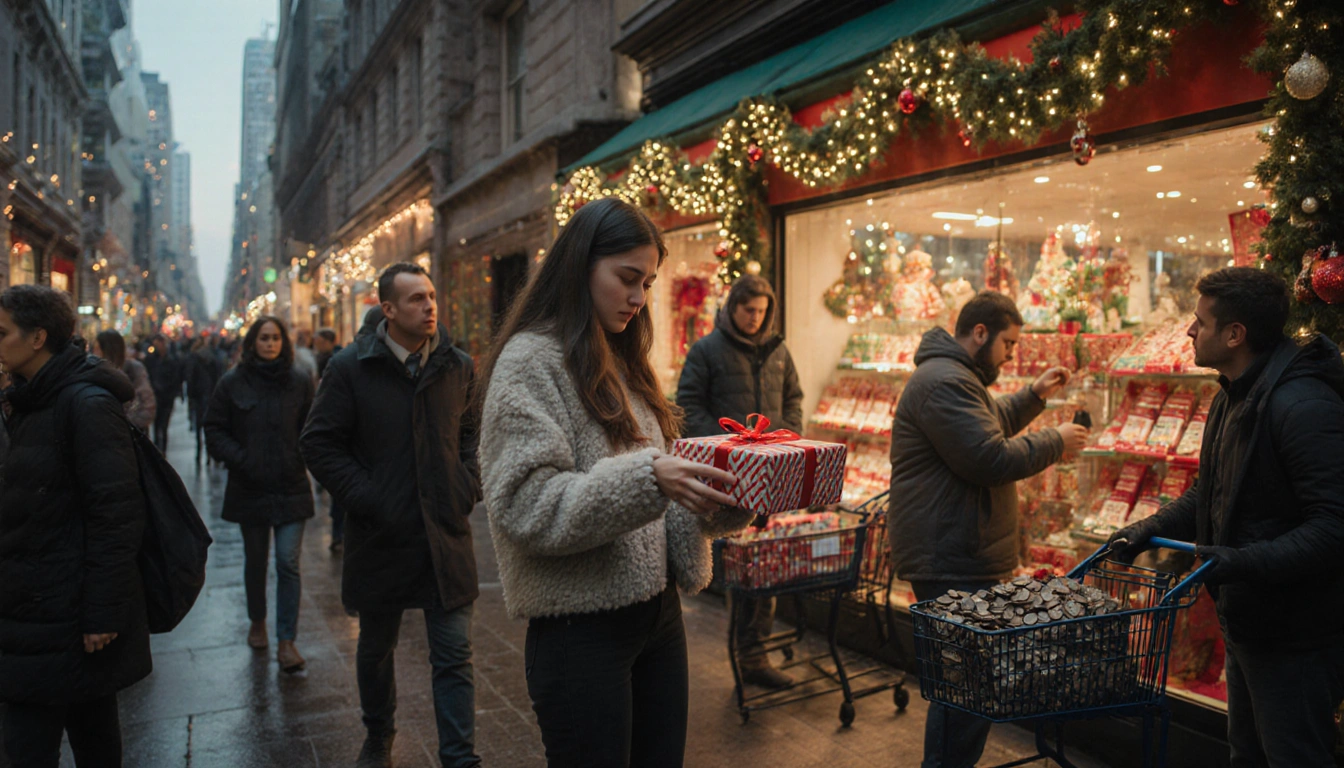
Consumers increased gift-giving during the first seven weeks of the holiday season, but the pace of spending is tempered by worries about the economy.
Early Holiday Sales
From November 1 through Sunday, cash and credit-card sales climbed 4.2%, a drop from the 4.8% rise seen during the same period a year earlier, according to Visa’s Consulting & Analytics division. Those figures exclude auto dealerships, gas stations and restaurants, and they are not adjusted for inflation or the impact of President Donald Trump’s tariffs.
When adjusted for inflation, retail sales grew a more modest 2.2% for the first seven weeks of the holiday period, compared with a 3% inflation-adjusted increase a year ago, said Visa’s U.S. principal economist Michael Brown. “It’s certainly not a spectacular season,” Brown told The Associated Press. “It’s sort of an average holiday season given concerns about macro economic growth, inflation. There’s still a lot of uncertainty among the consumer population.”
Mastercard’s View
Mastercard SpendingPulse, which also tracks cash and credit-card spending, reported a 3.9% rise from November 1 through Sunday. That figure sits above Mastercard’s 3.6% forecast for the overall season, but it is lower than last year’s 4.1% increase. “Shoppers blended online and in-store shopping to find the best deals and maximize convenience,” said Michelle Meyer, chief economist at Mastercard Economics Institute. The Mastercard figure is not adjusted for inflation, excludes automotive dealerships and gas stations, but includes restaurant sales.

Shoppers’ Focus
Retailers note that consumers are being selective, concentrating on gifts while holding back on holiday décor. Many households are feeling the pinch of higher grocery prices, rent, and imported goods hit by tariffs. The latest job report from the Labor Department last week also shows a souring employment picture. Consumer confidence fell in December, marking the fifth straight monthly decline, as Americans grew anxious about high prices and the impact of Trump’s sweeping tariffs, according to the Conference Board.
Forecasts and Foot Traffic
Visa expects holiday sales data to be roughly in line with its prediction of a 4.6% sales increase between November and December. Several of the season’s busiest shopping days remain ahead, including the day after Christmas and the first Saturday after the holiday, according to Sensormatic, which tracks retail foot traffic. RetailNext, which measures real-time foot traffic in physical stores, noted a 5.4% decline in customer traffic on Saturday compared with last year. “The drop suggests that Americans are spreading their trips across the final weeks before Christmas and are sticking to shopping lists,” said Joe Shasteen, global manager of advanced analytics at RetailNext.
National Retail Federation Outlook
Overall data from Visa and Mastercard are in line with the forecast from the National Retail Federation, the nation’s largest retail industry trade group. The Federation expects sales over November and December of between $1.01 trillion and $1.02 trillion, an increase of 3.7% to 4.2% over last year. Figuring out consumer behavior this season has been challenging after a 43-day federal government shutdown interrupted the publication of U.S. economic data, including retail sales.
Detailed Category Performance
The Commerce Department reported last week that sales at U.S. retailers and restaurants were unchanged in October from September, dragged down by electric-car sales after the Trump administration allowed government subsidies for those vehicles to expire. According to Visa, e-commerce sales rose 7.8% for the first seven weeks of the period, fueled by early-season promotions. Shopping in stores remains dominant, with 73% of holiday payment volume driven by in-store sales and 27% online, Visa said.
Mastercard SpendingPulse reported that online sales surged 7.4%, compared with a 2.9% increase in stores. General merchandise stores-defined by big discounters like Target and Walmart that sell all types of merchandise-rose 3.7%, Visa said. Electronics sales climbed 5.8%, driven in part by devices powered by artificial intelligence.
Tariffs played a key role in how shoppers behaved, Brown said. Clothing and accessories sales accelerated at a 5.3% pace from November 1 through December 21, compared with a 4.1% increase last year, as the category was less affected by tariffs than other areas such as holiday home décor, predominantly made in China. That décor category saw a slim 0.8% sales gain. A still-weak housing market hurt sales of home-improvement items like building materials and garden accessories, which recorded a 1% sales increase, Visa said.
Mastercard SpendingPulse also reported that spending on clothing was strong-up 7.8% for the first seven weeks of the season compared with a year ago, helped by chilly temperatures and seasonal deals. Restaurant spending increased 5.2% from November 1 through December 21, suggesting that Americans are spending on experiences like a night out.
Key Takeaways
- Holiday sales rose 4.2% in the first seven weeks, below last year’s 4.8% growth.
- Inflation-adjusted sales grew 2.2%, a decline from the 3% a year ago.
- Online sales surged 7.8% in e-commerce, while in-store sales accounted for 73% of the volume.
Consumers are buying more gifts but holding back on décor, and tariffs continue to influence category performance. While economic uncertainty keeps shoppers cautious, holiday sales are expected to stay close to forecasts, with major retailers preparing for a busy final stretch of the season.