
A Mexican Navy Beech King Air 350i carrying a young burn patient and seven others crashed off the Texas coast in dense fog, killing at least six, officials said Tuesday. The plane had been transporting the patient to a hospital in Galveston, near Houston, as part of a medical mission. Air traffic controllers lost contact with the aircraft for about ten minutes before the crash. Search teams recovered five bodies and rescued two survivors from the wreckage.
Flight Details
The aircraft was a twin-turboprop Beech King Air 350i that approached Sholes International Airport in Galveston. Radar data showed the plane was far too low during its final approach. The navigation system for the runway had been out of service for about a week, according to former NTSB and FAA investigator Jeff Guzzetti. Fog limited visibility to roughly a half-mile, making the approach particularly hazardous.
Search and Casualties
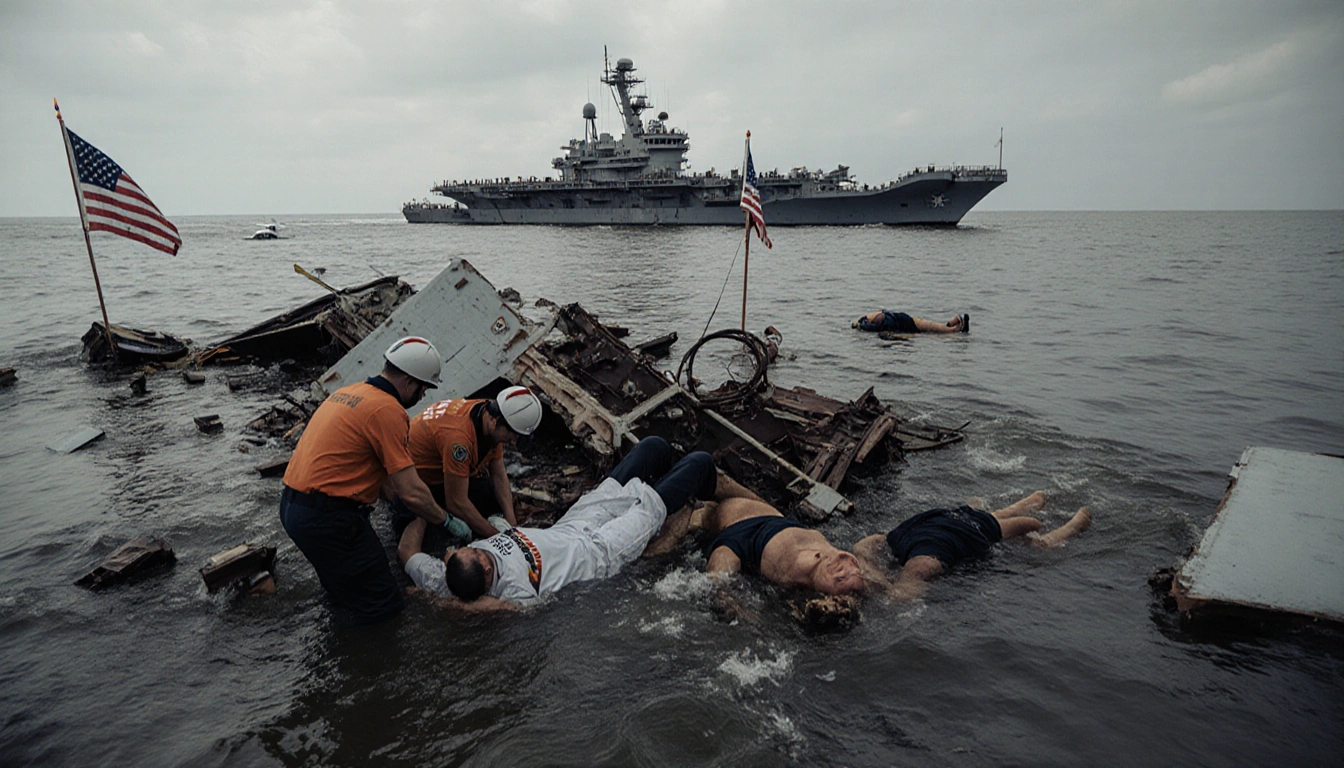
Teams found the dead bodies of five people and pulled two survivors from the plane’s wreckage. A daylong search in waters near Galveston continued for 29-year-old Navy Lieutenant Luis Enrique Castillo. Castillo’s family, who live in a rural town in southern Mexico, had been waiting for answers. Search teams ended Tuesday night when they located Castillo’s body.
Family and Community
Eduardo Castillo, the pilot’s father, said, “We don’t know what to do,” before adding, “All we can do is wait. We can’t go to the United States, we have no visa.” Eduardo gathered with relatives in El Pantano, Veracruz, refreshing his phone every few minutes for news. Framed pictures of Luis Enrique and his diplomas lined their home wall, and the family was expecting a child due in three months. When the call came that his son was dead, Eduardo said, “Now he’s never going to meet his unborn child.”
Presidential Statement
President Claudia Sheinbaum said in her morning briefing that the plane had landed but lost contact with air controllers. She added, “What happened is very tragic,” and noted that sailors were among the dead. The President’s remarks came after officials confirmed the crash occurred in thick fog. Her briefing emphasized the tragedy and the loss of life.
Radar and Altitude
Jeff Guzzetti noted that the radar track showed the pilot was descending rapidly below 200 feet, a full two miles from the runway. He said the pilot should have aborted the landing if the runway wasn’t visible at an altitude of 205 feet. Guzzetti added, “Maybe there was some sort of mechanical malfunction,” but believed the approach should never have occurred. The recorded flight track and weather conditions suggested the landing approach was inappropriate.
Navigation System Outage
The runway’s navigation system had been out of service for about a week, removing a key aid for pilots in low-visibility conditions. This system sends signals to the cockpit that help pilots navigate when visibility is limited. The fog was so dense that meteorologists estimated only about a half-mile of visibility. The outage contributed to the aircraft’s difficulty in maintaining proper altitude.
Pilot Decision
The pilot was descending below the minimum safe altitude without the navigation aid. According to Guzzetti, the pilot should have climbed back up and tried again or sought another airport. The decision to continue the approach in such conditions was highlighted as a critical factor. The investigation will review whether the pilot’s motivation to land was influenced by the patient’s medical urgency.
Witness Account
Sky Decker, a professional yacht captain near the crash site, jumped into his boat to assist. He found a badly injured woman trapped beneath chairs and debris, with only about 3 inches of air to breathe. Decker said, “There was jet fuel in there mixed with the water, fumes real bad. She was really fighting for her life.” He also pulled out a man seated in front of her who had already died.
Investigation and Expert Input
A spokesperson for the NTSB said investigators will review maintenance records, weather forecasts and air traffic control communications. The preliminary report is expected within 30 days, according to the NTSB email. Guzzetti noted, “There have been previous accidents in the air medical community where pilots try to push their luck in order to save the patient.” John Cox, an aviation safety expert, said the aircraft had a very, very proven design.
Aircraft Design
Cox added that the Beech King Air 350i is the latest version of a series that has been in use since the 1960s. It would have been outfitted with all the modern electronics, avionics and equipment. The design’s proven track record is noted by aviation safety experts. However, the investigation will determine if any mechanical issues contributed to the crash.
Medical Mission and Foundation
The Mexican Navy said the plane was helping with a medical mission in coordination with the Michou and Mau Foundation. The charity was founded after a mother died trying to save her kids from a fire. Over 23 years, the foundation has helped transfer more than 2,000 patients to Shriners Children’s Texas and other burn-specialized facilities, according to its website. In a social media post, the foundation offered condolences to the families of the crash victims.
Wider Aviation Context
The crash comes amid a year of intense scrutiny on aviation safety after several high-profile incidents. Earlier this year, a midair collision between an Army helicopter and an airliner near Washington, D.C., and a medical transport plane crash in Philadelphia were highlighted. A fall 2025 UPS plane crash added to concerns, yet the total number of crashes in 2025 was slightly down from last year. Experts say flying remains safe overall, but the incident underscores ongoing safety challenges.
Key Takeaways
- The crash occurred during a low-visibility approach with a non-functional navigation aid.
- The investigation will examine pilot decisions, mechanical conditions, and medical mission pressures.
- The incident adds to broader aviation safety concerns despite overall safety trends.
The crash of the Mexican Navy Beech King Air 350i off Texas highlights the dangers of low-visibility approaches, the importance of functioning navigation aids, and the complexities of medical transport flights. Investigations are underway to determine the precise causes, while families and communities mourn the loss. The incident adds to the broader conversation about aviation safety and the need for rigorous oversight.