
In a move aimed at averting widespread blackouts on the island, Mexico’s president announced that two tankers have delivered 80,000 barrels of oil to Cuba, marking the latest chapter in a long-standing partnership that began in the early 1990s. The shipments, sent Monday, are part of what President Claudia Sheinbaum calls a “historic series of support” for the Caribbean nation, and she said they will help reduce the number of power outages that have plagued Cuba in recent months.
Historic Support and Legal Framework
President Sheinbaum framed the delivery as part of a broader framework with a sovereign nation and an agreement that Mexico has with Cuba. “First of all, we’re doing this as part of the framework with a sovereign nation,” she said. “Second, this is part of an agreement that we have with Cuba, and thirdly, we’re doing this to avoid a crisis of blackouts on the island.” She emphasized that the transaction is a sale, not a gift, and that it is legal under Mexican law. “We’ve been doing this for a very long time,” she added. “Later, we will make public what the price is as well as the cost to transport and unload the oil. The motives are humanitarian for the people of Cuba.”
The legal nature of the deal is significant. While the shipments are described as sales, the president said they are “humanitarian” and will continue in the future. The agreement is rooted in Mexico’s investment in Cuban infrastructure; in 1994, Mexico poured $350 million into a refinery in Cuba to process oil, a move that laid the groundwork for the current partnership. The refinery investment of $350 million in 1994 was a key step that enabled Mexico to supply refined oil to Cuba under the existing framework. The refinery remains a key asset that allows Mexico to provide refined petroleum products to Cuba under the existing framework.
Fuel Shortages and Blackouts in Cuba
According to CiberCuba, a Cuban news agency, the country is facing serious fuel shortages that are affecting 94 generating plants. The lack of fuel has led to severe power outages throughout the island, a crisis that the Mexican deliveries aim to mitigate. By providing 80,000 barrels of oil, Mexico hopes to stabilize the supply chain and reduce the frequency and duration of blackouts.
The impact on Cuban citizens is tangible. Power cuts have disrupted daily life, from cooking and heating to the operation of essential services. Hospitals, schools, and small businesses have reported interruptions that compromise safety and productivity. The Cuban government has implemented rolling power cuts that affect both urban and rural areas, forcing residents to rely on generators or alternate energy sources. The Mexican shipments are seen as a direct response to these hardships, with the president highlighting the urgency of preventing further crises.
Economic Impact and Future Plans
Sheinbaum said the price of the oil and the cost to transport and unload the barrels will be made public at a later date. The sale is structured to comply with Mexican export regulations, and the transaction will be recorded in official trade documents. While the exact figures are not yet disclosed, the president assured that the price is fair and that the agreement benefits both countries. The continued supply of oil is expected to support Cuba’s energy needs for the coming months, potentially reducing the need for emergency measures.
Geopolitical Context
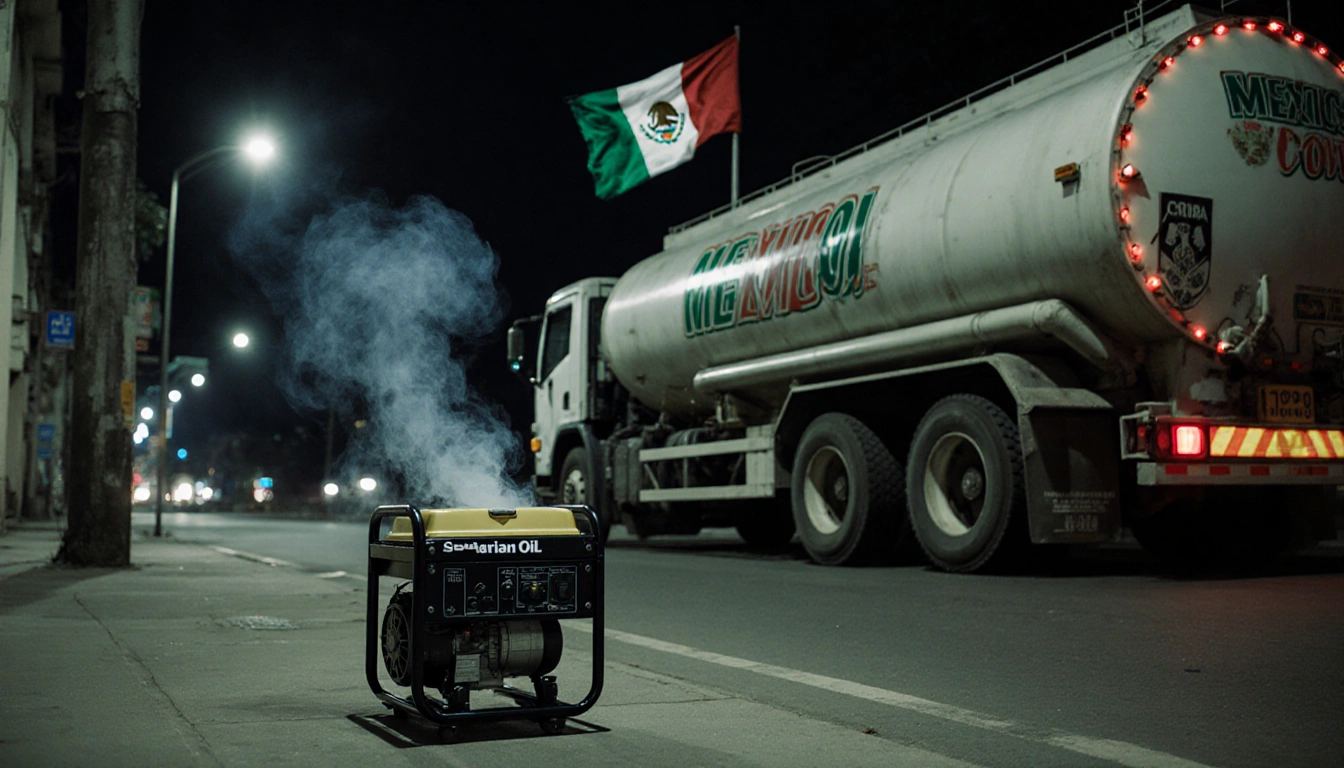
The timing of the deliveries coincides with increasing pressure from the United States on Venezuela, which has been a traditional supplier of oil to Cuba. The White House has implemented a blockade of Venezuelan oil, citing that the country’s petroleum is used to “fund narco-terrorism and drug trafficking.” President Sheinbaum noted that Mexican oil deliveries will help Cuba as the United States continues to make it harder for Venezuela to supply the island.
This development adds a new layer to the geopolitical dynamics between the U.S., Mexico, Venezuela, and Cuba. While Mexico’s role is framed as humanitarian, the broader context suggests a shift in Cuba’s energy sourcing away from Venezuela, potentially altering the balance of influence in the region. The blockade has limited the volume of Venezuelan oil that Cuba can receive, creating a supply gap that Mexico is now helping to fill.
Key Takeaways
- Mexico has sent 80,000 barrels of oil to Cuba via two tankers, a continuation of a long-standing partnership that began with a $350 million refinery investment in 1994.
- The deliveries are described as legal sales, not gifts, and are intended to prevent blackouts affecting 94 Cuban generating plants.
- The shipments come amid U.S. pressure on Venezuelan oil, which has historically supplied Cuba, and may signal a shift in Cuba’s energy sourcing.
In a statement that underscored the humanitarian nature of the aid, President Sheinbaum said the motive is to help Cuban citizens, not to advance political interests. The continued cooperation between Mexico and Cuba is expected to play a pivotal role in stabilizing Cuba’s power grid during a period of significant fuel shortages.