
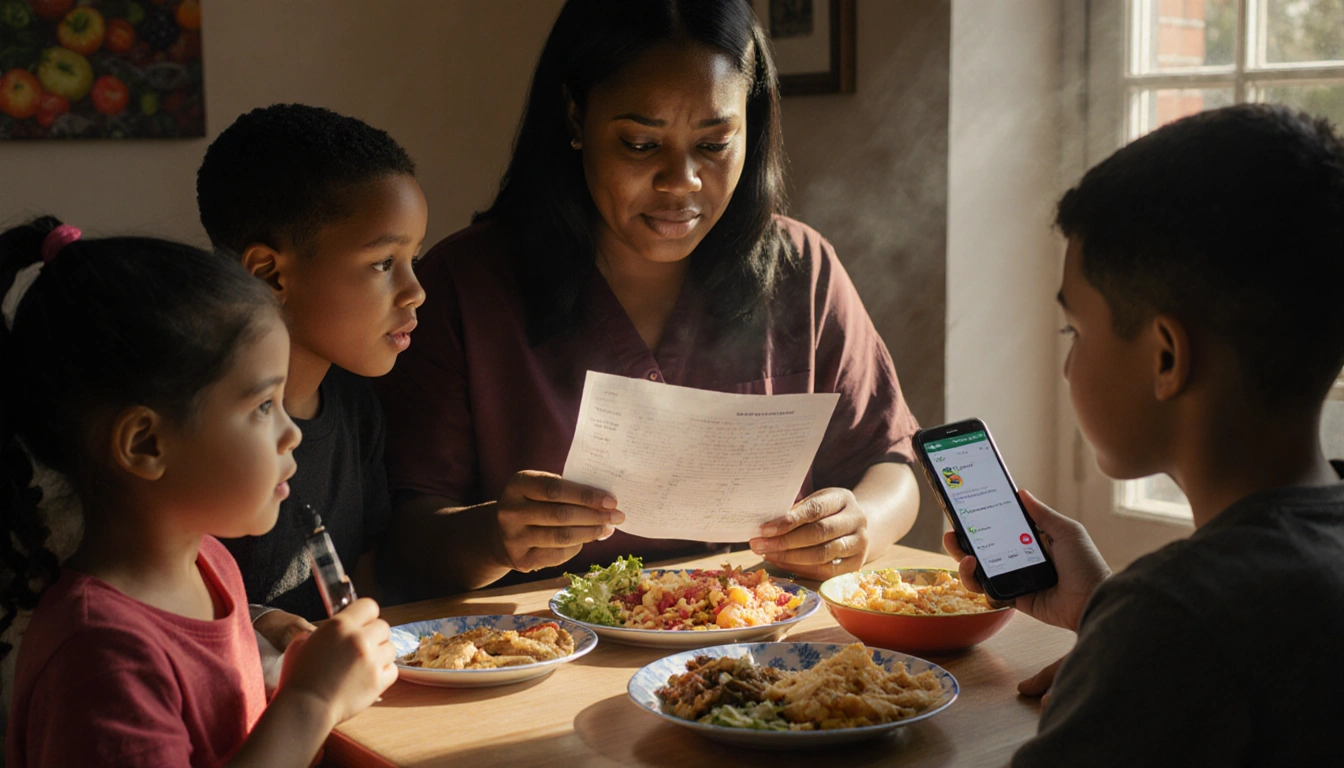
Jade Grant, a 32-year-old certified nursing assistant, felt the pinch as the year’s final months approached. “Everyone’s birthday is back-to-back,” she said. “You have holidays coming up. You have Thanksgiving. Everything is right there. And then, boom. No (food) stamps.” Grant is one of the nearly 42 million lower-income Americans who receive help buying groceries from the Supplemental Nutrition Assistance Program, or SNAP. When the federal shutdown began in October, she was not worried about losing her benefits, saying she is used to government “foolishness.” The situation changed when the budget impasse entered its second month and President Donald Trump froze November SNAP payments. With a gluten-free child and another with many allergies, specialty items already drove up her grocery bill, and she wondered how she would feed her family, especially with her youngest’s sixth birthday approaching.
Within a minute of logging into Propel, an app used by 5 million people to manage their electronic benefits transfers, a pop-up banner invited her to apply for a relief program. She completed a survey, and about two days later received a virtual $50 gift card. The amount was far below her monthly SNAP allotment, but the Palm Bay, Florida, resident said it was enough to buy a customized “Bluey” birthday cake for her son.
Nearly a quarter of a million families received the same cash injection from the nonprofit GiveDirectly when they missed SNAP deposits that many need to feed their households. The collaboration with Propel proved to be the largest disaster response in the international cash assistance group’s history outside of COVID-19; non-pandemic records were set with the $12 million raised, more than 246,000 beneficiaries enrolled and 5,000 individual donors reached.
Recipients are still recovering from the uncertainty of last month’s SNAP delays. Company surveys suggest many are dealing with the long-term consequences of borrowing money in early November when their benefits didn’t arrive on time, according to Propel CEO Jimmy Chen. At a time when users felt the existing safety net had fallen through, they credit the rapid payments for buoying them – both financially and emotionally.
“It’s not a lot. But at the same time, it is a lot,” Grant said. “Because $50 can do a lot when you don’t have anything.”
A ‘man-made disaster’ forces partners to try something new
It’s not the first partnership for the antipoverty nonprofit and for-profit software company. They have previously combined GiveDirectly’s fast cash model with Propel’s verified user base to get money out to natural disaster survivors – including $1,000 last year to some households impacted by Hurricanes Milton and Helene.
“This particular incident with the shutdown we saw as akin to a natural disaster,” Chen said, “in the sense that it created a really sudden and really acute form of hardship for many Americans across the country.”
The scope differed this time. The “man-made disaster,” as GiveDirectly U.S. Country Director Dustin Palmer put it, was not geographically isolated. SNAP costs almost $10 billion a month, Palmer said, so they never expected to raise enough money to replace the delayed benefits altogether.
But 5,000 individual donors – plus $1 million gifts from Propel and New York nonprofit Robin Hood, as well as other major foundations’ support – provided a sizable pot. Palmer found that the issue resonated more than he expected.
GiveDirectly reports that the median donation was $100. Palmer took that response as a sign the issue hit close for many Americans.
“You and I know SNAP recipients. Maybe we’ve been SNAP recipients,” Palmer said. “So that was not a disaster in Central Texas where I’ve never been, but something in our communities.”
The greatest question revolved around the total sum of each cash transfer. Should they reach more people with fewer dollars or vice versa? Los Angeles wildfire survivors, for example, got $3,500 each from a similar GiveDirectly campaign. But that’s because they wanted to provide enough to cover a month’s worth of lodging and transit to those who lost their houses.
They settled on $50 because Palmer said they wanted a “stopgap” that represented “a meaningful trip to the grocery store.” To equitably focus their limited resources on the that would be missing the most support, Palmer said they targeted families with children that receive the maximum SNAP allotment. Propel’s software allowed them to send money as soon as the app detected that a family’s benefits hadn’t arrived at the usual time of the month.
Recipients decided whether their prepaid debit cards arrived physically, which might allow them to take cash out of an ATM, or virtually, which could be used almost immediately. The split is usually pretty even, according to Palmer, but this time more than 90% of recipients went with the virtual option.
“To me, that speaks to the speed and need for people,” Palmer said. “Just saying, ‘Oh yeah, I just need food today. I don’t want to wait to get it mailed.'”
Recipients lost trust when closely watched benefits were disrupted
Dianna Tompkins relies on her SNAP balance to feed her toddler and 8-year-old child.
“I watch it like a hawk, honestly,” she said.
But she said she entered “panic mode” when she missed what is usually a $976 deposit last month. She’s a gig worker, completing DoorDash and Uber Eats orders when she finds the time.
Her pantry is always stocked with non-perishables – canned goods, pastas, sauces – in case her unreliable van stops working and she can’t get to the store. But she couldn’t risk running out as uncertainty continued over the shutdown’s length and future SNAP payments.
GiveDirectly’s $50 bought her milk and bread – not much but a “big help,” she said. Her local food pantries in Demotte, Indiana, had proven inconsistent. One week they gave far more than expected, she said, but the following week they were “so overwhelmed” that it almost didn’t worth visiting.
She said it’s “scary” the government “can just decide to not feed so many people.”
“At least I have my safety net but not everybody’s lucky,” she said. “I’ve never trusted the government and that’s just a new solid reason why I don’t trust them.”
Chen, the Propel CEO, said his company’s research suggests that November’s freeze damaged many recipients’ confidence in the government. Even with SNAP funded through the next fiscal year, Chen said, many respondents are concerned about another shutdown.
“Now it’s introduced this seed of doubt for people that this really fundamental thing that they use to pay for food may not be there when they need it,” Chen said.
The gap persists for many. Propel estimates that just over half of SNAP recipients got their benefits late last month. GiveDirectly launched an additional “mop-up” campaign to distribute cash retroactively for more than 8,000 people still reeling.
The delay disrupted the financial balancing act that Grant had going. She put off payments for her electricity bill and car insurance.
“Government shuts down and that just throws everything completely off,” she said.
___