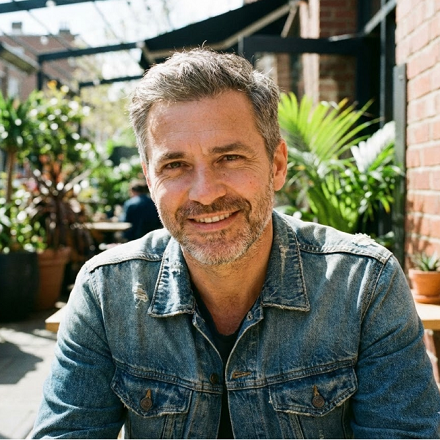
In Tokyo, a seasoned journalist who once covered news and sports in Spain, Mexico and Argentina has spent seven years trying to master Japanese, a language he says still eludes him. His weekly classes have taught him humility more than anything else.
A Teacher’s Insight
Ayaka Ono, the author’s current Japanese instructor, has tutored roughly 600 students over 15 years, most of them between 20 and 50 years old. She notes that older learners often make only “tiny, tiny steps” before falling back. “I find older students take tiny, tiny steps and then they fall back,” Ono-san says. “They can’t focus as long. I teach something one minute and they forget the next.”
The author, who is more than a decade beyond Ono’s eldest student, has seen this pattern in his own practice. He admits that despite his best efforts, he will probably never progress beyond preschool level in Japanese. Still, he believes that the mental workout of learning a new language is worth the effort.
Science Behind the Effort
The article highlights recent research published in Nature Aging in November. The study examined 87,149 healthy people aged 51 to 90 from 27 European countries. The authors wrote that the findings “underscore the key role of multilingualism in fostering healthier aging trajectories.”

Ellen Bialystok, a distinguished research professor emeritus at York University in Toronto, is credited with advancing the idea of a “bilingual advantage” in the late 1980s. She explains that “the science shows that managing two languages in your brain — over a lifetime — makes your brain more efficient, more resilient and more protected against cognitive decline.”
Bialystok also emphasized that learning a new language later in life is still beneficial. “Trying to learn a language late in life is a great idea, but understand it won’t make you bilingual and is probably too late to provide the protective effects of cognitive aging that come from early bilingualism,” she told the Associated Press. “However, learning a new language is a stimulating and engaging activity that uses all of your brain, so it is like a whole-body exercise.”
Expert Voices on Older Learners
Judith Kroll, a cognitive psychologist who heads the Bilingualism, Mind and Brain Lab at the University of California, Irvine, described the brain’s juggling act as “mental athletics” and “mental somersaults.” She said, “I would say there are probably not enough studies to date to be absolutely definitive about this,” but added that the evidence is “very promising,” suggesting that older adults can learn new languages and gain benefits.
Kroll compared the current state of research to the late 20th century, when exposing children to multiple languages was thought to be disadvantageous. “What we know now is the opposite,” she said.
Bialystok echoed this optimism, noting that the new study “ties all the pieces together.” “Over the lifespan, people who have managed and used two languages end up with brains that are in better shape and more resilient,” she said.
Personal Strategies and Real‑World Hints
The author recounts his early days in Madrid in the 1990s, where he was surprised to find many long‑term residents who could only say a few Spanish words. He now uses the Japanese phrase “itsumono,” meaning “the same as always,” to navigate everyday situations like ordering coffee.
He describes his one‑hour weekly class as grueling and compares his brain to a closet lacking empty hangers: “Japanese doesn’t go with anything in my wardrobe. The writing system is intimidating for an English speaker, the word order is flipped, and politeness is valued more than clarity.”
During 4½ years reporting from Rio de Janeiro, he managed with Portuñol, a blend of Spanish and Portuguese, and the patience of Brazilians. There is no such halfway house for Japanese; one either speaks it or one does not.
Ono-san calls language‑learning apps “better than nothing,” and Bialystok stresses that technology can help, but progress requires using the language in real situations with other people.
Key Takeaways
- Multilingualism protects against rapid brain aging, with greater benefits as the number of languages increases.
- Older adults can still learn new languages; the experience is stimulating and engages the entire brain.
- Real‑world practice and consistent exposure are essential for progress, even if full fluency remains elusive.
The author’s journey underscores that while fluency may be out of reach, the act of learning itself offers cognitive rewards. In a city where he is still asked, “And you’ve been here how long?”, he finds that the effort to learn Japanese is a worthwhile exercise for mind and life alike.