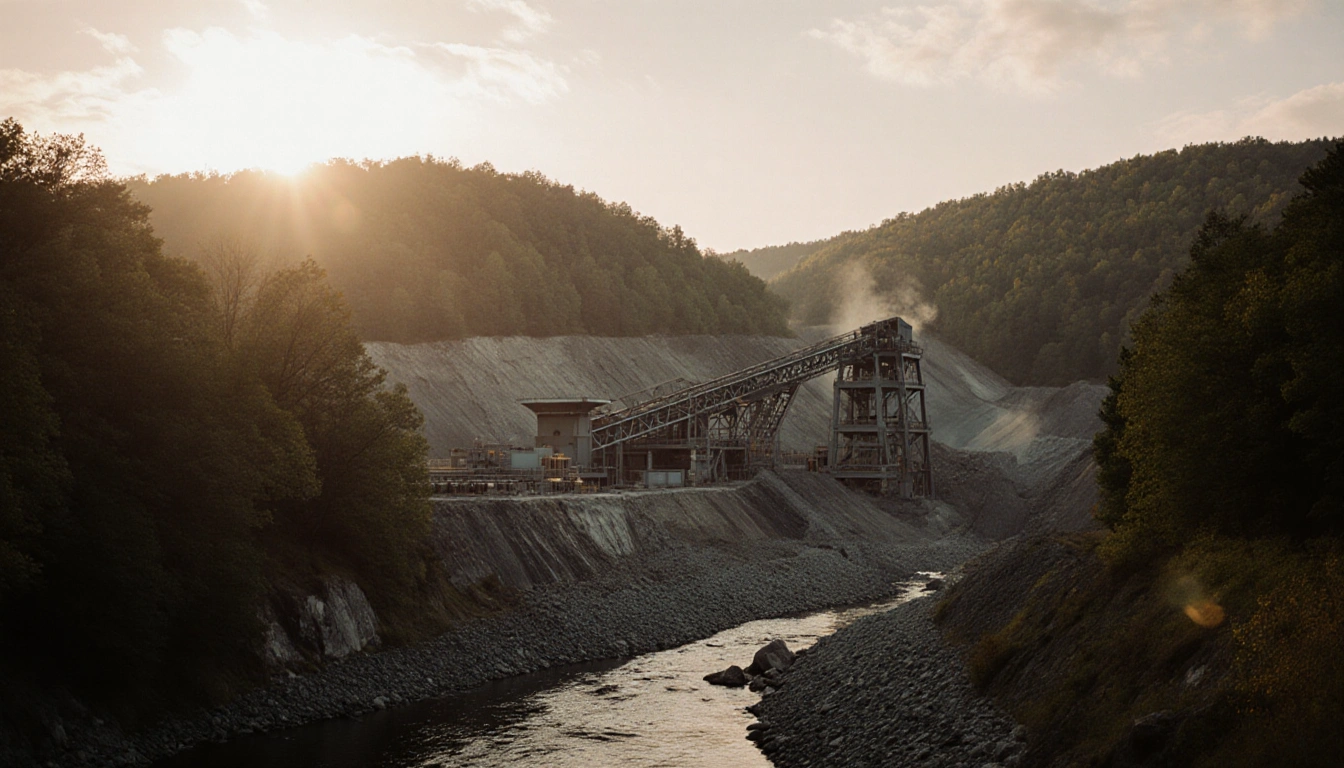
Titan Mining Corp has begun extracting graphite in upstate New York, marking the first commercial U.S. graphite mine in 70 years.
A New Chapter for U.S. Graphite
Graphite, the mineral that powers lithium-ion batteries, has long been imported from China. The U.S. Geological Survey National Minerals Information Center reports that no U.S. graphite mines regularly produce a commercial product today, and most mines closed by the 1950s. In that context, Titan Mining’s limited extraction from a deposit 25 miles (40 km) from the Canadian border is a significant development.
The company’s CEO, Rita Adiani, says the timing is right: “We believe there is a real opportunity here,” she told reporters. “We have the ability to supply a significant portion of U.S. needs. And that’s largely because you can’t see China now as a reliable supply-chain partner.”
Titan’s operations focus on a small, yet high-grade deposit discovered several years ago at the site of an existing zinc mine. The company is already mining a limited amount of ore under its current permits while it seeks additional approvals for full-scale production.
Titan’s Strategic Position
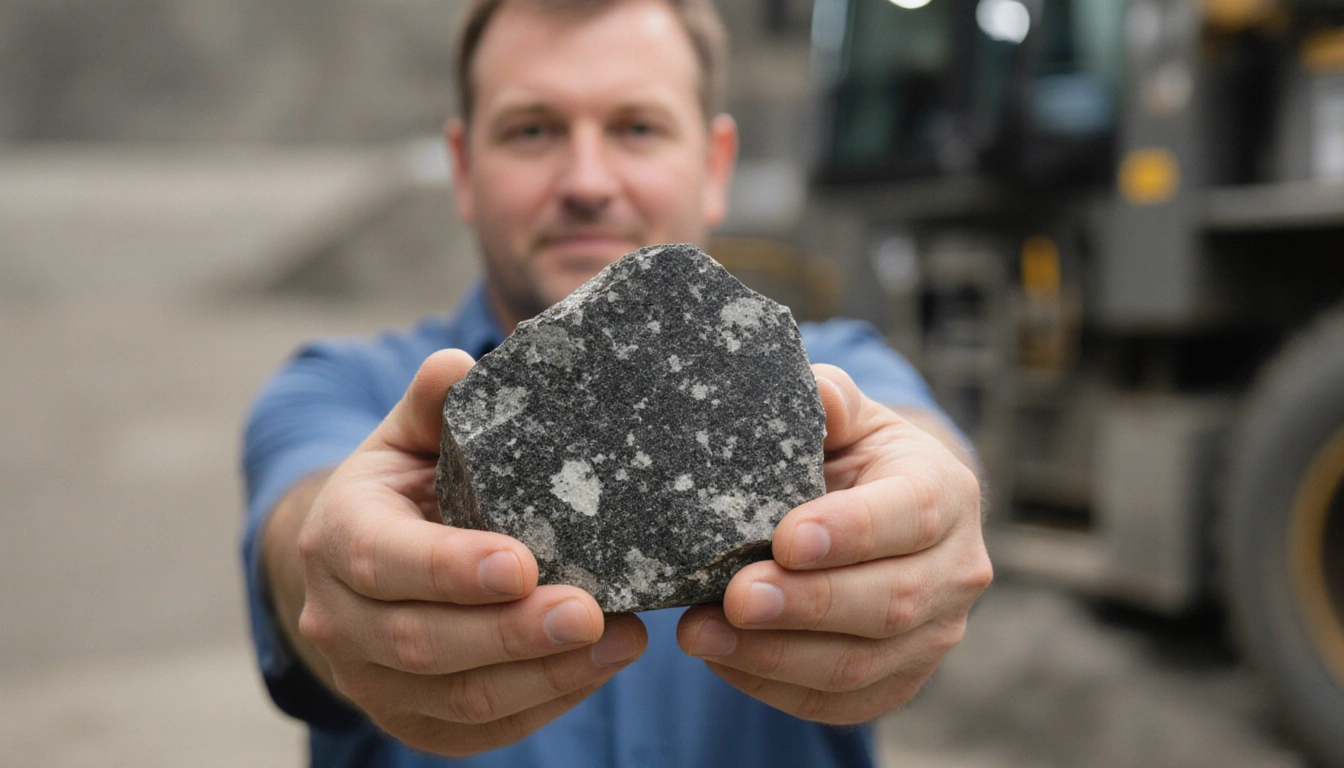
Titan’s vice president of operations, Joel Rheault, recently held up a rock from the newly mined area. “You can see how gray the rock is here,” he said. “That’s because of that graphite.” The fragment, a flecked piece of schist, contained roughly 3 % graphite.
The company expects to produce about 40,000 metric tonnes (44,092 tons) of graphite concentrate each year, roughly half the current U.S. demand for natural graphite. “We have indications, effectively, that 100 % of the output from this facility could be sold,” Adiani added.
Titan’s advantage lies partly in the deposit’s location. The northern New York site sits in a rural region with a long history of graphite, iron ore, and garnet mining. The iconic yellow Ticonderoga pencil was named for a town several hours east of this deposit where graphite was mined long ago.
Federal Support and Global Context
The federal government approved the New York mine for fast-tracked permitting this fall, stating it would “build a strategically significant domestic supply chain for graphite.” The U.S. Export-Import Bank said it would consider lending up to $120 million for construction and pledged $5.5 million for a feasibility study.
These actions follow a broader U.S. effort to secure critical minerals. The 2022 Inflation Reduction Act included a tax credit for critical mineral production, and the Trump administration struck deals with other countries to diversify supplies. The Department of Energy has declared graphite a critical mineral, and the Department of the Interior lists it among 60 critical minerals.
“What’s happening now needs to happen,” said Gregory Keoleian, co-director of the Center for Sustainable Systems at the University of Michigan. “I think you just don’t want to be completely reliant on other countries when you have resources that you could develop.”
China’s dominance in both natural and synthetic graphite has worried U.S. policymakers for years. Concerns rose recently when China imposed new export controls on graphite and several other minerals, only to relax them for a year.
Other U.S. Projects
Titan is one of five active U.S. graphite projects. Two are in Alabama, one each in Montana and Alaska. Westwater Resources announced this fall that it had retained an engineering firm to lead the permitting process for mine development at the Coosa Deposit in Alabama.
The Graphite One Inc. project in Alaska sits at a site the state calls the largest known large-flake graphite deposit in the United States. “When we are sitting with one of the largest graphite deposits in the entire world … there’s no reason why we need to rely on China for our graphite,” said Anthony Huston, president and CEO of Graphite One.
These projects illustrate a growing domestic push to restore the U.S. graphite supply chain, driven by the surge in demand for lithium-ion batteries that power everything from phones to electric cars.
Key Takeaways
- Titan Mining Corp is the first U.S. company to mine graphite commercially in 70 years, targeting 40,000 metric tonnes of concentrate annually.
- Federal fast-track permitting and Export-Import Bank financing support the New York project, reflecting a national strategy to secure critical minerals.
- Six other U.S. projects, including two in Alabama, one in Montana, and one in Alaska, are underway to diversify domestic graphite supply.
The reopening of U.S. graphite mining signals a shift in the critical-mineral landscape, offering a domestic source for a material essential to the growing battery industry.
Closing
With trade tensions over China persisting and the global battery market expanding, the United States is moving to reduce its reliance on foreign graphite. Titan Mining’s New York operation, backed by federal support and a clear commercial plan, represents the first tangible step toward that goal.