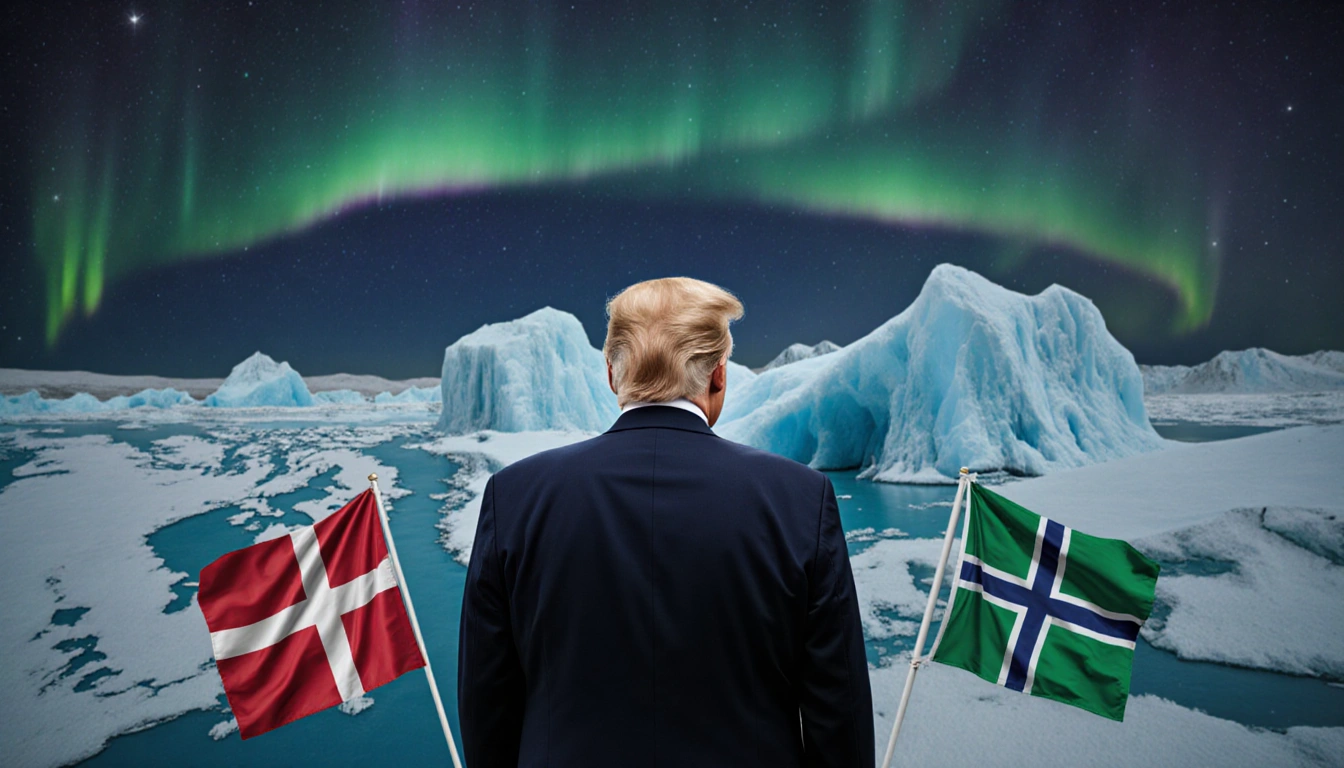
President Trump’s attempt to turn Greenland into a U.S. territory has ignited a diplomatic flare-up with Denmark and Greenland, as officials and analysts weigh national security against sovereignty.
Background
Greenland, the world’s largest island, spans just over three times the area of Texas and is more than 80 % covered in snow. Its population of about 57,000 people is largely Inuit, and the territory sits within Denmark’s sovereign jurisdiction. The island holds rich deposits of zinc, lithium, graphite, nickel, and copper, and is covered by NATO security guarantees that stem from Denmark’s defense commitments.
Trump’s Statements
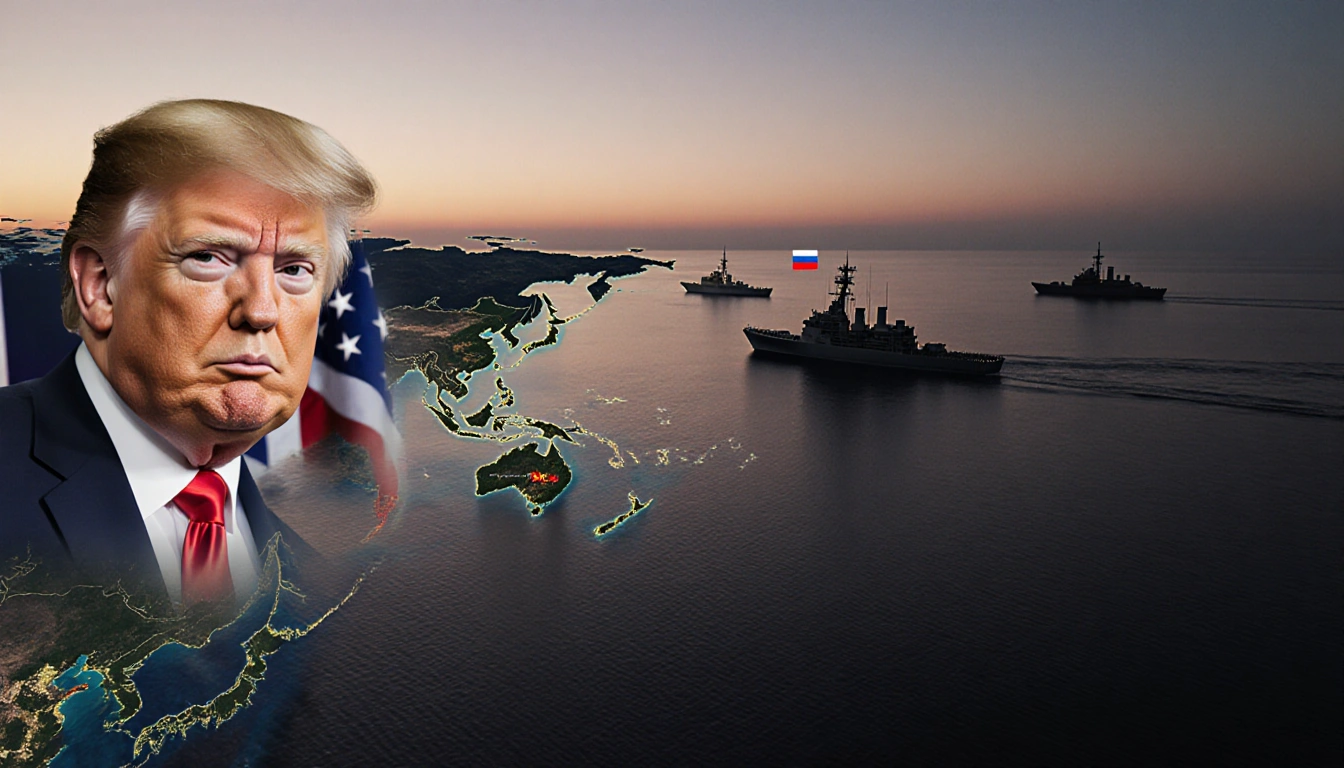
At Mar-a-Lago on Monday, Trump said his interest in Greenland “does not lie in the island’s mineral abundance, but rather in its strategic qualities.” He added, “We need [Greenland’s] financial security, not for minerals. We have so many sites for minerals and oil and everything,” and that the U.S. “has more oil than any other country in the world.” Trump further claimed, “We need Greenland for national security… If you take a look at Greenland, you look up and down the coast, you have Russian and Chinese ships all over the place.”
Appointment of Gov. Landry
Trump’s next move was to tap Louisiana Gov. Jeff Landry, who took office in January 2024, as his envoy to Greenland. Landry said the role would not affect his governorship and claimed Trump called him to help Secretary of State Marco Rubio. He framed the appointment as an opportunity for Greenland to join the U.S. economic table, stating, “This is an opportunity for Greenland to be invited to [the] economic table with the United States, the strongest most advanced economy in the world. And we care. We care about them, with the fastest security route to give them the security and the protection.”
Denmark’s Reaction
Denmark was so upset by the envoy appointment that its foreign minister summoned U.S. ambassador Ken Howery for a briefing. Howery met with Greenland’s foreign minister Vivian Motzfeldt, who said that the administration’s plans to appoint Landry were not discussed. Motzfeldt reiterated that Greenland’s future is decided by its people, adding, “In Greenland nothing has changed. The future of our country is decided by the people of Greenland. We are not Danes. We are not Americans – and we do not wish to become so. We are Inuiaat Kalaallit, we are the people of Greenland.”
Joint Statement
Greenlandic Prime Minister Jens-Frederik Nielsen and Danish Prime Minister Mette Frederiksen issued a joint statement declaring that Greenland “belongs” to its people and that the U.S. “shall not take” the mineral-rich island. The statement emphasized that Greenland’s autonomy and sovereignty must be respected, and it warned that any U.S. attempt to annex the territory would be a violation of existing norms.
Expert Analysis – Chivvis
Christopher Chivvis, a senior fellow and director of the American Statecraft Program at the Carnegie Endowment for International Peace, said the move would be seen worldwide as the start of a new era where the U.S. disregards sovereign norms. He added, “It’s not clear exactly what the president believes he’s going to get, maybe a slightly better deal on some of those fronts, but it would be paying an extraordinary cost for a very small benefit.” Chivvis warned that further U.S. pressure could provoke stronger European backlash.
Expert Analysis – Jacobsen
Marc Jacobsen, an associate professor at the Royal Danish Defence College, told The Hill that Landry’s appointment and the appointment of venture capitalist Thomas Dans as head of the U.S. Arctic Research Commission are new elements of the strategy. He said, “In Greenland, however, these efforts are counterproductive as Greenlanders are seeing the U.S. as more and more antagonistic and a less desirable partner on the road to independence.” Jacobsen noted that Greenlanders favor independence from Denmark, but the majority oppose joining the U.S.
U.S.-Denmark Defense Partnership
The U.S. already shares a bilateral defense partnership with Denmark, including patrols around Greenland and a shared NATO security umbrella. Trump’s push could strain that relationship, prompting Denmark to look to refurbish ties in 2025 after past mistreatment of Inuit people came to light. The U.S. has also increased Arctic defense spending following criticism that it had not done enough.
European and Congressional Reactions
France and Sweden reaffirmed Greenland’s territorial sovereignty, while top congressional Democrats on foreign-policy committees accused the president of destroying U.S. relationships with allies and urged him to focus on Russia instead. Analysts warned that intensified U.S. pressure could lead Europe to deploy EU security services to monitor U.S. actions in Greenland and increase military exercises and investments in the region.
Potential EU Pushback and Future Implications
Chivvis noted that Europe’s pushback would carry a high cost for individual countries such as Spain or Italy, potentially fracturing solidarity within the bloc. Jacobsen suggested that enough people in the ‘right positions’ could pull the handbrake on Trump’s idea, yet the administration’s push might still result in a new defense agreement between the U.S., Greenland, and Denmark that Trump could present as a victory, even if it differs little from the current arrangement.
Conclusion
While Greenland’s population largely rejects the notion of becoming part of the United States, Trump’s continued pursuit of the island keeps the issue alive on the international stage. The diplomatic fallout illustrates the delicate balance between national security interests and respect for sovereign territory, and it remains to be seen how the U.S., Denmark, and Greenland will navigate this contentious debate.
Key Takeaways
- President Trump’s appointment of Louisiana Gov. Jeff Landry as envoy to Greenland sparks diplomatic backlash from Denmark and Greenland.
- Analysts warn that the move could erode U.S. alliances and provoke stronger European counter-actions.
- Greenland’s people largely oppose U.S. annexation, and the island remains under Danish sovereignty with NATO security guarantees.